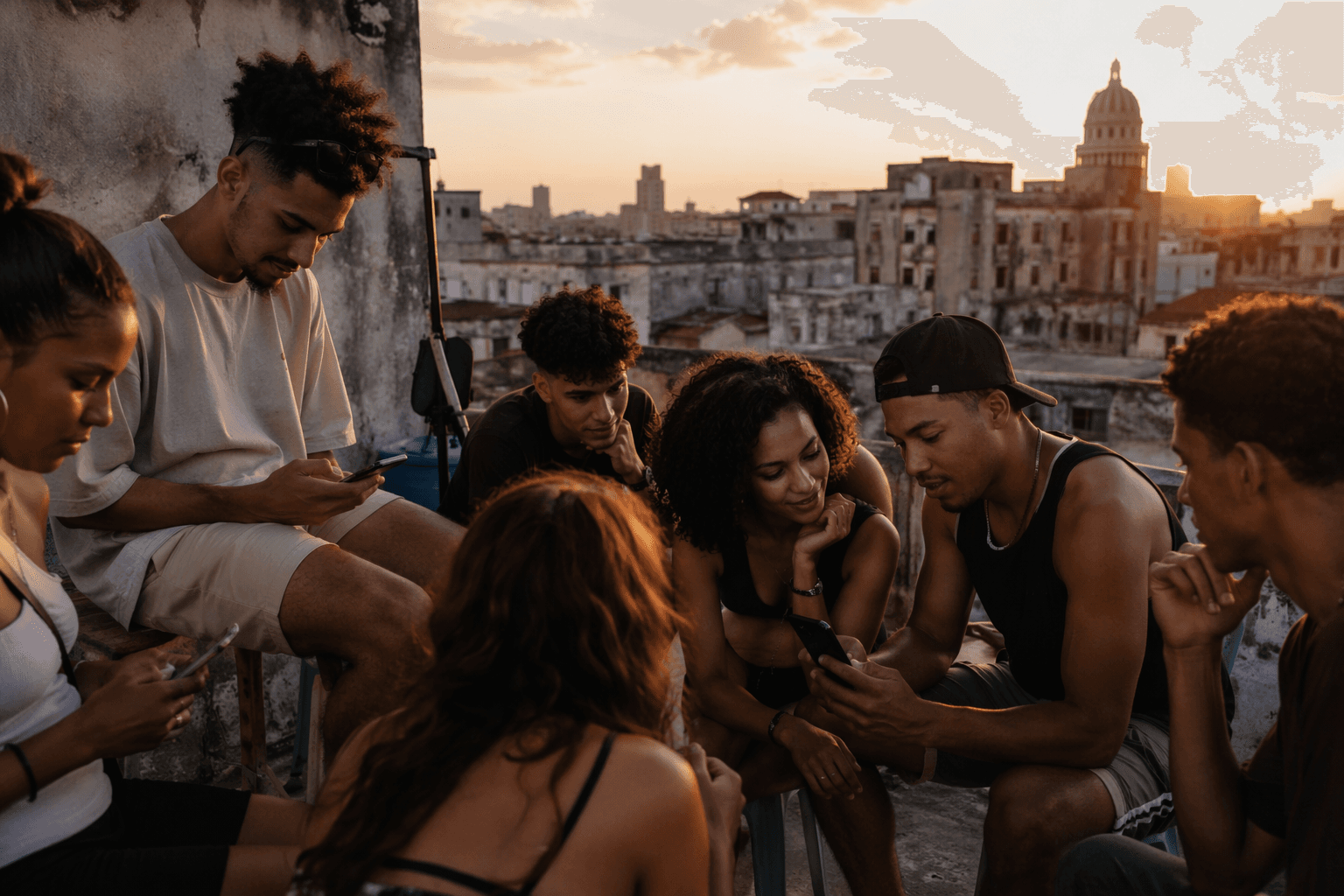
Cubans improvise daily as blackouts and shortages reshape normal life
A charcoal car in Aguacate shows how blackouts, fuel cuts and dry taps have pushed Cubans to engineer daily life around scarcity.

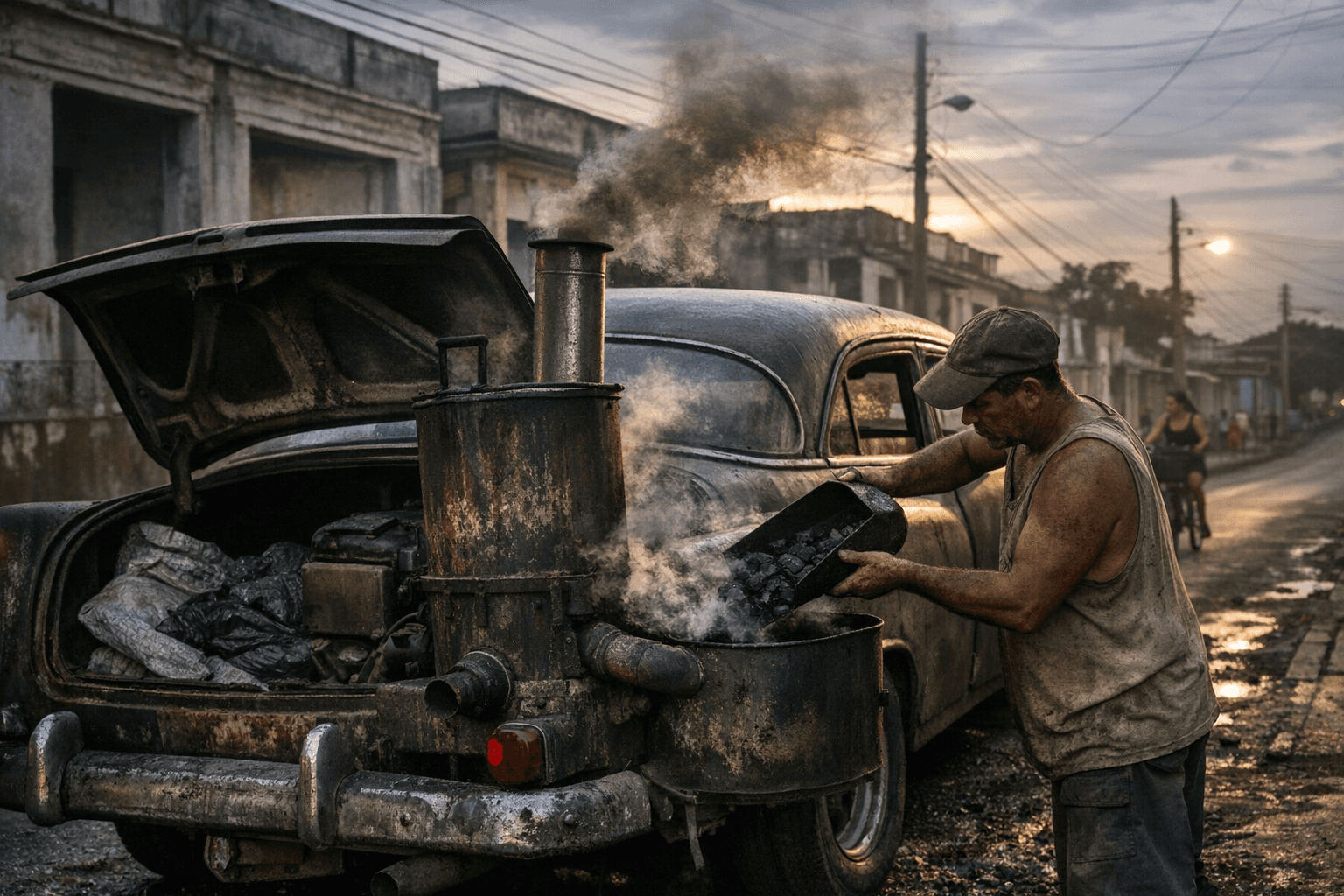
Blackouts, fuel cuts and dry taps have turned ordinary errands into a test of invention in Cuba. In Aguacate, about an hour and a half from Havana, Juan Carlos Pino has become known for driving a Polski Fiat 126p powered by charcoal, a fix that says more about the country’s collapse than any novelty ever could.
A car built for scarcity
Pino’s car is not a stunt. It is a practical answer to a transport system and a fuel market that no longer function in normal ways, and that is what makes it so revealing. After Donald Trump issued an executive order blocking fuel deliveries to the island at the end of January, Pino parked the modest Fiat for a month and then began experimenting with another way to keep moving.
He leaned on YouTube tutorials from an Argentine engineer, built a fuel tank from scrap and recycled objects, and attached it to the back of the car. Inside the system, charcoal burns in a modified propane tank fitted with a transformed cap and a stainless-steel milk jug component, and the ignition process starts long before the car is ready to move. The point is not the ingenuity alone; it is that a basic personal vehicle now has to be redesigned as a survival machine.
Pino’s work captures a wider truth on the island: gasoline is no longer something many people can count on, and for many households, the choice is not between standard and alternative transport but between movement and paralysis. In that sense, the charcoal car is less a curiosity than a map of what daily life has become.
The grid keeps collapsing, and normal life keeps shrinking
The transport crisis is happening alongside a power crisis that has repeatedly swallowed the island whole. Reuters reported a major blackout on March 4, 2026, after an unexpected outage at the Antonio Guiteras thermoelectric plant, and said the cut stretched from Pinar del Río in the west to Camagüey in the center-east, leaving only parts of the far eastern provinces with power. Less than two weeks later, Reuters reported another nationwide grid collapse on March 16 that left around 10 million people without electricity.
Those outages are not isolated. Cuba’s blackouts are tied to fuel scarcity, aging thermoelectric plants and repeated mechanical failures, which means the system is not merely under strain, it is being forced to operate beyond what it can safely sustain. The state utility, Unión Eléctrica, has repeatedly struggled to stabilize service, and every new breakdown pushes more households into improvised routines that used to be temporary and now feel permanent.
The United Nations said in April 2026 that humanitarian needs in Cuba remained acute and persistent. It also said fuel shortages deepened after Washington moved at the end of January to block oil supplies from entering the island, and a March 2026 UN plan noted that Cuban authorities had recorded no fuel imports since December 13. That context helps explain why the grid is failing so often: once fuel stops arriving, every weak point in the system gets exposed at once.
Water and sanitation are being rebuilt at home
The same pressure is showing up beyond transport and electricity. The EL PAÍS feature places Pino’s charcoal car alongside other household adaptations, including rainwater toilets, to show that Cubans are not only improvising around inconvenience but redesigning basic routines around shortage. When water is unreliable, sanitation becomes another engineering problem; when electricity is unstable, washing, pumping and storage all become part of the same daily calculation.
That is what makes the story so stark. These are not isolated hacks or colorful anecdotes, but signs that the infrastructure of ordinary life has thinned to the point where families have to patch together the essentials themselves. Transport, sanitation, mobility and cooking are no longer separate systems in practice, because each one is now shaped by the same scarcity.
The result is a kind of domestic resilience that is easy to romanticize from a distance and much harder to live inside. A rainwater toilet is not a lifestyle choice in this context. It is evidence that the water system can no longer be taken for granted.
What these workarounds say about Cuba now
EL PAÍS described the crisis in February 2026 as worsening under what it called a U.S. oil siege, with blackouts reaching record levels and warnings that reduced crude supplies could push the country toward a humanitarian collapse. Read together with the March outages and the UN’s assessment, the picture is not of a temporary emergency but of a society learning to function inside breakdown.
That is the deeper meaning of Pino’s charcoal car. It shows how quickly scarcity becomes normalized when people have to invent substitutes for fuel, electricity and water just to keep daily life moving. A system in this condition does not just produce hardship; it forces households to become their own emergency planners, mechanics and energy managers.
What looks inventive from the outside is, inside Cuba, a measure of how far the crisis has spread into the structure of normal life. The coal car, the rainwater toilet and the blackout schedule all point to the same reality: survival engineering is no longer a side effect of the crisis, it is part of the country’s everyday operating system.
This article was produced by Prism’s automated news system from verified source data, official records, and press releases, then run through automated quality and moderation checks before publishing. The system is built and supervised by the people who set the standards it runs under. Read our full AI policy.
Did this article answer your question?