Cuba’s baseball roots run deep, from 1860s to national identity
Cuba’s baseball story starts with elite students returning from the United States and grows into Latin America’s first pro league, a legacy still felt today.
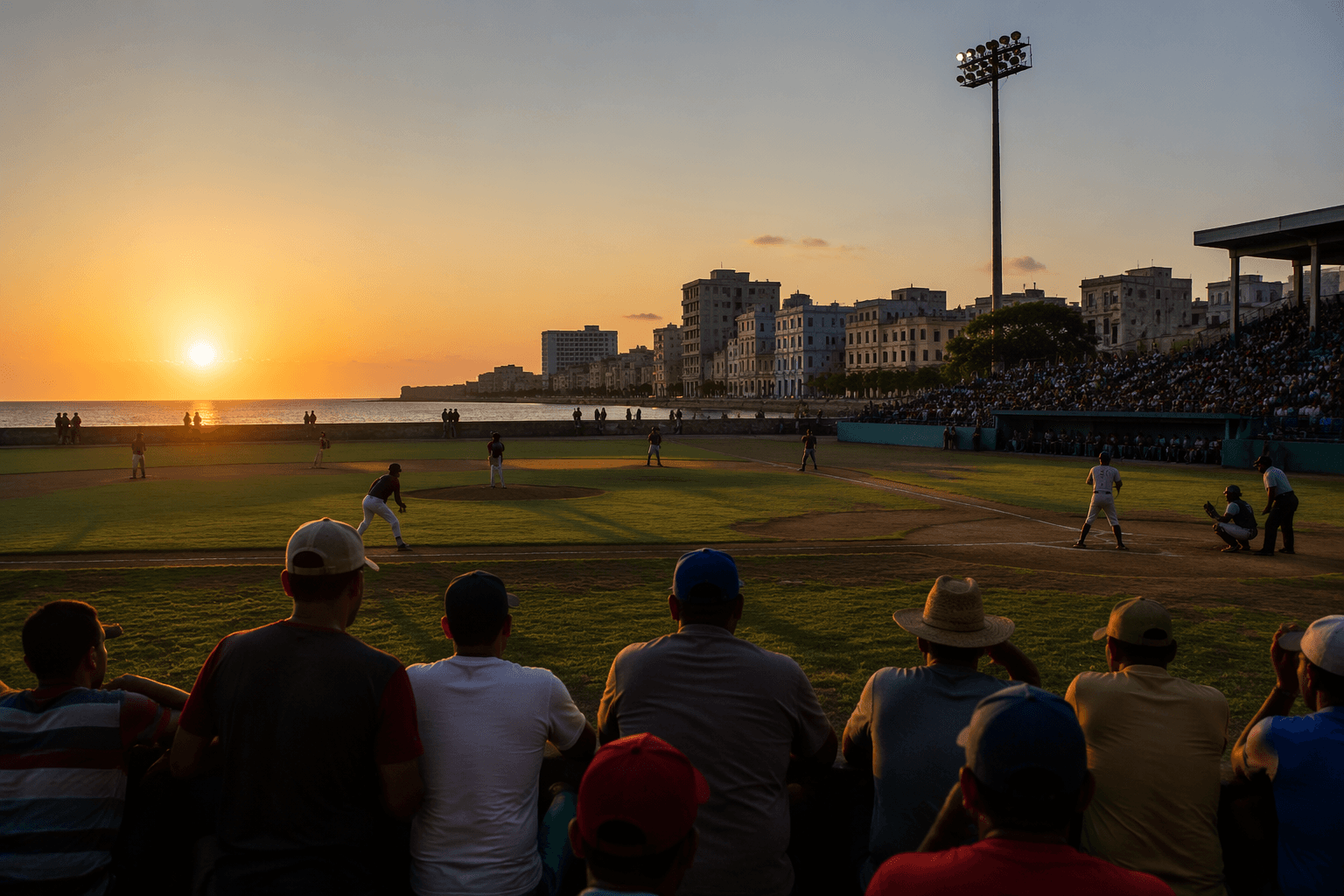
Before Cuba became a pipeline for big-league talent, it was already building the baseball blueprint for Latin America. Encyclopaedia Britannica dates the sport’s arrival to 1864, and the first Cubans to learn it were children of the island’s elite sent to study in the United States in the 1860s, who brought the game home with them. That early start made baseball part of Cuban identity long before modern scouting, free agency, or the island’s status as a global export.
How the game took root in schools and clubs
The National Museum of African American History and Culture calls Cuba the fountainhead of baseball in Latin culture, and that label fits the way the sport moved through Cuban society. It was not just imported as a novelty from the United States; it was absorbed through education, social class, and the clubs that gave the game structure. Race and war shaped Cuban baseball in ways that made it a social institution as much as a pastime.
One marker places the first official baseball game in Cuba at Palmar de Junco in Matanzas in 1874. Four years later, the Cuban Winter League, often referred to simply as the Cuban League, officially began with three teams: Habana, Almendares, and Matanzas. That matters because the league was not a loose collection of matches. Britannica describes the Cuban League as the earliest baseball league founded in Latin America, which gives Cuba a head start the rest of the region would spend decades catching up to.
Those early clubs mattered because they created rivalries, routines, and a serious competitive standard. Habana, Almendares, and Matanzas gave Cuban baseball its first durable institutions, and the league around them turned the island’s passion for the game into something organized enough to last. From there, baseball became woven into national identity more than a century ago, not as a side hobby but as one of the country’s most recognizable forms of public life.
The league that set the regional standard
Cuban baseball’s importance goes well beyond a few famous names. Before the 1961 shift to amateur-only baseball, Cuba had already produced generations of elite players who moved through the Negro leagues, the Caribbean winter leagues, and eventually Major League Baseball. The Cuban League helped create a professional standard in the region, and that standard made Cuban players legible across the wider baseball world.
Martín Dihigo, Dolf Luque, Minnie Miñoso, Tony Pérez, Luis Tiant, and Pedro Martínez represent different eras, different styles, and different baseball economies, but they all point back to the same island foundation. Dihigo belongs to the older, transnational era; Luque connects Cuban talent to the early professional game; Miñoso, Pérez, Tiant, and Martínez show how Cuban excellence kept resurfacing across generations. Their careers are not separate anecdotes. Taken together, they are the long proof that Cuba’s baseball culture was producing world-class players before the modern global market even existed.
That broader baseball world included the Negro leagues and other professional circuits, where Cuban players and Cuban teams helped shape the style and depth of play across the hemisphere. Cuba did not sit at the edge of the baseball map. It helped draw that map.
Havana’s bridge to the U.S. game
The island’s connection to the United States was never abstract. In 1954, Bobby Maduro created the Havana Sugar Kings, an International League club that gave Havana a top-level minor-league presence inside the U.S. professional system. The Sugar Kings are one of the clearest signs that Cuban baseball was already plugged into a hemispheric network, not sealed off from it.
That club also illustrated how serious Cuban baseball had become by the mid-20th century. A state-of-the-art stadium and a high-level minor league team in Havana told the same story the old clubs had begun: Cuban fans were not borrowing baseball culture from elsewhere. They were living inside one of the deepest baseball cultures in the Americas, and the island had a place in the professional imagination well beyond its shores.
When 1961 changed the rules
The biggest rupture came in 1961. Fidel Castro banned professional sports in Cuba that year, and diplomatic relations between Cuba and the United States broke down at the same time. Ballplayers faced a stark choice: continue their careers elsewhere or return to Cuba and enter a different sporting system altogether.
Once professionalism was abolished, the Cuban National Series became the center of the sport at home. Baseball-Reference lists the 1961-62 Cuban National Series as a four-team competition, a small but important sign of how quickly the island’s baseball structure had to be rebuilt. The first international tournament to feature a Cuban entry after the revolution was the 1961 Amateur World Series, held from April 7 through April 21, 1961, which marked the beginning of a new era built around amateur play and national representation.
That change did not erase Cuban baseball’s older history. It reframed it. The game that had once developed through elite schools, early clubs, and professional leagues was now tied more tightly to the state, the national team, and the domestic series.
Cuba’s baseball roots run deep because the island did the hard part first: it built the institutions before the rest of Latin America caught up. From the schoolboys who brought the game home in the 1860s to the clubs in Havana and Matanzas, from the Cuban League’s early professional standard to the post-1961 National Series, the sport has always been part of how Cuba sees itself. That is why Cuban baseball still matters now. Every current roster, every diaspora star, and every debate about the island’s game still traces back to the same foundation laid when baseball first took hold there in 1864.
This article was produced by Prism’s automated news system from verified source data, official records, and press releases, then run through automated quality and moderation checks before publishing. The system is built and supervised by the people who set the standards it runs under. Read our full AI policy.
Did this article answer your question?