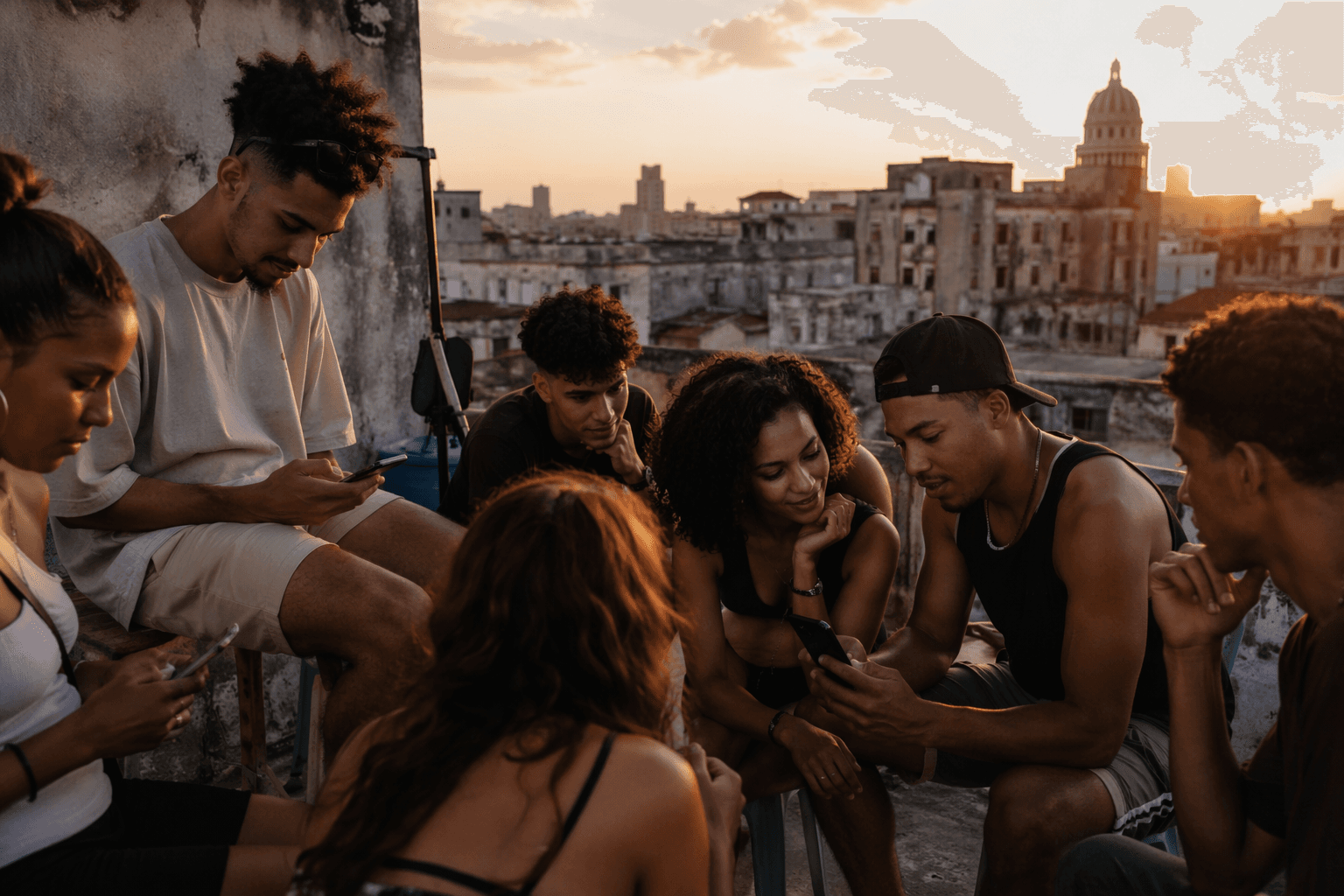
Cuba's doctors' neighborhood endures blackouts, fear, and nightly improvisation
Nightfall in Doctors’ Neighborhood now means fear, candles, and beans cooked whenever the grid flickers back, exposing Cuba’s wider collapse.
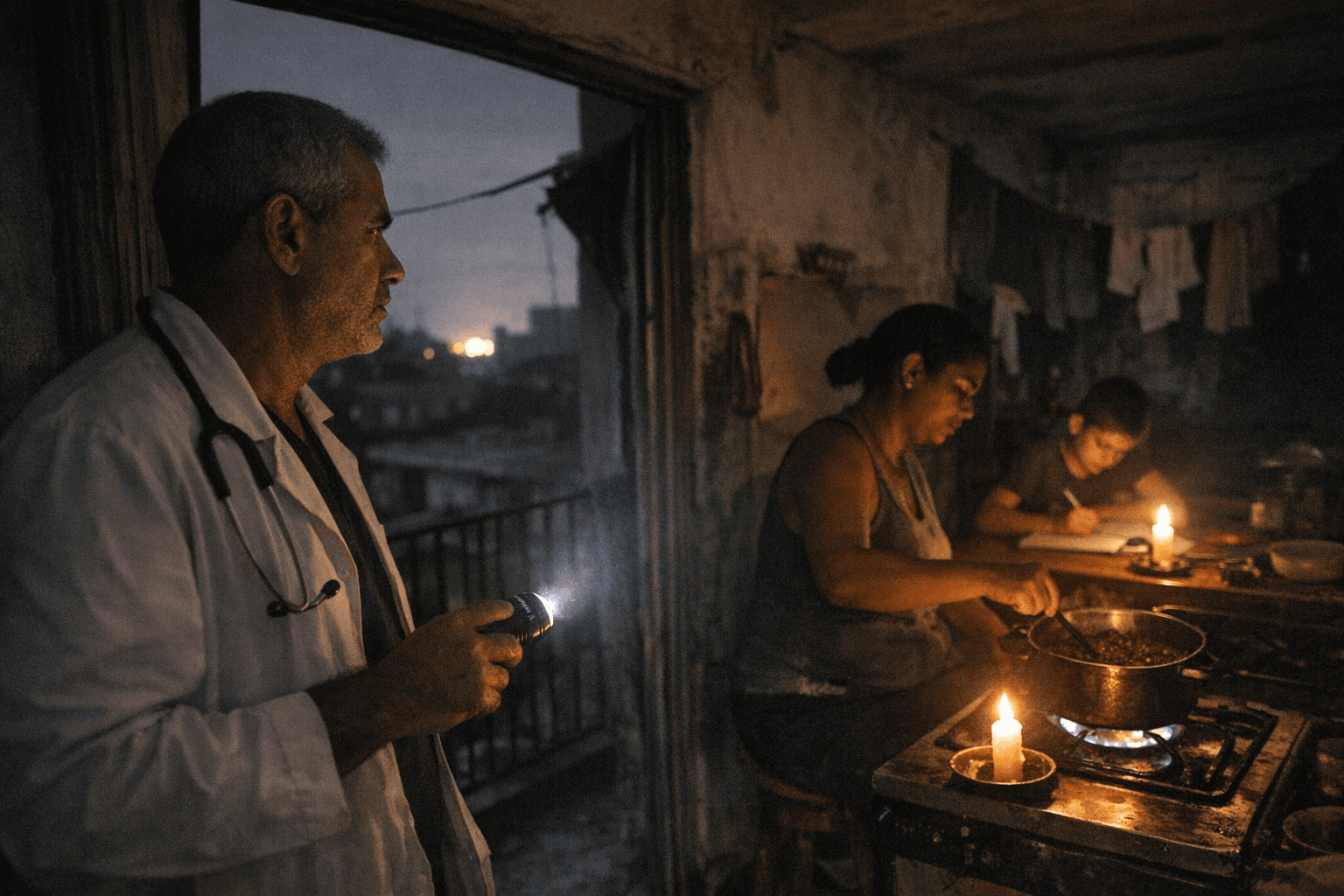
Night closes in early in Doctors’ Neighborhood
By seven in the evening, the Doctors’ Neighborhood in San Jose de las Lajas already feels like a silent curfew zone. Only a few weak lights glow through apartment windows, and people linger near doorways to catch whatever air they can or keep watch, because once darkness settles, the block changes character fast.
Marcia, a 49-year-old surgeon, lives the rhythm in its most punishing form. She says the blackouts often last more than 24 hours, and the little electricity that returns in the early morning is too brief to steady a normal day. Sometimes she and her husband get up in the middle of the night just to cook beans before the current disappears again, a routine that turns sleep into another task to manage.
What daily life looks like when power is never reliable
The neighborhood’s hardship is not just about inconvenience. With the streets dark and the homes dim, fear of robbery rises, and neighbors are more likely to stay inside once night falls. That changes how people move, how they talk to each other, and how much confidence they have in the block that was supposed to represent stability.
The strain also follows doctors back to work. After a night spent timing cooking, lights, and sleep around the grid, they return to the hospital carrying the same fatigue and improvisation into a system that is already under pressure. In a place built for medical workers, the daily lesson is that no part of life is insulated from the outage.
A housing project that now mirrors Cuba’s wider contract breakdown
Doctors’ Neighborhood was created as a reward for sacrifice abroad. It was meant for health workers returning from overseas missions, a physical sign that the state valued their service and wanted to bring them home with dignity. That promise matters because Cuba has built so much of its self-image around medicine, discipline, and international solidarity.
The history is real and long. Cuba says its first internationalist medical mission left for Algeria on May 23, 1963, and that more than 600,000 Cuban health workers have served in 165 countries over six decades. That legacy is exactly why this housing complex carries symbolic weight: it was meant to honor the people the state depends on most, and it now shows how thin that protection has become.
The contradiction is hard to miss. A neighborhood designed to celebrate doctors now reflects the same fragility they confront in the hospitals, in the streets, and at home. The state can still invoke sacrifice, but it cannot reliably guarantee the basic conditions that sacrifice was supposed to earn.
The blackout crisis reaches far beyond one block
What is happening in San Jose de las Lajas is part of a national energy emergency, not a local malfunction. Humanitarian reporting in April said fuel scarcity has disrupted electricity generation and transport across the country, affecting an estimated nine million people. That is nearly the whole island, on a population base of 9.8 million, and it helps explain why so many daily routines now depend on luck, timing, and spare fuel.
The United Nations Office for the Coordination of Humanitarian Affairs said fuel remains the central constraint on humanitarian delivery under a US$94 million plan launched in late March 2026. Its regional update also said severe blackouts and disruptions to food, water, and health services continue across Cuba because the grid is fragile and fuel is limited. In other words, the problem is not only that lights go out. It is that the systems that keep people fed, mobile, and treated at all are all connected to the same failing supply line.
The Office of the United Nations High Commissioner for Human Rights warned in February that Cuba’s oil scarcity is putting health, food, and water systems at risk nationwide. That warning is especially stark when hospitals are mentioned directly, including intensive care units, emergency rooms, and temperature-sensitive medicines. When power instability reaches those points, it stops being a comfort issue and becomes a life-and-death problem.
Why San Jose de las Lajas feels like a warning sign
The fragility in the Doctors’ Neighborhood is echoed elsewhere in San Jose de las Lajas. In another local scene, pension lines collapsed when electricity or cash ran out, a small but telling example of how one outage can trigger a chain reaction in daily life. If the grid fails, the money system slows. If the money system slows, people queue longer. If both fail at once, ordinary errands become a test of endurance.
That local pattern sits on top of a much older national warning. Cuba’s electrical system has already suffered another collapse, showing that the current blackout crisis did not begin with this neighborhood’s sleepless nights. The difference now is that the failures are no longer abstract. They are visible in a doctors’ housing block built to reward public service and now shaped by fear, darkness, and nightly improvisation.
A neighborhood built to honor care now lives without it
Doctors’ Neighborhood has become a compact version of Cuba’s wider social contract breakdown. It was meant to house the people who carried the country’s medical prestige abroad, then brought that prestige back home. Instead, it now shows how the state’s promise to its medical workers breaks down in the most ordinary places: a stove turned on at 2 a.m., a hallway watched in the dark, a surgeon trying to rest before hospital duty.
That is why the block matters beyond San Jose de las Lajas. It captures the moment when a celebrated public mission collides with the reality of a grid that cannot hold, a fuel supply that keeps shrinking, and families forced to plan life around the next short burst of electricity. In Cuba now, the distance between policy and survival is measured in hours without light.
This article was produced by Prism’s automated news system from verified source data, official records, and press releases, then run through automated quality and moderation checks before publishing. The system is built and supervised by the people who set the standards it runs under. Read our full AI policy.
Did this article answer your question?