Cuba's Informal Dollar Market Hits Record High Amid Fuel Shortages, Blackouts
Cuba's informal dollar rate hit a new record over the weekend, with street rates climbing into the low-500s of Cuban pesos as fuel shortages and blackouts battered confidence in the peso.
The informal dollar market in Cuba broke into new record territory over the weekend, with street-level selling prices climbing into the low-to-mid 500s of Cuban pesos per dollar. Independent trackers OMFi (Observatorio de Monedas y Finanzas de Cuba) and elToque, which compile daily rates across informal exchange points in Havana and other cities, documented the surge as it unfolded.
The spike extended a trend that independent outlets had been logging since at least April 5. OMFi's modelling for April now projects the dollar approaching 533 CUP before the month closes, with the euro potentially reaching 604 CUP and the MLC reference rate climbing toward 393 CUP.
Behind the record sits a convergence of acute pressures: fuel shortages that have left Cubans queuing for hours, rolling blackouts, and tightened U.S. measures that have cut into oil flows reaching the island. Those conditions drove anyone with access to hard currency toward informal exchange rather than the official CADECA network, where foreign currency remains structurally scarce. Demand on the street surged; confidence in the peso did not.
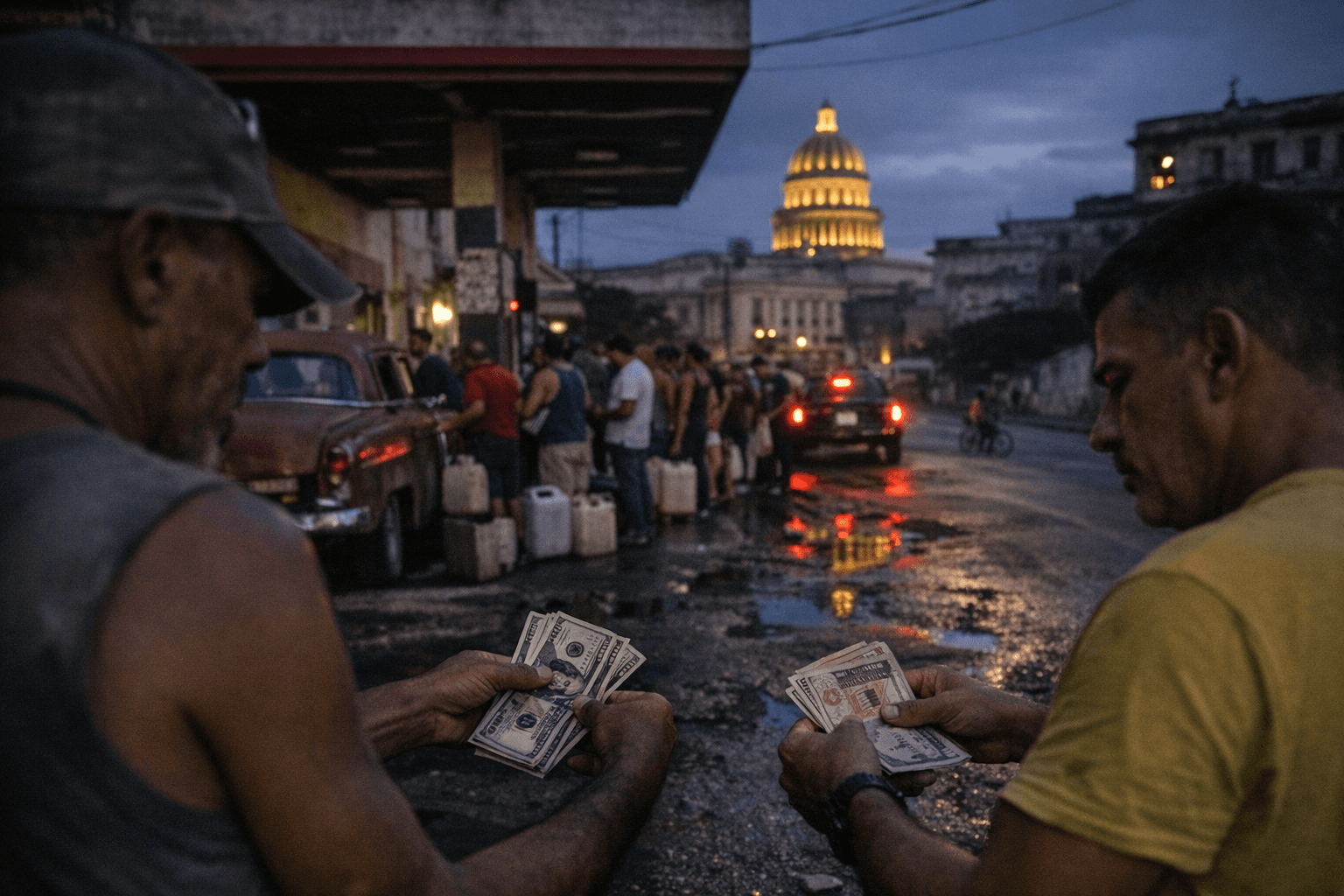
Families receiving remittances from Miami, Madrid, or wherever the diaspora has scattered face a bitter arithmetic. More pesos per dollar sounds favorable until you calculate what those pesos actually buy: goods priced in MLC or foreign currency track the informal rate closely, so medicine, cooking oil, and basic groceries all become more expensive in tandem with the street exchange rate.
Supply-side shocks add another layer of volatility. State operations that periodically remove currency from informal circulation can produce sudden swings within a single day, meaning the weekend's record could shift again before the week is out. CiberCuba and other independent outlets were tracking the market post-by-post through early April precisely because of that kind of daily movement.
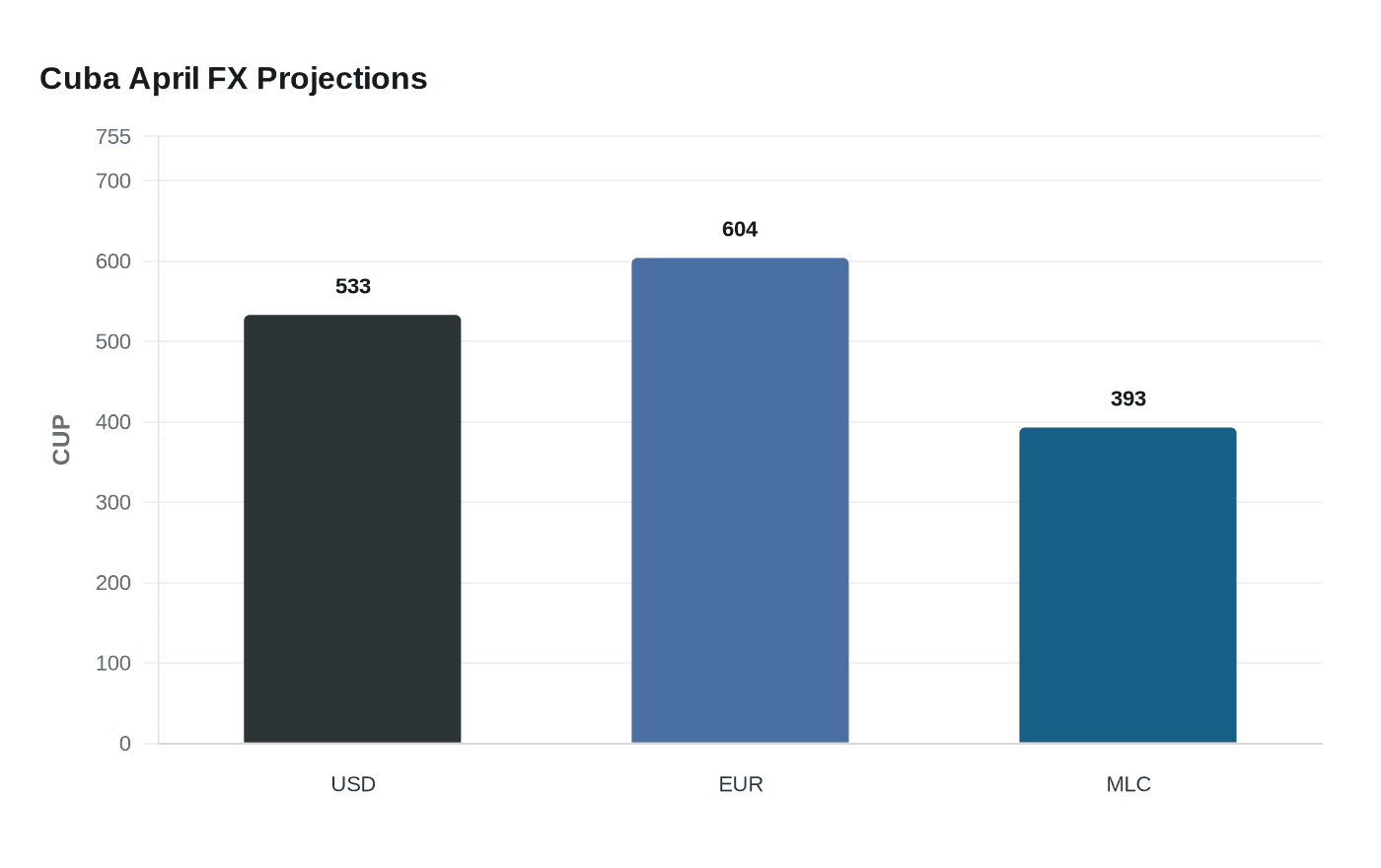
If OMFi's April projections hold, the peso has further ground to lose. For an economy already absorbing blackouts measured in hours and fuel lines that have become a fixture of street life, a rate of 533 CUP would mark another threshold crossed in a crisis that has yet to find a floor.
This article was produced by Prism’s automated news system from verified source data, official records, and press releases, then run through automated quality and moderation checks before publishing. The system is built and supervised by the people who set the standards it runs under. Read our full AI policy.
Did this article answer your question?