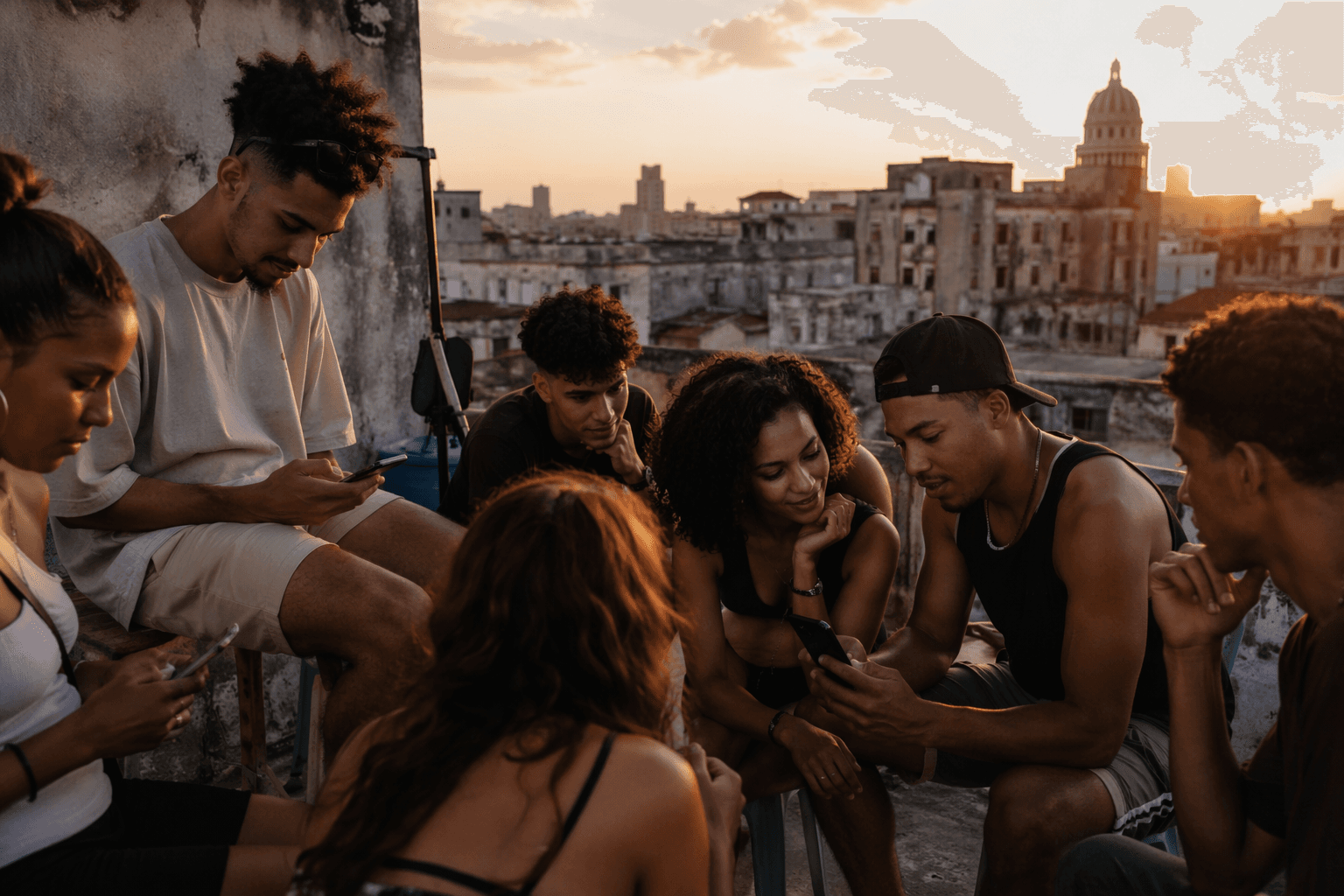
Cuba's Prison Rate Second Only to El Salvador, New Stats Show
Cuba locks up 794 people per 100,000 residents, second only to El Salvador globally, as protest-linked detentions swell a prison population already near 90,000.

At 794 prisoners per every 100,000 residents, Cuba now holds the second-highest incarceration rate on the planet. Only El Salvador, which reached 1,659 per 100,000 after its own sweeping security crackdowns, sits ahead of it. Rwanda comes in third at 620, Turkmenistan fourth at 576, and the United States fifth at 541. That Cuba outpaces all of them except El Salvador is not an accident of data; it is the arithmetic of a government that has made detention a tool of political management.
Translate 794 per 100,000 into daily life and the number carries a different weight. Roughly one in every 126 Cubans is currently held behind bars. For a family in Santiago de Cuba or Bayamo, where hundreds of people were detained during March 2024 protests demanding "power and food," that ratio is not a statistic; it is a neighbor, a sibling, a spouse. For activists, the figure functions as an ambient threat: challenge the government and the odds of imprisonment are not theoretical.
The figures originate from the World Prison Brief, a database maintained by the Institute for Research on Crime and Justice that tracks prison systems across every country. Independent monitoring organizations, including Cubalex and the Cuban Prisons Documentation Center, have confirmed that Cuban facilities hold close to 90,000 people. The Cuban government does not publish verified national prison data and denies Cuban and international human rights organizations access to its facilities, which means the 794 figure almost certainly understates the real count. The World Prison Brief itself notes its Cuba data is drawn from official figures, a baseline that rights groups say excludes an unknown number of undisclosed detention facilities.
The current numbers are inseparable from the July 11, 2021 protests, the largest mass demonstrations since the Cuban revolution. Justicia 11J, the NGO that tracks those cases, documented 1,586 people arrested in connection with that day. By 2024, its third annual report confirmed that 554 of them, 35 percent, remained imprisoned with confirmed sentences. The musician Maykel Castillo Pérez, co-writer of the protest anthem "Patria y Vida" and a two-time Latin Grammy winner, has been held in maximum-security Pinar del Río prison since May 2021. José Daniel Ferrer, leader of the Cuban Patriotic Union, the country's main opposition party, also remained behind bars. The United Nations Working Group on Arbitrary Detention ruled in June 2024 that the detention of 17 people arrested after the July 2021 protests was arbitrary, a finding the Cuban government ignored.
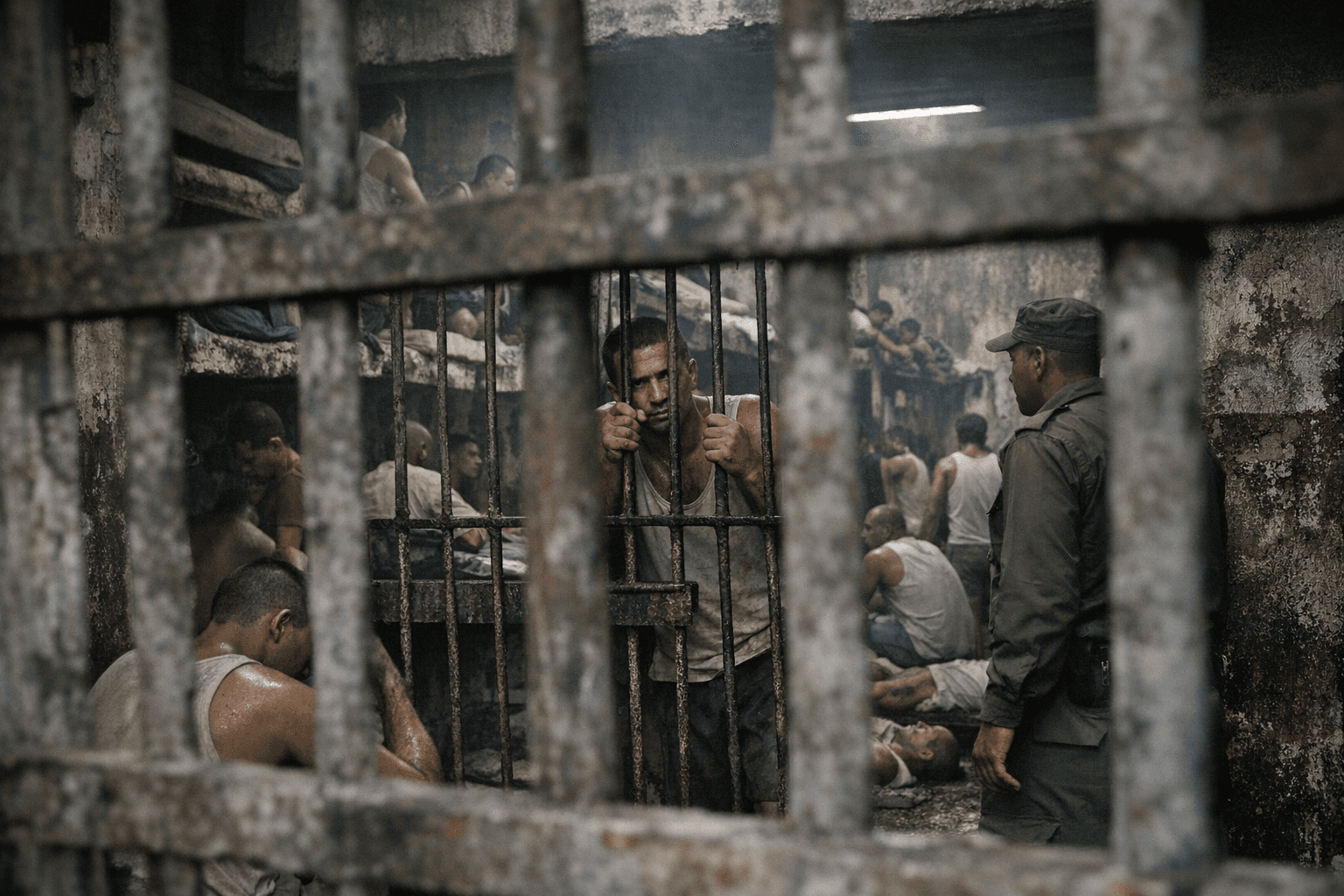
Post-2021 arrests compounded the total. Independent media reported more than 684 people detained following protests in 2024 alone. Cubalex documented 1,559 human rights violations inside Cuban prisons during that same year, cataloguing arbitrary detentions, violence, harassment, deaths in custody, and hunger strikes. The provinces with the highest recorded violations were Santiago de Cuba, Havana, and Camagüey.
In January 2025, Cuban authorities announced the release of 553 detainees, framed as a gesture tied to negotiations with the Vatican and the United States. Independent Cuban NGOs estimated that approximately 200 of those released were political prisoners. Hundreds of others remained in custody. Within weeks of the announcement, some released prisoners reported being re-detained, interrogated, or coerced into accepting modified parole conditions that effectively kept them under state control.
The headline number, 794 per 100,000, is built on official data Cuba itself supplied, filtered through a government with every incentive to minimize it. What Cubalex, Justicia 11J, and the Inter-American Commission on Human Rights have pieced together from families, former detainees, and leaked documentation suggests the real figure runs higher. For a country already ranked second in the world, that possibility is the most unsettling data point of all.
This article was produced by Prism’s automated news system from verified source data, official records, and press releases, then run through automated quality and moderation checks before publishing. The system is built and supervised by the people who set the standards it runs under. Read our full AI policy.
Did this article answer your question?