Díaz-Canel says Cuba seeks peace but will defend itself against U.S. threats
At the José Martí Memorial, Díaz-Canel warned an attack on Cuba would reach the U.S. and region, as Trump intensifies pressure with new sanctions threats.
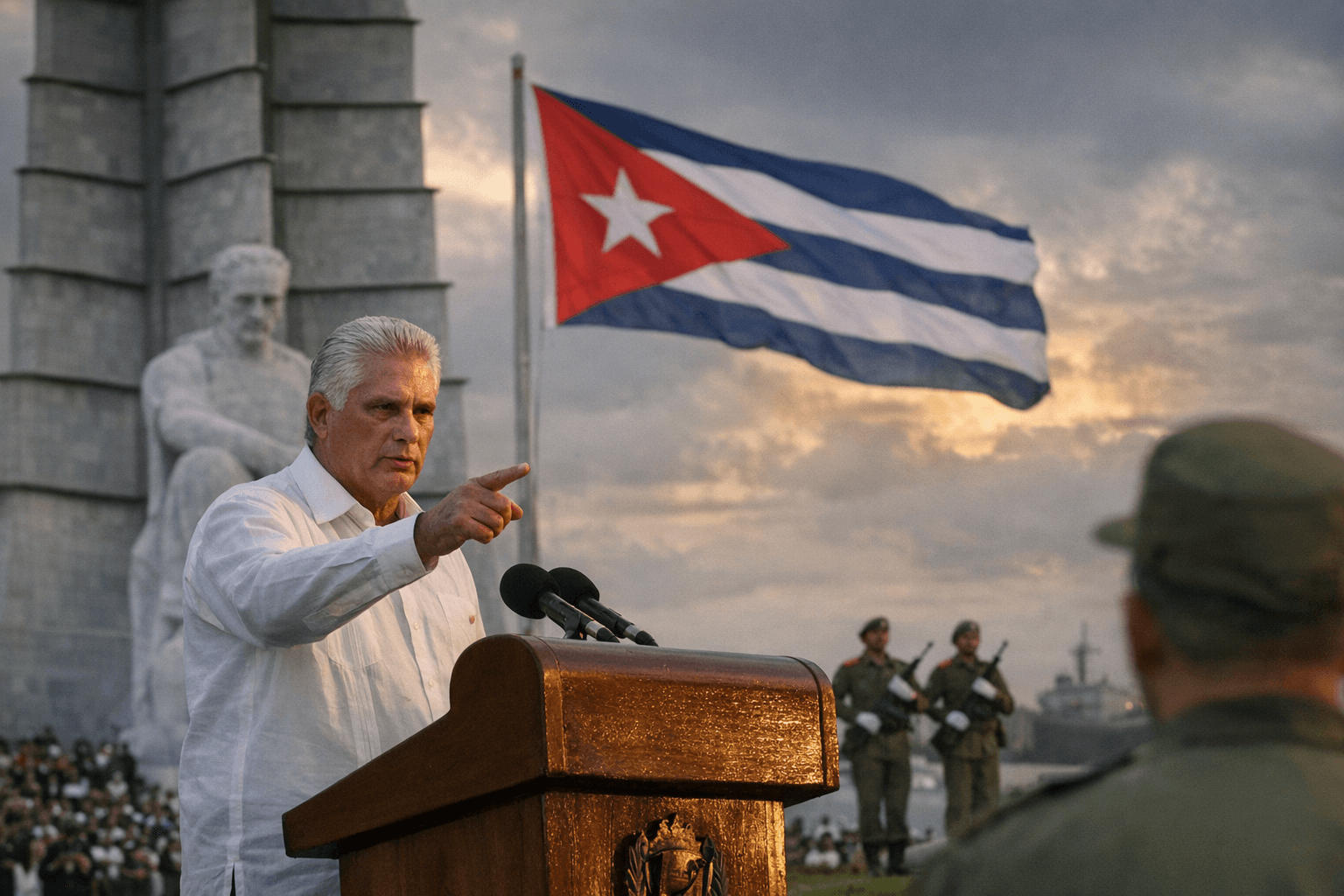
Miguel Díaz-Canel used his first interview with a U.S. broadcast network to send a layered message from Havana: Cuba wants dialogue and peace, but it will not accept being cornered. Speaking with Kristen Welker at the José Martí Memorial on April 9, 2026, he said there was no justification for a U.S. military attack and warned that any invasion would affect the security of Cuba, the United States, and the wider region.
The setting mattered almost as much as the words. NBC aired part of the interview the same day and released the fuller conversation on April 12, and Cuban state media emphasized that it was the first time a Cuban head of state had sat for an interview with a U.S. television network. That gave the appearance and the substance unusual weight, especially with Díaz-Canel invoking the island’s revolutionary memory and its long fight against outside pressure.
His language was carefully calibrated for three audiences at once. To Washington, he drew a line around sovereignty and said Cuba would defend itself if attacked. To Cubans at home, he cast the confrontation as another chapter in a struggle that has lasted 150 years, from colonial to neocolonial domination, and said the country had endured 67 years of pressure and more than six decades of what he called the longest-running blockade in history. To the diaspora, he framed Cuba not as a country eager for confrontation but as one that still sees itself as a nation under siege. He said, “We are a country of peace. We do not promote war, we do not like war...”
Welker pressed him on U.S. demands that have long defined the standoff: releasing political prisoners, holding multiparty elections, recognizing unions, and allowing a free press. Díaz-Canel rejected those as matters not under negotiation with the United States and did not commit to releasing political prisoners. NBC said the discussion specifically included imprisoned rapper Maykel Osorbo, who was jailed in 2021 after protests over conditions and shortages during the COVID pandemic.
The interview landed as Donald Trump sharpened pressure on Cuba again. On January 29, 2026, he signed Executive Order 14380, declaring a national emergency with respect to Cuba and authorizing possible tariffs on countries that directly or indirectly supply oil to the island. That backdrop, plus Reuters-linked reporting in April showing a 56% drop in international tourist arrivals in February and describing blackouts, fuel shortages, and empty tourist areas, made Díaz-Canel’s message read less like ceremony than warning. The echo of Fidel Castro’s 1959 NBC appearance on Meet the Press only reinforced the point: Havana wanted Washington, and everyone watching, to hear that Cuba is still speaking in the language of resistance.
This article was produced by Prism’s automated news system from verified source data, official records, and press releases, then run through automated quality and moderation checks before publishing. The system is built and supervised by the people who set the standards it runs under. Read our full AI policy.
Did this article answer your question?