Pentagon quietly plans Cuba scenarios as Trump weighs action
The Pentagon is quietly drawing up Cuba scenarios as Trump says Washington will do "something with Cuba" soon, raising fears of a bigger confrontation.
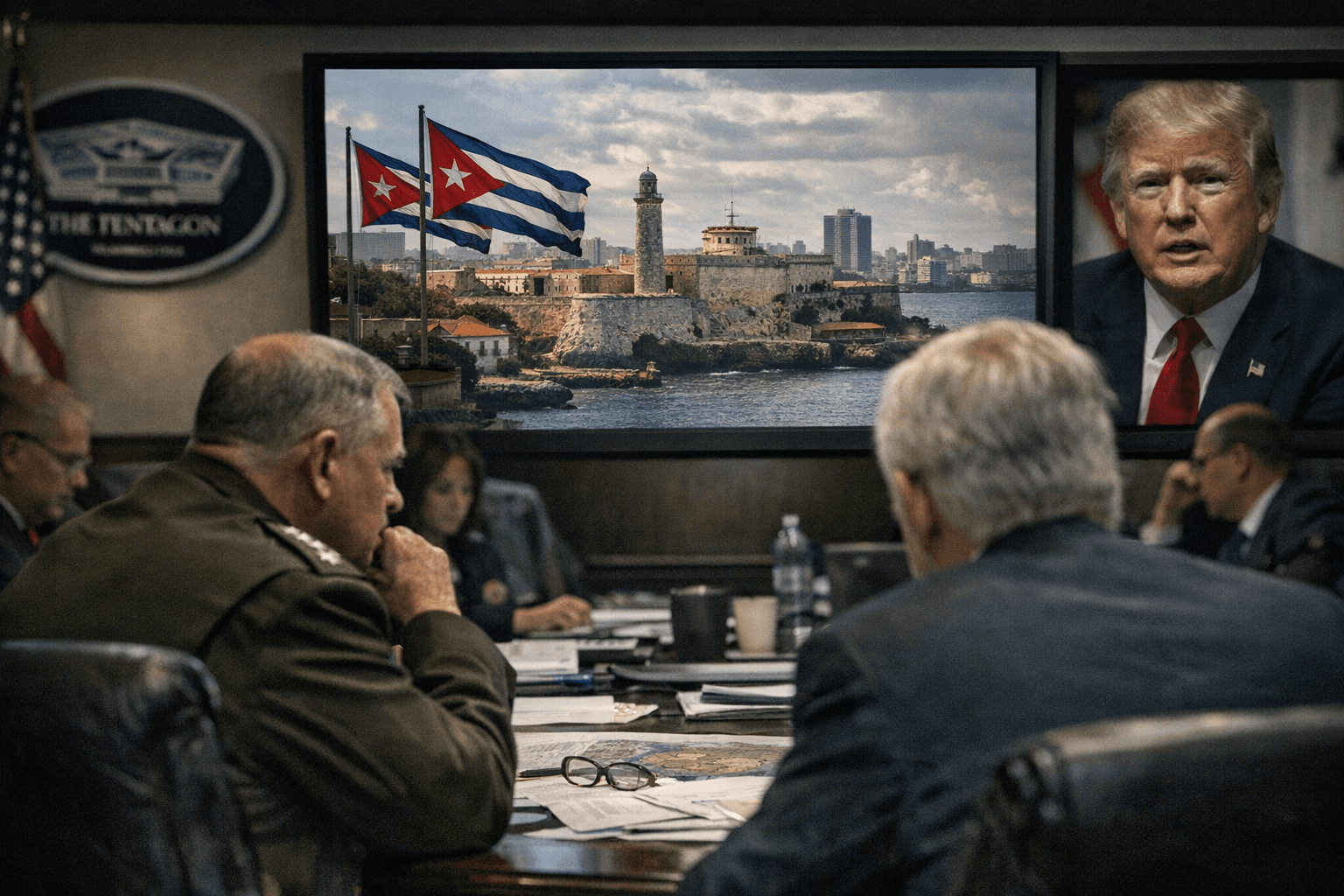
The Pentagon is quietly drawing up Cuba scenarios while Donald Trump talks up action, and that leaves one threshold question hanging over Havana: is this contingency paperwork, or the first real sign of a sharper U.S.-Cuba confrontation? Inside the Pentagon, planning usually means officials are mapping options, force needs, timelines and fallout so Washington can move fast if ordered. It does not mean troops are on the way. But when the subject is Cuba, even quiet preparation can rattle civilians, migrants and diplomats across the Caribbean.
Trump has already pushed the issue into public view. On March 15, he said the United States could soon reach a deal with Cuba or take other action. On March 17, he went further and said Washington would be doing "something with Cuba" soon. Cuba’s top diplomat has said the island is open to economic cooperation, but the signal from Washington has been one of mounting pressure, not calm diplomacy. That is why the Pentagon’s internal work matters: it suggests officials are thinking through more than one possible path, from coercive pressure to something far more disruptive.
Before anything resembling an operation becomes plausible, there would still have to be a presidential order and a chain of decisions on what kind of force, what kind of access and what kind of regional posture the United States would need. That means scenario building, intelligence work and logistics planning are all part of the picture long before any visible movement. Even then, the likely consequences would reach well beyond the island. A U.S. military step in Cuba would reverberate through migration routes, Caribbean security planning and the calculations of governments that have spent decades trying to avoid another Cuba crisis.
The timing is especially volatile because Cuba is already under severe pressure. A Catholic Church leader warned on April 12 that the island is near humanitarian collapse as sanctions and fuel shortages choke aid delivery. Blackouts, shortages and economic stress have already made daily life harder for Cuban families. In that setting, the mere prospect of Pentagon planning can deepen fear and uncertainty, even if no operation ever follows.
The historical backdrop is impossible to ignore. The United States has maintained a comprehensive economic embargo on Cuba since February 1962, after John F. Kennedy proclaimed it. The last major U.S.-backed effort to overthrow the Cuban government was the Bay of Pigs in April 1961, when roughly 1,500 Cuban exiles landed in a failed invasion. Six months later came the thirteen days of the Cuban Missile Crisis, when the world waited on the edge of nuclear war. Any new planning in Washington will be read through that history in Havana, Florida and across the hemisphere.
This article was produced by Prism’s automated news system from verified source data, official records, and press releases, then run through automated quality and moderation checks before publishing. The system is built and supervised by the people who set the standards it runs under. Read our full AI policy.
Did this article answer your question?