Díaz-Canel warns Cuba ready to fight if attacked by US
Díaz-Canel turned a socialist anniversary rally into a warning shot, saying Cuba would fight if attacked as shortages, blackouts and U.S. pressure deepen.
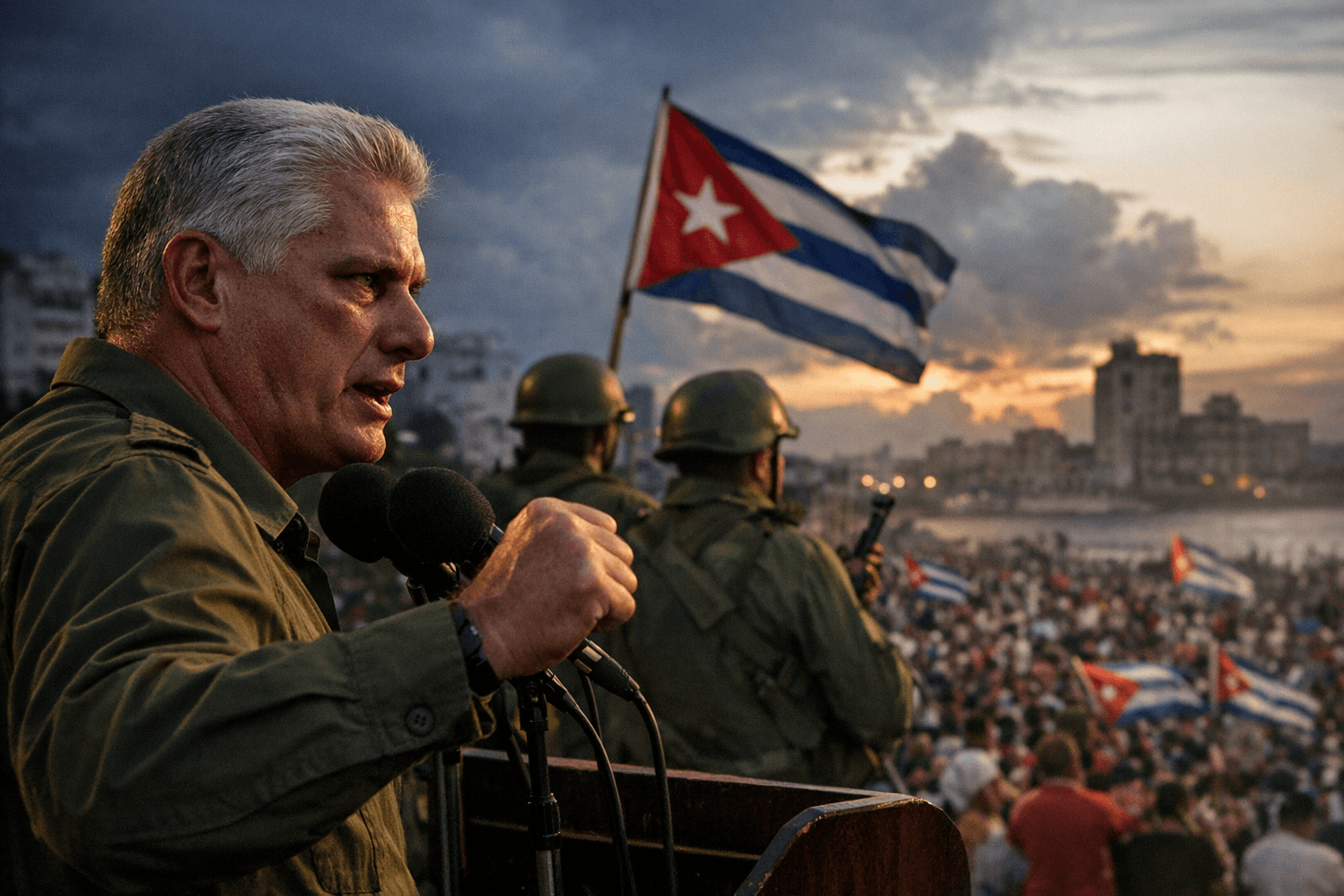
Miguel Díaz-Canel used a Havana rally of hundreds to turn a revolutionary anniversary into a message of defiance, warning that Cuba did not want military aggression from the United States but was ready to fight if one was imposed. The speech landed as the island was already straining under blackouts, fuel scarcity and worsening shortages of food and medicine, giving the moment the feel of both commemoration and mobilization.
The Cuban president anchored his remarks in April 16, 1961, the day Fidel Castro proclaimed the socialist character of the Cuban Revolution on the eve of the Bay of Pigs invasion. By invoking that history, Díaz-Canel cast the current standoff with Washington as another test of survival, not a routine diplomatic dispute. The symbolism was deliberate: the government wanted Cubans to hear resolve, not retreat, at a time when daily life has been marked by prolonged outages and deepening economic pressure.
The confrontation with Washington has sharpened this year. Donald Trump said in March that the United States might “stop by Cuba” after finishing the war in Iran, language that Havana reads as more than bluster. At the same time, the White House has said Cuba’s government constitutes an unusual and extraordinary threat to U.S. national security and foreign policy, while the State Department has kept pressure on Havana over repression and political prisoners. The department said in July 2025 that more than 700 Cubans remained imprisoned after the July 11, 2021 protests, underscoring how tightly human rights and sanctions remain tied to the policy fight.
That pressure is unfolding against a severe domestic crisis. United Nations News said on April 6 that Cuba faced a worsening humanitarian emergency fueled by a prolonged energy blockade and the damage left by Hurricane Melissa. ReliefWeb and ACAPS said on April 17 that since early January the island had seen a rapid deterioration in fuel availability, along with shortages of food and medicine. For a government already battling public frustration over blackouts and scarcity, Díaz-Canel’s warlike language served a second purpose: to rally a domestic audience that is being asked to endure more hardship while the leadership frames the crisis as a sovereignty fight.
The United States also keeps a formal embargo in place that dates to February 1962, and the current hard line from Trump and Secretary of State Marco Rubio has only reinforced Havana’s sense of siege. In that climate, the rally in Havana was not just a nostalgic nod to 1961. It was a signal that Cuba’s top leadership is preparing the country for a confrontation that could get worse before it gets better.
This article was produced by Prism’s automated news system from verified source data, official records, and press releases, then run through automated quality and moderation checks before publishing. The system is built and supervised by the people who set the standards it runs under. Read our full AI policy.
Did this article answer your question?