Ex-NSC Juan Gonzalez Pushes Diplomatic Engagement for Cuba Crisis
Cuba's grid is dark, the UN warns of 'collapse,' and the Biden NSC's top Latin America official says 63 years of sanctions strategy is morally wrong.
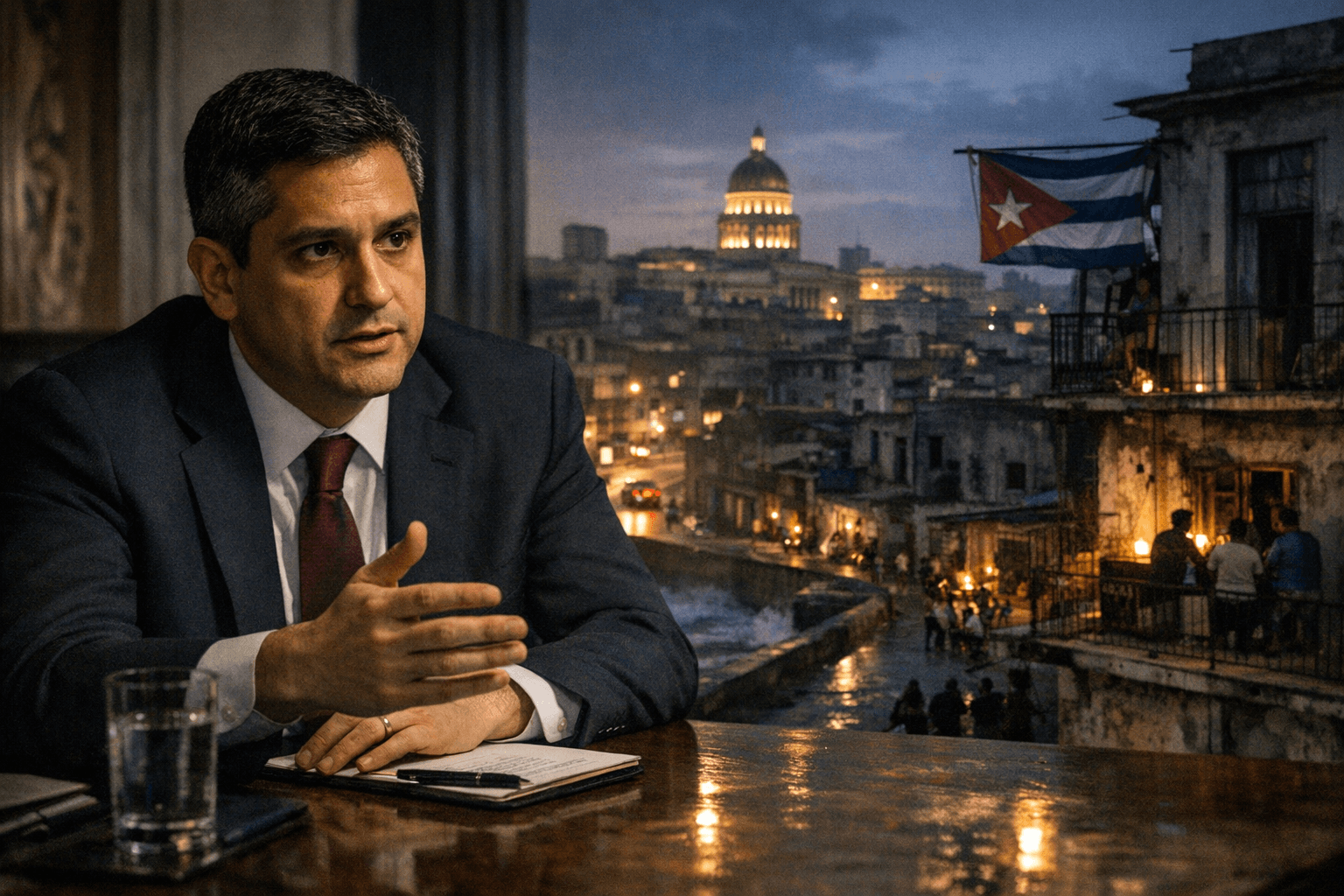
Cuba's national electrical grid went completely dark in March 2026, an island-wide disconnection affecting all 11 million residents as a U.S. oil blockade entered its second month. The United Nations warned of potential humanitarian "collapse." Into that vacuum stepped Juan Gonzalez, the Biden administration's Senior Director for Western Hemisphere Affairs on the National Security Council, to make the case that sixty-three years of coercive economic strategy has not worked and cannot work.
Appearing on The Bulwark's "How to Fix It" with host John Avlon, Gonzalez argued the current approach has crossed a moral threshold. "Trying to promote regime change through humanitarian suffering is not only ineffective, it is, I think, morally wrong," he said. "You have to have very ambitious diplomatic engagement. Engagement is a subversive act."
His argument carries weight precisely because of where he sat. From 2021 to 2025, Gonzalez was the most senior U.S. national security official working Latin America policy day-to-day, navigating everything from the July 2021 protests, the largest street demonstrations in Cuba since 1994, to the Trump State Sponsor of Terrorism re-designation that Biden ultimately reversed in January 2025. That reversal, which came as part of a deal to release political prisoners, is Gonzalez's most concrete exhibit: diplomatic engagement, within weeks, produced prisoner releases. The Trump administration re-imposed the SSOT designation days after Biden left office, and the prisoner release pipeline closed.
The SSOT label is not symbolic. It freezes Cuban access to international banking, blocks the private-sector entrepreneurs who represent the island's only organic economic reform, and makes it nearly impossible to route humanitarian aid through formal channels. In February 2026, the Trump administration issued a limited license allowing companies to resell Venezuelan oil to Cuba's private sector, a narrow carveout that acknowledged what Gonzalez's broader argument insists: targeted engagement reaches Cubans without flowing through regime accounts. That license covers the private sector only. The other 11 million are still in the dark.
Migration is the metric that arrives on Florida's doorstep. More than 300,000 Cubans reached U.S. soil in fiscal year 2022-2023, roughly 3% of the entire island's population in twelve months and the largest Cuban outflow since the 1980 Mariel boatlift. With surgeries now being postponed across the island and no sustained oil supply for months, the pressure to leave has only intensified. Gonzalez and the analysts who share his position, including researchers at the Cuba Study Group and the Brookings Institution, argue that sustained coercion accelerates emigration rather than destabilizing the government.
Secretary of State Marco Rubio holds the opposing view. The Cuban-American former Florida senator, now the leading Cuba hawk in the Trump Cabinet, contends that engagement legitimizes the Díaz-Canel government and betrays dissidents and political prisoners still inside Cuban jails. Gonzalez's response is not that the regime deserves legitimacy; it is that the alternative produces chaos without resolution. "There may be a regime change," he said, "but you're gonna still have people with guns and with money that are gonna be vying for control."
Obama's December 2014 diplomatic opening offered a working model: embassies were restored by July 2015, travel channels expanded, and remittance flows to Cuban families increased. The current trajectory runs directly counter to it. With U.S. lawmakers visiting Havana on April 4 to document conditions under the blockade, and the UN Resident Coordinator for Cuba describing humanitarian needs as "quite acute and persistent" even after a single Russian oil tanker arrived on March 30, the debate over which approach actually loosens Havana's grip has never been more consequential.
This article was produced by Prism’s automated news system from verified source data, official records, and press releases, then run through automated quality and moderation checks before publishing. The system is built and supervised by the people who set the standards it runs under. Read our full AI policy.
Did this article answer your question?