Fidel Castro's Grandson Calls for Capitalism, Deal With Trump
Sandro Castro, grandson of Fidel, told CNN "the majority of Cubans want to be capitalist, not communist" while powering his Havana apartment with a private battery generator as the island goes dark.

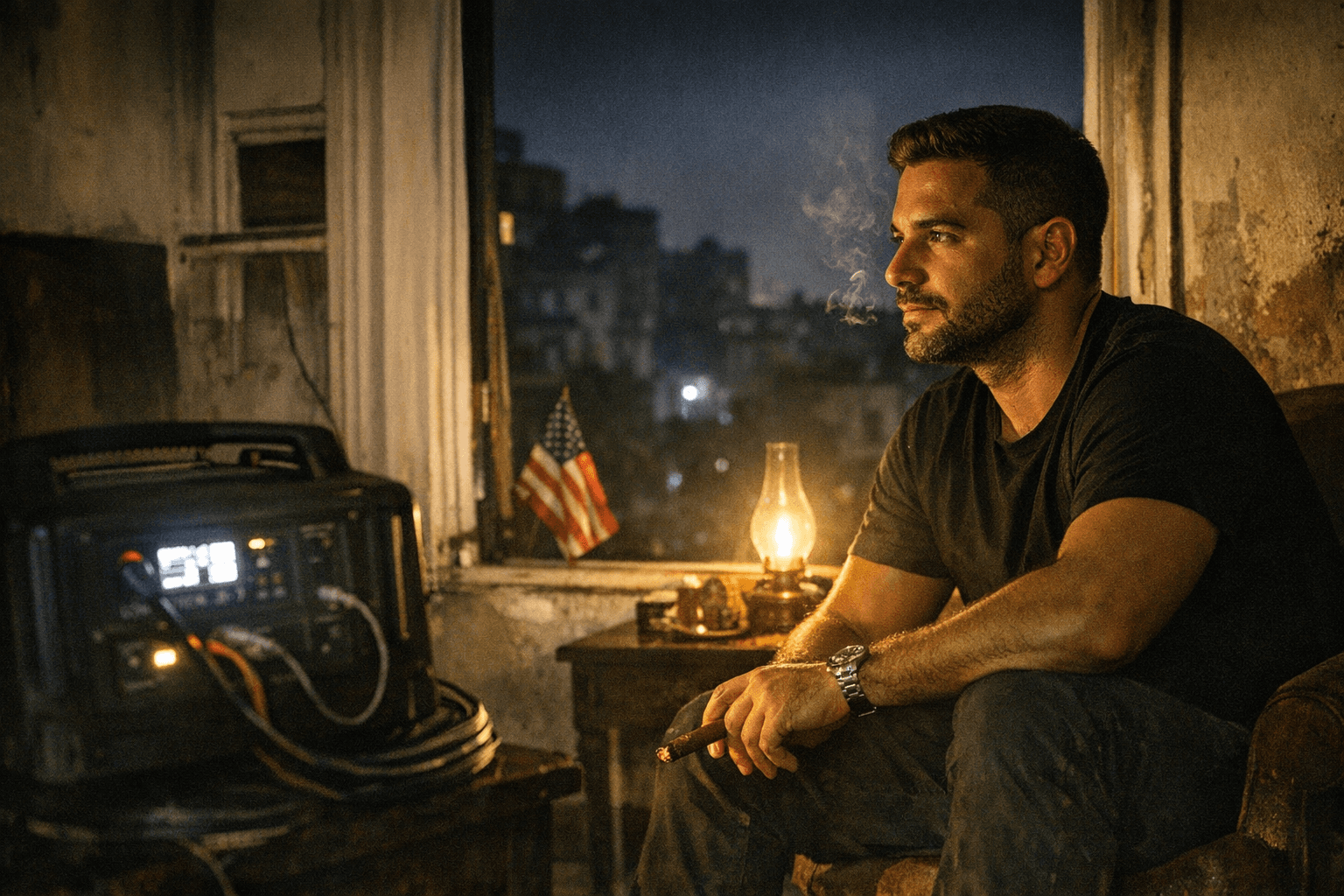
Sandro Castro's Havana apartment runs on an EcoFlow battery generator. Most of his neighbors do not have that option. While Cuba's decade-old power grid staggers through rolling blackouts triggered by a U.S. ban on Venezuelan oil imports, the 33-year-old grandson of Fidel Castro keeps the lights on and the Cristal beers chilled. The contrast is not lost on him. In a CNN interview conducted from Havana, he called for a deal between President Donald Trump and officials in the Cuban government, saying "I think the majority of Cubans want to be capitalist, not communist."
That sentence, coming from anyone named Castro, is not a normal sentence.
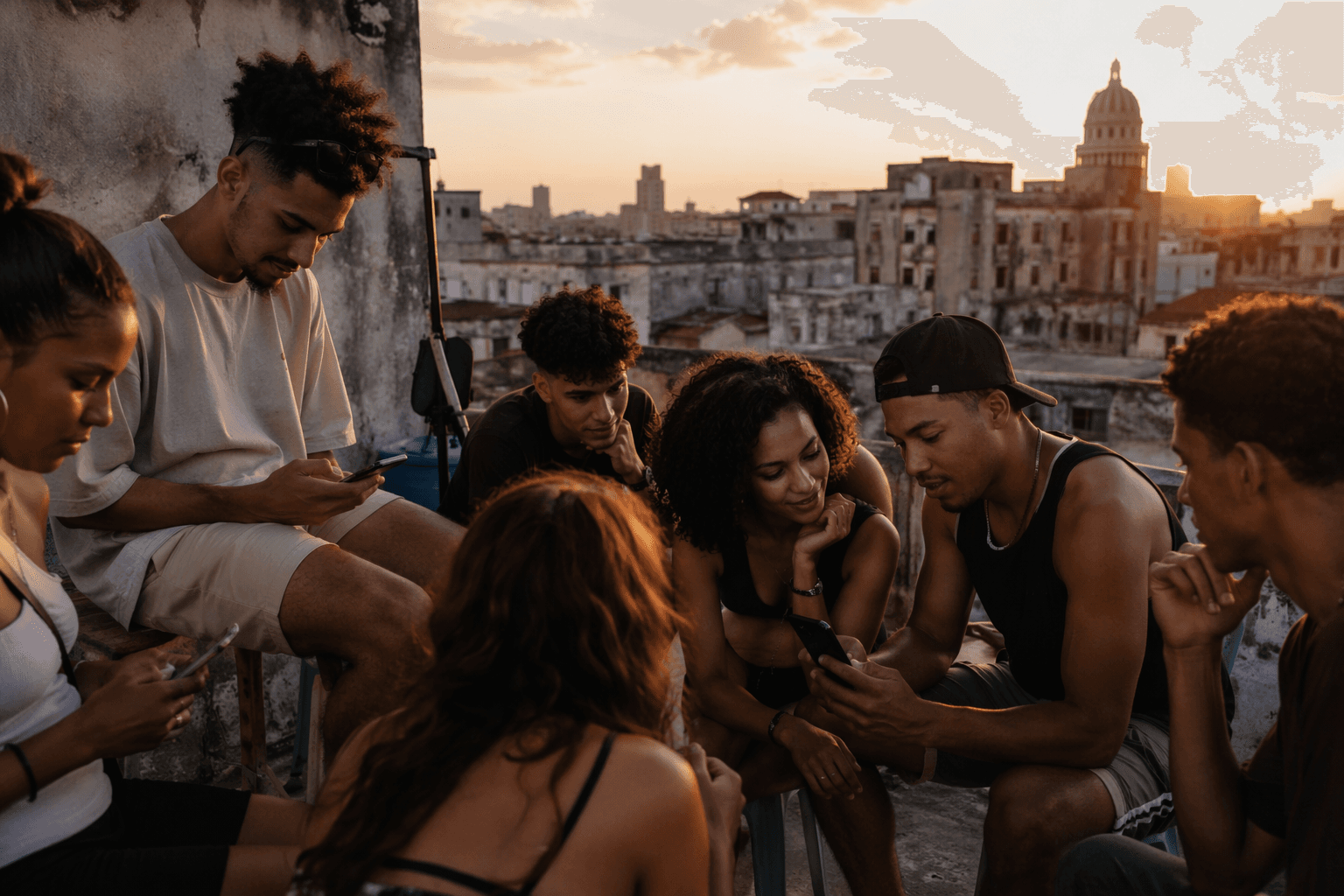
Cuba has been squeezed for months by an American ban on Venezuelan oil imports to the island, which has cascaded into an energy crisis making blackouts and food shortages routine, and leaving health care and transportation frequently paralyzed. The average Cuban salary sits below $20 per month. Against that backdrop, Sandro Castro acknowledged the wreckage plainly: "Life in Cuba is so hard." He then criticized President Miguel Díaz-Canel, who took over in 2018 with Raúl Castro's blessing, as "not doing a good job," and said he was frustrated with the financial bureaucracy the Castro dynasty itself had spent six decades constructing.
"There are many people in Cuba that think in a capitalistic way. There are many people here who want to do capitalism with sovereignty," he told CNN.
He did not map the mechanics. But the architecture of any deal between Havana and Washington is not mysterious: it would require the Trump administration to ease or lift the oil ban and broader sanctions; Cuba would almost certainly need to release political prisoners, and in March 2026, the Cuban government announced it had agreed to free 51, a number cited as part of early diplomatic contact between the two governments. Foreign investment reform, the dismantling of the state-control apparatus Castro described as bureaucratic rot, would be the longer structural negotiation. Díaz-Canel confirmed in a March address on Cuban television that talks with the United States were taking place. Trump, separately, had said publicly that the U.S. could achieve a "friendly takeover of Cuba."
Into that charged moment, Sandro Castro inserted himself with a CNN interview, 150,000 Instagram followers, and a nightclub on a main avenue of Havana that he says cost him $50,000 to open, a sum, as CNN noted, beyond the reach of virtually every Cuban on the island. He holds no official position in the government. He has no seat at any table where these negotiations are actually happening. Reports from the Miami Herald in February cited U.S. contact not with Sandro but with Raúl Guillermo Rodríguez Castro, another Castro grandson and also not a senior party figure. The family name is being workshopped by multiple heirs, none of them in power.
That is the rupture the statement represents, and also its limit. When asked whether the revolution led by his grandfather Fidel and his great-uncle Raúl had actually improved life on the island, Sandro Castro declined to say. "I was born after 1959, so I can't say," he told CNN. He praised both men in the same interview. The evasion is precise: close enough to the dynasty to command attention, unencumbered enough by its record to call for its economic reversal.
His public persona amplifies the contradiction. In a recent video satire, he presents an actor playing Trump with a "Trump" tower hotel rising over the Havana skyline, the kind of content that functions simultaneously as provocation, performance art, and pitch deck. During the CNN interview he wondered aloud how he might obtain a visa to visit "friends in Miami." He apologized for his English, adding: "It's like Maduro's," a reference to Venezuelan leader Nicolás Maduro, seized by the United States in January. The joke landed with a mischievous smile.
On the question of privilege, he pushed back with a phrase that has circulated widely since the interview: "My name is my name. I am proud of my name logically. But I don't see this help you are talking about. I am just one more citizen." He added: "The little I have is thanks to my effort, my sacrifice." The nightclub cost $50,000. The EcoFlow generator is running. The average Cuban makes less than $240 a year.
Fidel Castro nationalized industry across the island after the 1959 revolution, aligned Havana tightly with the Soviet Union, and held power for nearly five decades before transferring it to his brother Raúl. Several hundred thousand Cubans fled the island in the years immediately after; waves of migration to the United States followed across every subsequent decade. The family that produced that history now has a 33-year-old Instagram influencer in Havana calling it wrong, on camera, in rudimentary English, with a generator humming in the background.
Whether that makes Sandro Castro a genuine signal of shifting elite sentiment or a well-connected provocateur chasing relevance inside a collapsing economy, the talks between Havana and Washington are real, the prisoner releases have begun, and the pressure on both governments is accelerating. His voice may not be the one at the table. It is, however, the one getting aired.
This article was produced by Prism’s automated news system from verified source data, official records, and press releases, then run through automated quality and moderation checks before publishing. The system is built and supervised by the people who set the standards it runs under. Read our full AI policy.
Did this article answer your question?