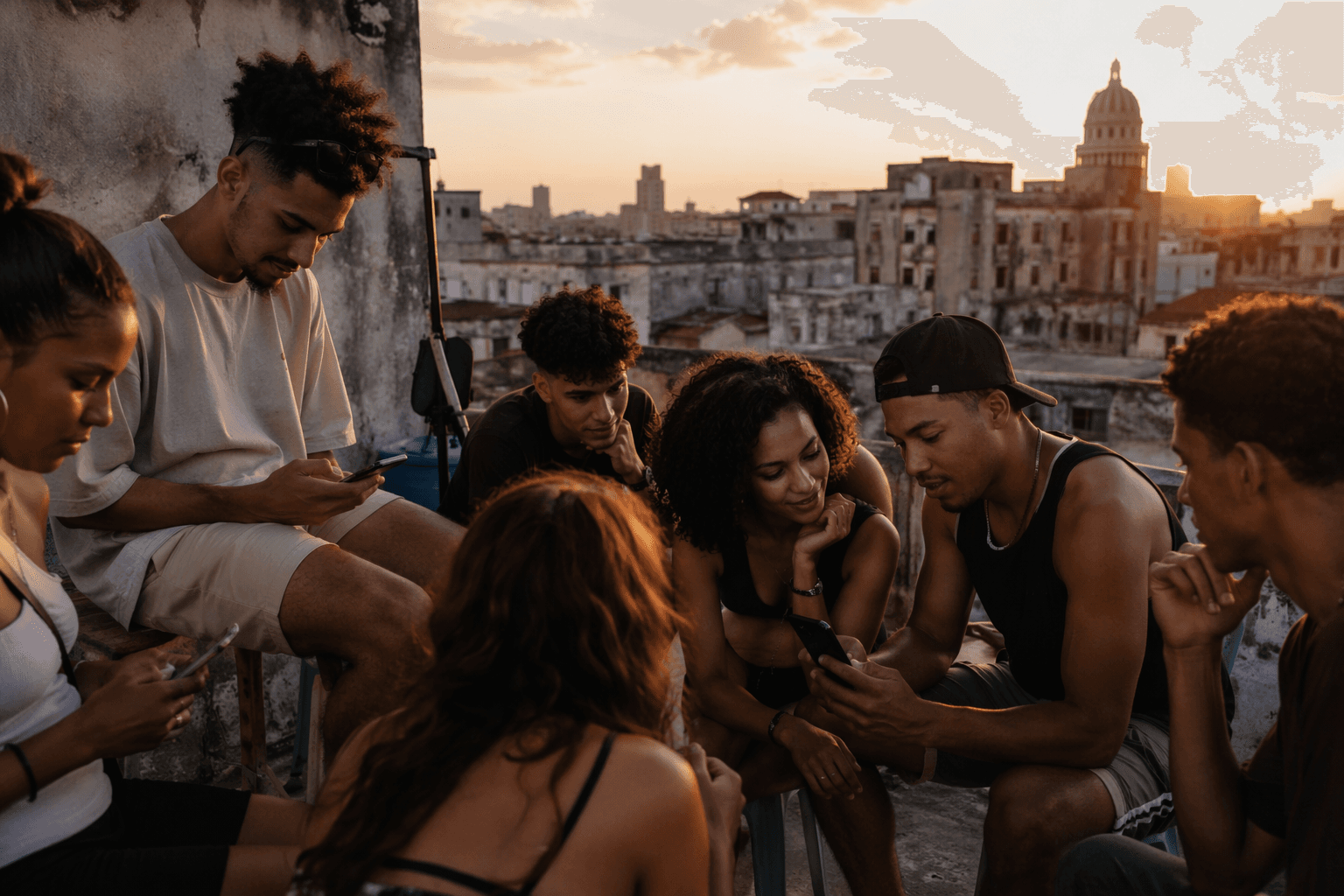
Foreign Affairs Warns Cuba Faces Blackouts, Protests, Arrests and Mass Emigration
"In the weeks ahead, the only thing Cubans can be sure of is their country’s deterioration," Foreign Affairs warns, predicting longer blackouts, more protests, more arrests, and accelerating emigration.

In the weeks ahead, the only thing Cubans can be sure of is their country’s deterioration: longer blackouts, more protests, more arrests, accelerating emigration," Foreign Affairs warns, placing a stark, short-term forecast at the center of its analysis of the island's crisis. The piece frames those risks as immediate, predicting daily-life disruptions through rolling power cuts, rising street action, and a surge in departures.
Foreign Affairs adds that "Cuba is feeling pressure from both outside and within," and it names the United States as a factor: "U.S. pressure will lead to Cuba's transformation. But any hope the Trump administration might have that such a transformation will be pain free is misplaced." The article treats external sanctions and diplomatic pressure alongside domestic strains as drivers likely to speed an unstable transition rather than a managed reform.
The magazine warns the revolution itself may be approaching a turning point: "The revolution seems close to its final chapter, yet the manner of its demise—and what will follow—is still unknown." It highlights elite interests, writing, "Even if broad segments of Cuban society demand a decisive break with socialism, the dominant bureaucratic, academic, military, and media elites would seek to preserve their influence." Those lines underscore a contested future in which existing institutions could blunt or redirect popular demands.
Foreign Affairs also notes the weakness of organized opposition: "And with most of the regime's political opponents abroad or in jail, there is now no obvious leader for Cubans to rally around." That leadership vacuum, the article argues, narrows immediate pathways for a coordinated political alternative and complicates both domestic mobilization and any negotiated settlement.
On regime outcomes, the analysis is unambiguous: "However the showdown unfolds, Cuba's traditional revolutionary model is not likely to endure. The regime's revolutionary character is unsustainable. Cuba will transition from a revolutionary state to a postrevolutionary one that lacks a clear new identity." The piece goes further to warn that many Cubans would see concessions to U.S. pressure as "an erosion of Cuban sovereignty, even a reversion to the island's pre-revolutionary status as a U.S. client state," and it concludes that "A rebellion by the military and parts of society cannot be ruled out."

The assessment casts doubt on democratic prospects, noting, "What is most unlikely, however, is any real democratic transition in Cuba. Although economic liberalization could generate growth and reduce poverty, it would also privilege stability over political pluralism." The article closes by stressing governance realities: "For the foreseeable future, whoever is in power in Havana will have to accommodate large segments of the old party-state bureaucracy and the armed forces, whose cooperation will be essential for short-term stability and governability."
THE WORST IS YET TO COME
For further reading the Foreign Affairs excerpt points readers to works titled exactly as listed: "Cuba on the Brink — Where Will the Island’s Crisis End?" by Michael J. Bustamante; "Blundering on the Brink — The Secret History and Unlearned Lessons of the Cuban Missile Crisis" by Sergey Radchenko and Vladislav Zubok; and "The Cuban Crackdown — How the Military Bolsters Authoritarian Rule" by Laura Tedesco and Rut Diamint [...].
This article was produced by Prism’s automated news system from verified source data, official records, and press releases, then run through automated quality and moderation checks before publishing. The system is built and supervised by the people who set the standards it runs under. Read our full AI policy.
Did this article answer your question?