Frozen US Visa Applications Block Legal Migration Amid Cuba's Economic Crisis
The State Department's January 21 immigrant visa freeze for 75 countries hit Cuba at its worst moment: one million people have already fled, and blackouts last up to 20 hours a day.
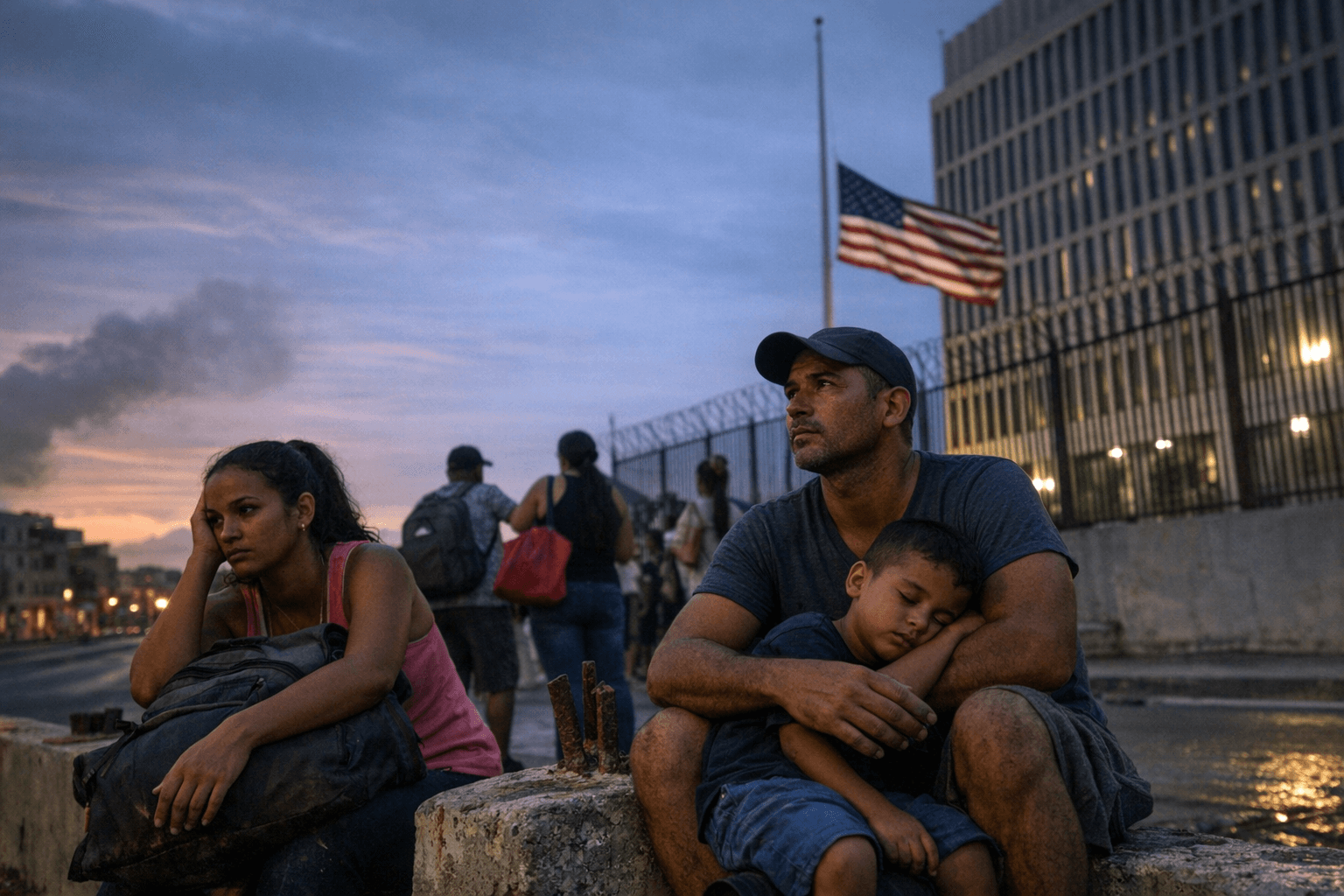
Former National Security Council official Alex Vindman has drawn attention to a compounding crisis: the legal immigration pathways that were specifically designed to bring Cubans to the United States in an orderly fashion are now effectively frozen, leaving hundreds of thousands of applicants in limbo as the island descends into its deepest humanitarian collapse in decades.
The blockage runs across multiple layers of U.S. policy. Effective January 21, 2026, Secretary of State Marco Rubio ordered consular posts to pause all immigrant visa issuances for nationals of 75 countries, Cuba among them, over what Washington described as "public charge" screening concerns. That directive landed on top of Presidential Proclamation 10998, which had already taken effect on January 1, halting the issuance of nonimmigrant visas, including standard visitor B-1/B-2, student, and exchange categories, to Cuban nationals. Together, the two measures shut down nearly every formal legal entry channel simultaneously.
The Cuban Family Reunification Parole Program, a mechanism established in 2007 that allowed family members with approved petitions to enter the United States before their immigrant visa number became available, was also terminated. A December 15, 2025 Federal Register notice ended the program for Cubans alongside nationals of Colombia, Ecuador, El Salvador, Guatemala, Haiti, and Honduras. For those already inside the United States under that parole, status expired on January 14, 2026, unless they had filed a Form I-485 adjustment of status application before December 15. The Federal Register estimated approximately 1,060 Cubans were in the country with valid parole under the legacy program at the time of termination.
The asylum track has narrowed to nearly nothing as well. USCIS announced on November 28, 2025 that it was suspending all asylum decisions, accepting applications and conducting interviews but issuing no grants or denials for any nationality. The United States Refugee Admission Program, meanwhile, was capped at 7,500 admissions for fiscal year 2026, down from 125,360 under the Biden administration in 2024, and is now largely reserved for white South Africans.
All of this is arriving at the worst possible moment on the island. Between 2021 and 2025, more than one million of Cuba's estimated 10 million people left, the largest exodus since the 20th century. Those who remain face blackouts lasting up to 20 hours a day in much of the country, five total nationwide grid collapses between October 2024 and September 2025, and a health ministry that acknowledged in July 2025 that only 30 percent of medicines on its essential list were available. Energy conditions have deteriorated further in 2026 as U.S. pressure on Venezuelan oil tankers bound for Cuba has left the island with a single 85,000-barrel Mexican oil shipment arriving as of January.
For Cuban-American families navigating the freeze, a federal lawsuit is moving through the courts. A team of immigration attorneys is preparing a legal challenge against USCIS to compel the agency to advance thousands of stalled I-485 applications. The Svitlana Doe v. Noem class-action, filed on behalf of humanitarian parole beneficiaries and their sponsors, produced a preliminary injunction on January 24, 2026 from a Massachusetts federal court, staying the portion of the December 15 notice that would have terminated parole grants that had not yet expired. DHS said it disagreed with the ruling but was complying pending further litigation.
Immigration attorneys have advised clients with pending family-based I-130 petitions that those filings remain valid and will continue to progress on paper, since neither the immigrant visa freeze nor the parole termination eliminates underlying family petitions. The practical problem is that without a visa to issue and without parole as a bridge, an approved petition offers no route to physical entry. For families in Cuba waiting on petition approval while rationing cooking fuel and relying on wood fires to heat water, the gap between a case number and an actual flight to Miami has never been wider.
This article was produced by Prism’s automated news system from verified source data, official records, and press releases, then run through automated quality and moderation checks before publishing. The system is built and supervised by the people who set the standards it runs under. Read our full AI policy.
Did this article answer your question?