Fuel Shortage Leaves Havana With Only 44 of 106 Garbage Trucks Operating
Only 44 of Havana’s 106 garbage trucks are running this month, leaving cardboard, plastic and rotting food piled on streets as residents report flies and foul odors.
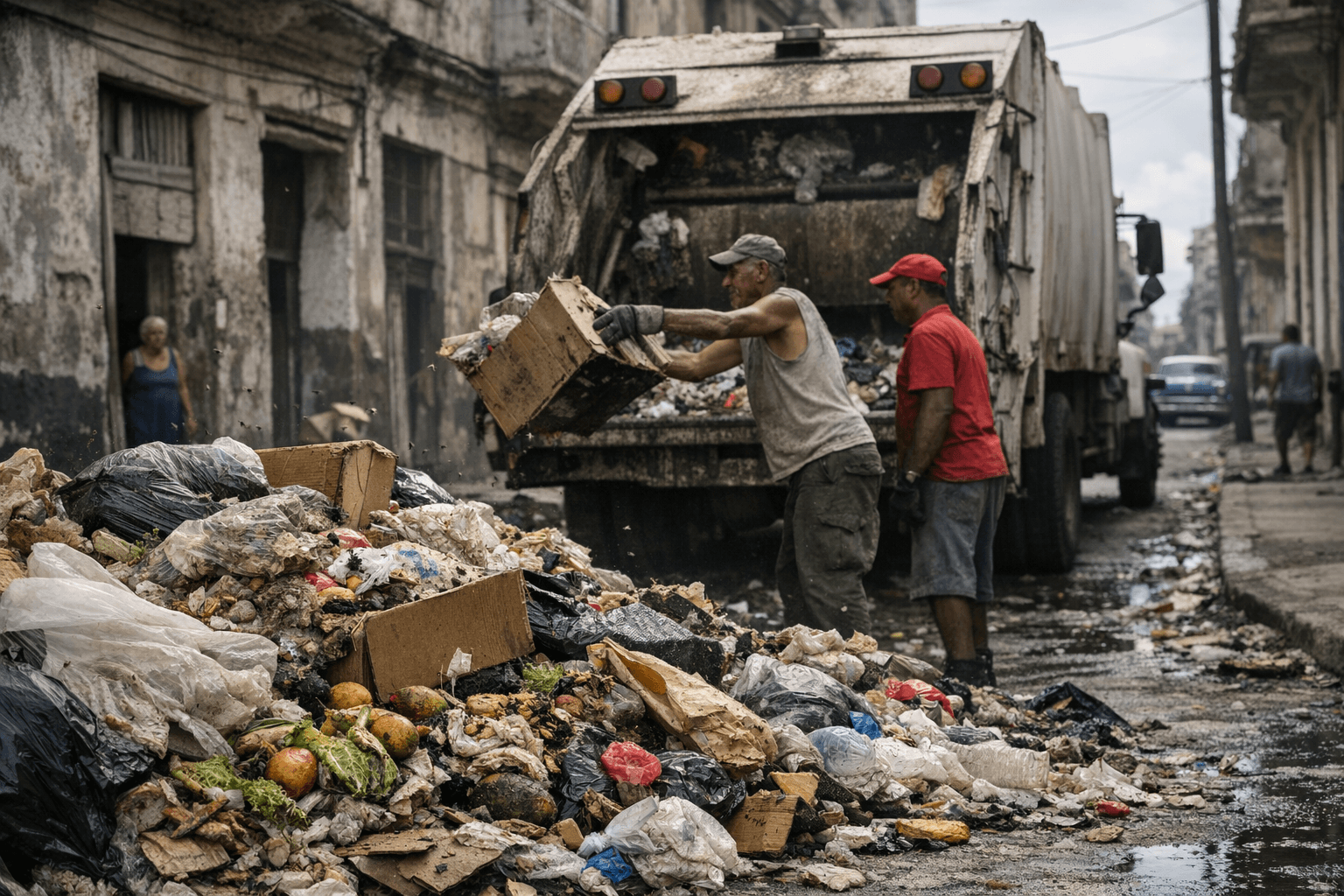
Only 44 of Havana’s 106 municipal garbage trucks are operating this month, a state-run Cubadebate tally cited across international coverage, leaving dozens of street corners choked with cardboard boxes, plastic bottles, rags and assorted household waste. The shortfall means an estimated 62 trucks are sidelined, and piles of refuse have grown large enough that motorists, pedestrians and cyclists must weave around them in the seafront capital.
Photographs and video from the city show the scale: a Reuters image by Norlys Perez captured a man sitting beside mounds of trash in downtown Havana, while DW Español and other footage document hordes of flies and “strong odours” hovering over rotting food and refuse. Residents have been seen sorting through waste for scrap and reusable items, undercutting official collection routines and adding a visible human toll to the sanitation breakdown.
“It’s all over the city,” local resident Jose Ramon Cruz told reporters, adding, “It’s been more than 10 days since a garbage truck came.” Cruz’s remarks underscore growing frustration in neighborhoods where collection has become intermittent amid the fuel squeeze.
Public-health warnings are spreading online as well as on the street. Social-media posts from Havana and other towns on the island have flagged mounting health risks, and DW’s Mahima Kapoor, citing AFP, AP and Reuters reporting, warned that “new kinds of diseases could spread in Cuba as garbage trucks aren't able to operate at full capacity due to a lack of fuel supply.” With Cuba home to around 11 million people, officials and community leaders are anxious about the implications if collection does not resume at closer-to-normal levels.
The sanitation crisis is tied to a sharp drop in fuel supplies. Reuters reported that the country’s oil supply “has fallen off dramatically in two months,” noting that Venezuela, once Cuba’s top supplier, “effectively stopped sending shipments in mid-December.” Mexico also halted shipments after Washington warned it would threaten suppliers with higher trade tariffs, a move cited in coverage as exacerbating the squeeze. A Russian newspaper has been reported to say Moscow is preparing crude and fuel cargoes for Cuba, but no delivery dates were provided.
Cuban authorities have put in rationing measures “to protect essential services” as shortages of food, fuel and medicine deepen, and the government suspended jet fuel supplies in early February. That suspension prompted repatriation flights by Canadian carriers, Russian carriers and LATAM before those airlines suspended services, creating a knock-on effect for transport as well as sanitation.
Voices on the street and in video coverage have proposed quick fixes for the visible problem. A commentator in a WION segment suggested, “I suggest that young people who don't work or prisoners be put to work collecting trash,” a suggestion presented in the clip as a stopgap. The reports cited provide no municipal waste-management official’s statement on altered collection schedules or emergency fuel allocations, and Cubadebate remains the primary source for the 44/106 figure circulating in international accounts.
As rubbish piles persist across Havana’s coastal avenues and downtown streets, local advocacy groups and residents say they need immediate clarity from municipal authorities on collection plans, fuel deliveries and public-health safeguards while international reports note potential, but undated, arrivals of Russian fuel shipments.
This article was produced by Prism’s automated news system from verified source data, official records, and press releases, then run through automated quality and moderation checks before publishing. The system is built and supervised by the people who set the standards it runs under. Read our full AI policy.
Did this article answer your question?