Havana cultural institutions mark 60 years since Barnet's Biografía de un cimarrón
Cuba marked the 60th anniversary of Miguel Barnet’s Biografía de un cimarrón, first published in 1966, as Havana cultural institutions planned commemorative activities in February 2026.
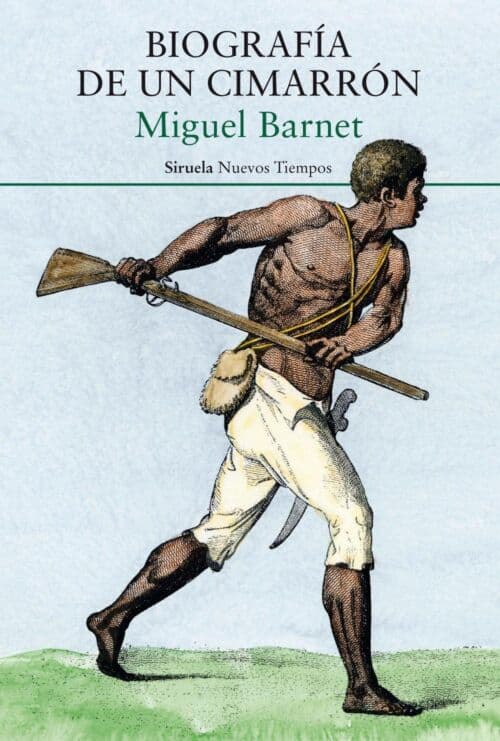
Cuba marked the 60th anniversary of Miguel Barnet’s Biografía de un cimarrón, the 1966 book widely regarded as the first Cuban testimonial novel, and cultural institutions in Havana planned commemorative activities in February 2026. Notices announcing the anniversary made clear the milestone but did not publish full program details, leaving exact venues and schedules for the month unspecified.
The book’s first edition was published in 1966 by the Institute of Ethnology and Folklore of Cuba, and Barnet later labeled the form the "testimonial novel" (Barnet, 1970). The work’s hybrid character - a blend of literature and ethnography - established Barnet as a pioneer of this narrative approach, and academic citations have followed through the decades (Echevarría 2011; Sklodowska 2002; Yudice 1991).
Barnet’s long career is a central part of the anniversary story. Born in Havana on January 28, 1940, he is president of the Fernando Ortiz Foundation and the National Union of Writers and Artists of Cuba (UNEAC) and is an Academician of the Cuban Academy of Language. His early poetry collections include La piedrafina y el pavorreal (1963) and Isla de güijes (1964); later works named in accounts of his career include La sagrada familia (1967), Orikis y otros poemas (1980), Carta de noche (1982), Poemas chinos (1993) and the anthology Con pies de gato (1993). He has published Autográfos cubanos and La fuente viva, and the short story Fátima o el Parque de la Fraternidad won the Juan Rulfo Short Story Prize in 2006.
State and scholarly recognition of Barnet’s output is substantial and specific. He received the National Prize for Literature in 1994 and the Distinction for National Culture in Cuba, and international honors include the García Lorca Prize of Andalucia, the National Order of Merit of the Republique Francaise (2003), the Grand Cross 1st Class of the Order of Merit of the Federal Republic of Germany (2004), and the Order of Merit of the Italian Republic (2011).

Academic debate remains an active part of the book’s legacy. Scholars have argued that "for its hybrid character, because it amalgamates literature and ethnography (novel and testimony), Biography of a Runaway Slave has been widely studied by literary critics and historians." Other commentators pose the pointed question: "who speaks in the testimonial novel, the witness or the editor? Is it possible to say that the voice we hear is de facto that of the survivor?" Historian Michael Zeuske’s 1997 re-reading sharpens that debate by arguing that Barnet omitted later episodes in his witness Esteban Montejo’s life; "Through the careful reading of historical documents, Zeuske discovered that in 1904 Montejo had been involved in a patron-client relationship with Eduardo Guzmán, a notorious yet dubious political figure."
As Havana stages events to mark six decades since the 1966 publication, Biografía de un cimarrón remains both celebrated and contested: a touchstone of Cuban letters that continues to draw institutional programs in the capital while prompting scholars to revisit questions of voice, editorial mediation and the historical record.
Know something we missed? Have a correction or additional information?
Submit a Tip