Havana’s Ciclobús becomes vital as fuel shortages cripple transport
At Havana Bay Tunnel, the Ciclobús carried bikes and scooters for 2 to 5 pesos, a 15-minute lifeline in a city strained by fuel rationing.
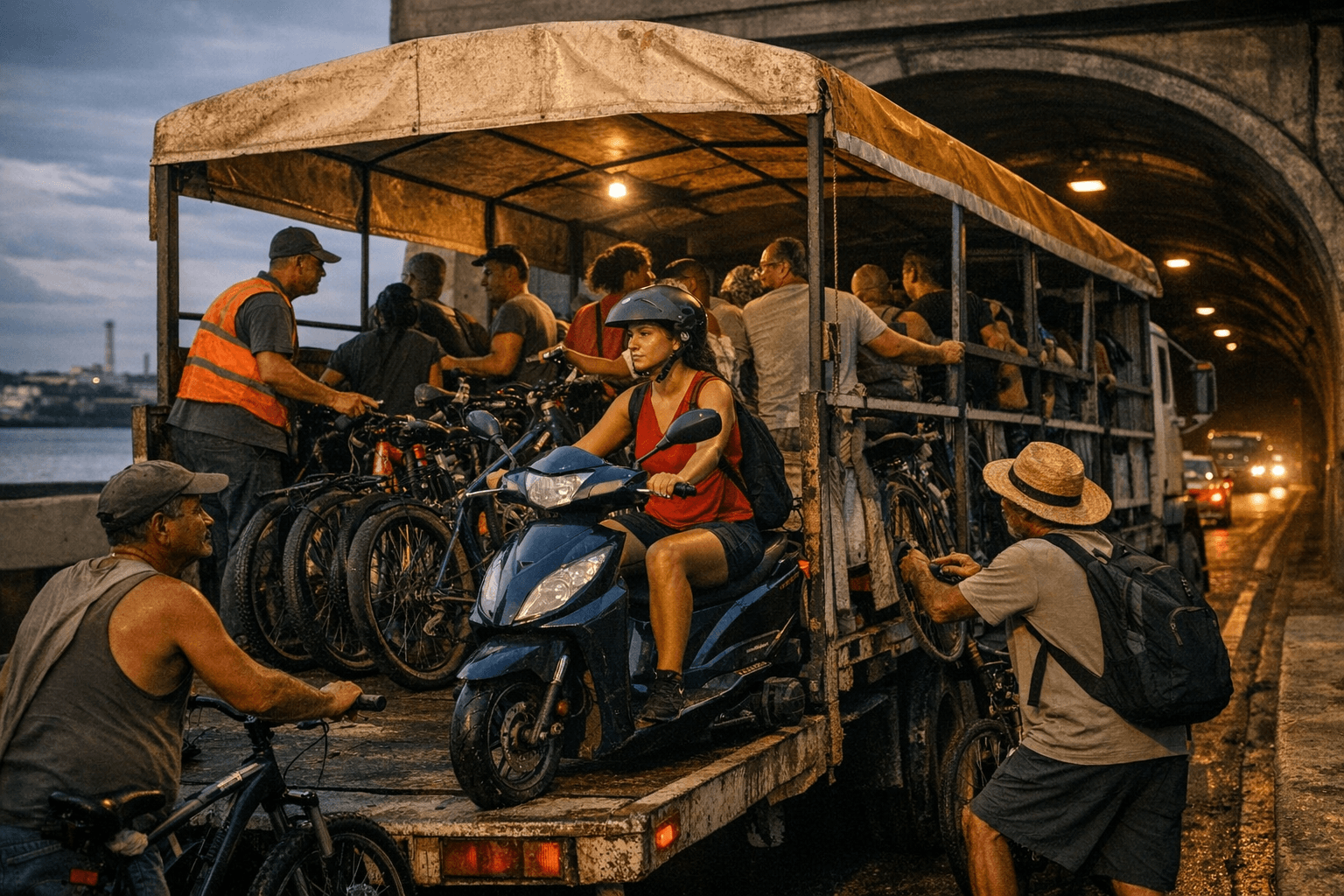
Cyclists, scooter riders and electric-motorcycle users lined up at the Havana Bay Tunnel to board one of the most practical rides in the city: the Ciclobús, a specially fitted bus that carried people and their vehicles under the bay. The short route covered 3 kilometers in about 15 minutes, yet it moved more than 2,000 people a day, turning an ordinary bus into a daily workaround for a transport system battered by fuel shortages and cutbacks.
The bus itself was not new. The Ciclobús has operated since the 1990s, when Cuba was enduring the Special Period after the Soviet collapse, but it has never mattered as much as it does now. Bicycles, motorcycles and scooters are not allowed in the Havana Bay Tunnel, so riders used the bus to cross with their vehicles instead of making the much longer 16-kilometer land detour through industrial port areas. That tunnel, built between 1955 and 1958 and officially opened on May 31, 1958, remained one of the capital’s most important links between Old Havana and the east side of the city, including Habana del Este.
The economics told the story of the crisis as sharply as the traffic did. The fare on the Ciclobús ranged from 2 to 5 Cuban pesos depending on the vehicle, while a shared taxi across the same area cost about 1,000 pesos. Against an average monthly wage of around 7,000 pesos, the contrast was stark. Ingrid Quintana said she used the route as her husband’s companion because public transportation was scarce and private taxis were too expensive for most families.
Havana’s streets reflected that strain. Cars had become rare, while bicycles and small electric motorcycles filled the gaps left by gasoline rationing and reduced transit service. The shortage reached beyond mobility. On April 6, 2026, United Nations officials said Cuba had gone more than three months without sufficient fuel, with the emergency rippling through health care, water and sanitation, food systems, education, telecommunications and transportation. The United Nations revised its response plan to support about two million people in 63 municipalities across eight provinces.
The crisis also reached hospitals. On March 26, 2026, the World Health Organization said Cuban hospitals were struggling to maintain emergency and intensive care services, with thousands of surgeries postponed. The United Nations said Hurricane Melissa, which struck in late October 2025 and affected more than 2.2 million people, had deepened the pressure on already fragile services. In that setting, the Ciclobús became more than a curiosity on Havana Bay. It became a symbol of how the city kept moving, one improvised crossing at a time.
This article was produced by Prism’s automated news system from verified source data, official records, and press releases, then run through automated quality and moderation checks before publishing. The system is built and supervised by the people who set the standards it runs under. Read our full AI policy.
Did this article answer your question?