IACHR Orders Cuba to Protect Detained Activist Facing Health Crisis
Roilán Álvarez Rensoler was revived with a defibrillator after 50 days on hunger strike; the IACHR ordered Cuba to protect his life on March 26.
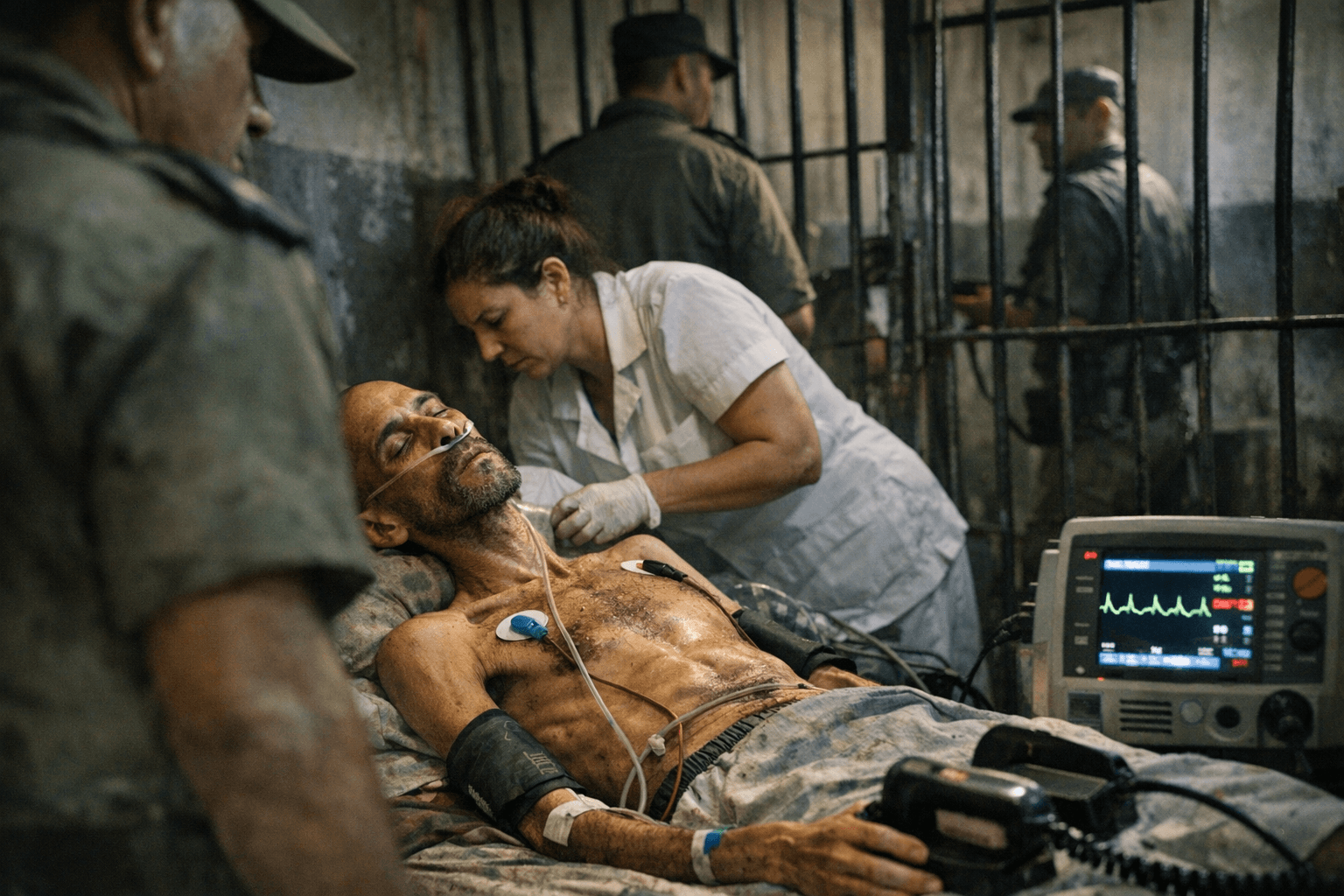
The defibrillator came first. After roughly 50 days on a hunger strike, 40-year-old Cuban activist Roilán Álvarez Rensoler suffered a cardiac arrest in mid-March and had to be resuscitated before his family confirmed he had suspended the fast. Six days later, on March 26, the Inter-American Commission on Human Rights issued Resolution No. 19/2026, granting Precautionary Measure 393-26 and formally ordering the Cuban state to protect his life.
Álvarez Rensoler was detained on January 31 in the eastern province of Holguín on charges of "propaganda against the constitutional order," the Cuban government's standing charge for dissent. He had been arrested for putting up anti-government posters and defacing a billboard featuring Fidel Castro, according to rights organizations monitoring the case. A member of UNPACU, the non-violent pro-democracy organization, he began a hunger strike almost immediately to protest what he and his supporters describe as an arbitrary detention.
By March 4, after more than 30 days without food, he was hospitalized in Holguín under state surveillance. His sister Arianna Álvarez repeatedly warned that his health was deteriorating rapidly and that authorities were providing minimal information to the family. Around March 19, after approximately 48 to 50 days on strike, he suffered cardiac arrest and required resuscitation by defibrillator. On March 20, the family confirmed he had ended the hunger strike and begun taking liquids.
The IACHR did not wait for Havana to act voluntarily. The Commission, operating under Article 25 of its Rules of Procedure, adopted Resolution No. 19/2026 six days after the cardiac episode, concluding that Álvarez Rensoler's situation meets the threshold of a "grave and urgent" threat to his rights to life, personal integrity, and health. The petition was filed by Centro de Denuncias Defensa CD, and the IACHR noted at adoption that Cuba had not supplied timely information to the Commission, a detail that underscores the opacity the family and advocacy groups had been fighting against for weeks.
The resolution carries four specific obligations for Havana: provide timely specialized medical attention, permit an independent medical evaluation with results shared with family and legal representatives, ensure detention conditions comply with applicable international standards, and report back to the Commission on steps taken. On paper, precautionary measures under the inter-American system are legally binding on member states. In practice, Cuba's compliance record is what observers are already watching.
Cuba has been the subject of IACHR precautionary measures in multiple comparable cases, and the pattern is consistent: the Commission orders action, and the Cuban government either contests the Commission's jurisdiction, ignores the request, or responds on its own terms and timeline. The IACHR issued similar measures for journalist Héctor Luis Valdés Cocho in 2021, for Eduardo Cardet Concepción in 2018, and in January 2026 for Duannis Dabel León Taboada and Yenisey Taboada Ortiz. In none of those cases did international pressure produce rapid, independently verified improvements in detention conditions. What the measures do accomplish is build a formal, documented record that advocacy organizations, foreign governments, and the Commission itself can cite when escalating pressure. That documented record is now Álvarez Rensoler's primary line of international protection.
The March 26 resolution also landed inside a broader IACHR signal: on March 25 and 26, the Commission publicly flagged a growing humanitarian and human rights emergency across Cuba, situating the Álvarez Rensoler case within a pattern of detentions, protests, and institutional deterioration that international bodies have been tracking with mounting alarm. Individual precautionary measures carry more diplomatic weight when they arrive as part of a coordinated international response rather than as isolated interventions, and the timing here was deliberate.
For the coming weeks, the critical markers are three: whether Cuba files any reply to the Commission, whether Álvarez Rensoler's family or legal representatives can confirm independent medical access actually occurred, and whether the IACHR triggers formal follow-up monitoring proceedings. If Cuba ignores the resolution entirely, the Commission can refer the situation to the OAS General Assembly and include detailed findings in its annual country report, steps that carry reputational costs even for a government with decades of practice deflecting international criticism.
The Álvarez Rensoler case had already drawn urgent appeals to U.S. officials from Cuban opposition figures before the IACHR acted. At 40 years old, still in detention in Holguín after a cardiac arrest that required defibrillation, he now sits at the center of a formal inter-American accountability process. Whether that process reaches inside a Cuban prison cell is the question that has defined, and so far largely eluded, every comparable case the IACHR has taken on.
This article was produced by Prism’s automated news system from verified source data, official records, and press releases, then run through automated quality and moderation checks before publishing. The system is built and supervised by the people who set the standards it runs under. Read our full AI policy.
Did this article answer your question?