Iran War Shifts White House Focus, Putting Cuba Policy on Hold
A sanctioned Russian tanker docked at Matanzas unopposed, Russia is loading a second, and Washington's promised next wave of Cuba pressure has quietly stalled.
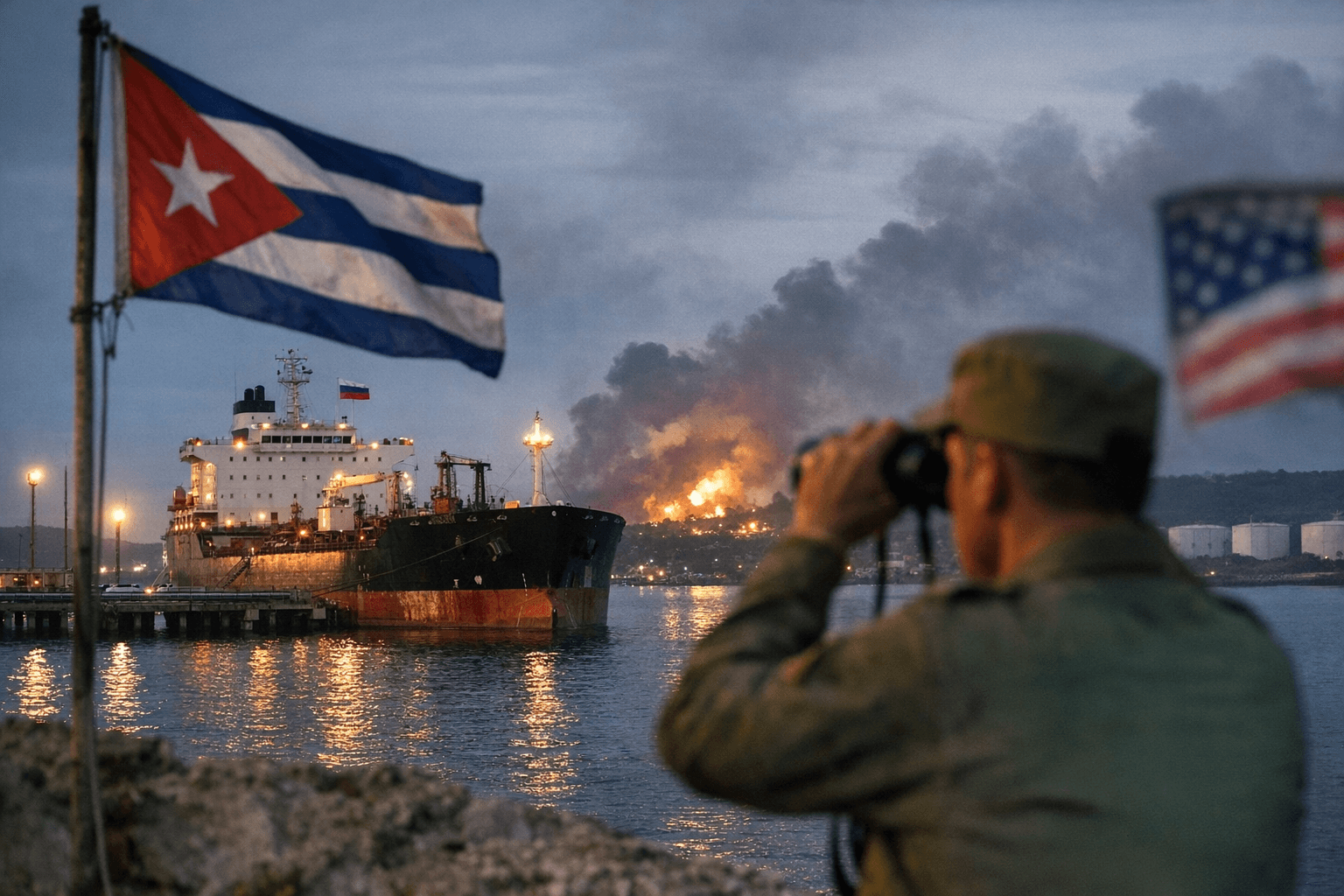
When the Anatoly Kolodkin, a sanctioned Russian-flagged Aframax tanker carrying roughly 730,000 barrels of crude, entered Matanzas Bay at sunrise on March 30, it completed a delivery the Trump administration's months-long oil blockade was explicitly designed to prevent. The White House let it through anyway, citing humanitarian necessity, then insisted nothing had changed. That contradiction captures the defining tension of U.S.-Cuba policy this spring: an ambitious hardline agenda that has quietly stalled while Tehran consumes every available hour of White House attention.
The administration moved fast after January. Following the U.S. capture of Venezuelan President Nicolás Maduro, which severed one of Havana's primary oil supply lines, the White House declared a national emergency over Cuba on January 30 and began physically blocking tankers from Pemex and other state-owned carriers in February. Senior officials described the goal clearly: force political change in Cuba by the end of 2026.
That timeline is slipping. The war in Iran, which shares a strategic partnership with Cuba, has absorbed the Pentagon, State Department, and Oval Office in ways that leave little bandwidth for executing the next escalatory wave. Travel enforcement rules, tighter remittance restrictions, and formal migration talks were all described as imminent next steps. None have moved.
The Anatoly Kolodkin passage illustrated what this limbo looks like in practice. After the White House said the tanker's arrival did not represent a "formal change in sanction policy" and that future decisions would be handled "on a case-by-case basis," Russian Energy Minister Sergei Tsivilev announced on April 2 that a second tanker was already being loaded for Cuba. Washington offered no public response.
Jeffrey DeLaurentis, who served as the senior U.S. diplomat in Havana, argued that permitting limited fuel deliveries reflects a pragmatic calculation: a sudden collapse in Cuba could trigger a migration surge that would compound political pressure at home while the administration is already stretched across a Middle East war. That logic appears to be holding, for now, but it has left a string of consequential decisions suspended in mid-air.
The effects are most visible in the remittance pipeline. Orbit S.A., the state-linked entity that had partnered with Western Union to process transfers to Cuba, was added to the U.S. restricted list effective March 10. Cuban-American families who relied on that channel have been navigating a legally ambiguous landscape since, with no formal guidance from Washington about what replaces it or when the enforcement picture clarifies. The U.S. has also suspended working-level migration discussions with Havana, a striking freeze given that U.S. immigration authorities encountered roughly 600,000 Cubans at the southern border between 2022 and 2024.
On April 3, Cuba announced it would release 2,010 prisoners in what it called a humanitarian gesture. Whether that represents quiet back-channel progress or a unilateral bid for international sympathy, it landed in a week when Washington had little capacity to respond either way.
Russia's second tanker will arrive before the administration resolves any of the pending decisions. The structural electricity crisis, the migration pressure at the southern border, and the unresolved enforcement questions around travel and remittances will all still be waiting when Iran stops dominating the West Wing agenda. The pause is not a policy reversal. But for anyone trying to plan around U.S.-Cuba relations right now, it has become nearly impossible to tell the difference.
This article was produced by Prism’s automated news system from verified source data, official records, and press releases, then run through automated quality and moderation checks before publishing. The system is built and supervised by the people who set the standards it runs under. Read our full AI policy.
Did this article answer your question?