Street vendors in Havana and Varadero report more bargaining, smaller purchases
Vendors in Havana and Varadero report tourists are bargaining more, making smaller purchases and prioritizing essentials, changing daily takings for street sellers and small guesthouses.
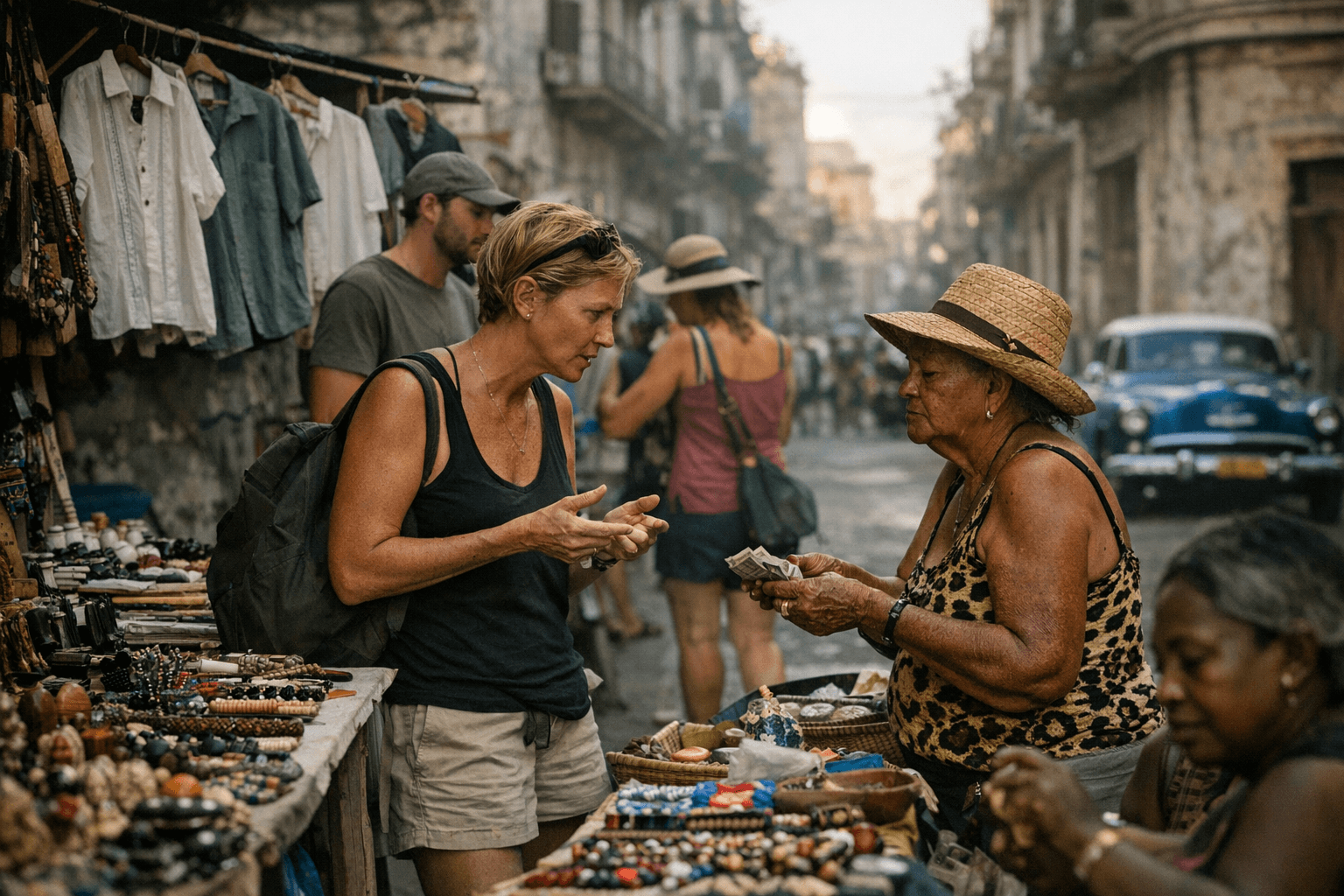
Street vendors, artisan markets and small hospitality businesses in Havana and Varadero are reporting a visible shift in tourist spending: more bargaining, smaller purchases, and customers prioritizing essential items, according to an ancillary paragraph in partner coverage focused on Havana and Varadero. That local observation describes sellers adjusting prices and product mixes without citing a sample size or precise timeframe.
The pattern in Havana and Varadero sits against broader souvenir and event-driven spending trends seen elsewhere. Futuredatastats notes that "In North America and Europe, the tourism souvenir market shows steady growth as travelers actively seek unique and culturally significant items," and cites strong demand in cities such as Paris, Rome, and New York as drivers for premium souvenirs and apparel.
Hard numbers from a separate regional study illustrate how much nonlocal visitors can lift local spending. Sandiego reports "Table 8: Event-Related Spending by Nonprofit Arts and Culture Audiences Totaled $528.2 million in the City of San Diego During Fiscal Year 2022" and lists a table fragment showing total attendance figures of 13,837,399, 2,480,288 and 16,317,687 with percent of attendees 84.8%, 15.2% and 100% and average dollars per attendee $29.21, $66.77 and $34.94. Sandiego also states that "Nonlocal attendees spent an average of 129% more than local attendees ($66.77 vs. $29.21, respectively) as a result of their attendance to nonprofit arts and culture events in the City of San Diego" and that 224,677 survey respondents showed 30.1% traveled from outside the county with their event-related spending "more than twice that of their local counterparts ($60.57 vs. $29.77)." The Sandiego excerpt cites IMPLAN modeling and data from 373 study regions, 16,399 arts and culture organizations and event-related spending information from 224,667 attendees.
Advocates for artisan development emphasize tourism’s potential to stabilize craft incomes and reconnect makers with markets. Solimarinternational writes that tourism "allows the craft producer to build relationships with tourists" and "promotes and sustains traditional craft production practices," adding that "The increased influx of visitors has provided artisans with a greater market presence and demand for their goods and services, pushing their craft businesses to new heights of success and sustainability." Solimarinternational also highlights experiential offerings such as "hands-on crafting, dancing with artisans, and cooking traditional food alongside locals, which promotes slow food and the value of leisurely dining over fast food."
Practical guidance aimed at tourists and market managers appears in lifestyle and events sources. Lifestyle advises concrete steps: "seek out local markets, craft fairs, and artisan workshops," "ask questions and engage with artisans," "be willing to pay a fair price for handcrafted items," and to "spread the word about the importance of supporting local artisans." Ticketfairy outlines how events boost local economies, noting accommodation bookings rise, "Food and beverages: Restaurants, cafes, and food vendors see a surge in sales," transportation ridership increases, and "Local artisans and vendors" obtain opportunities to sell crafts and food; Ticketfairy recommends partnering with local businesses to "offer festival-specific discounts or packages" and using analytics to optimize event duration for economic impact.
The contrast between the Havana and Varadero anecdote of shoppers haggling down purchases and the growth narratives documented by Futuredatastats, Solimarinternational and Sandiego is unresolved in the available material. The Original Report’s Cuba observation is qualitative and lacks the numerical follow-up present in the San Diego study. Local follow-up reporting should interview street vendors and market organizers in Havana and Varadero, obtain official tourism spending data for those destinations, and explore whether targeted events or festival partnerships could attract higher-spending nonlocal visitors and help artisans capture more of visitor dollars.
Know something we missed? Have a correction or additional information?
Submit a Tip