U.S. Suppliers Ship Fuel to Cuba's Private Sector Amid Oil Blockade
Roughly 30,000 barrels of U.S. diesel have entered Cuba since February, reaching private firms while nationwide blackouts deepen under Washington's broader oil blockade.
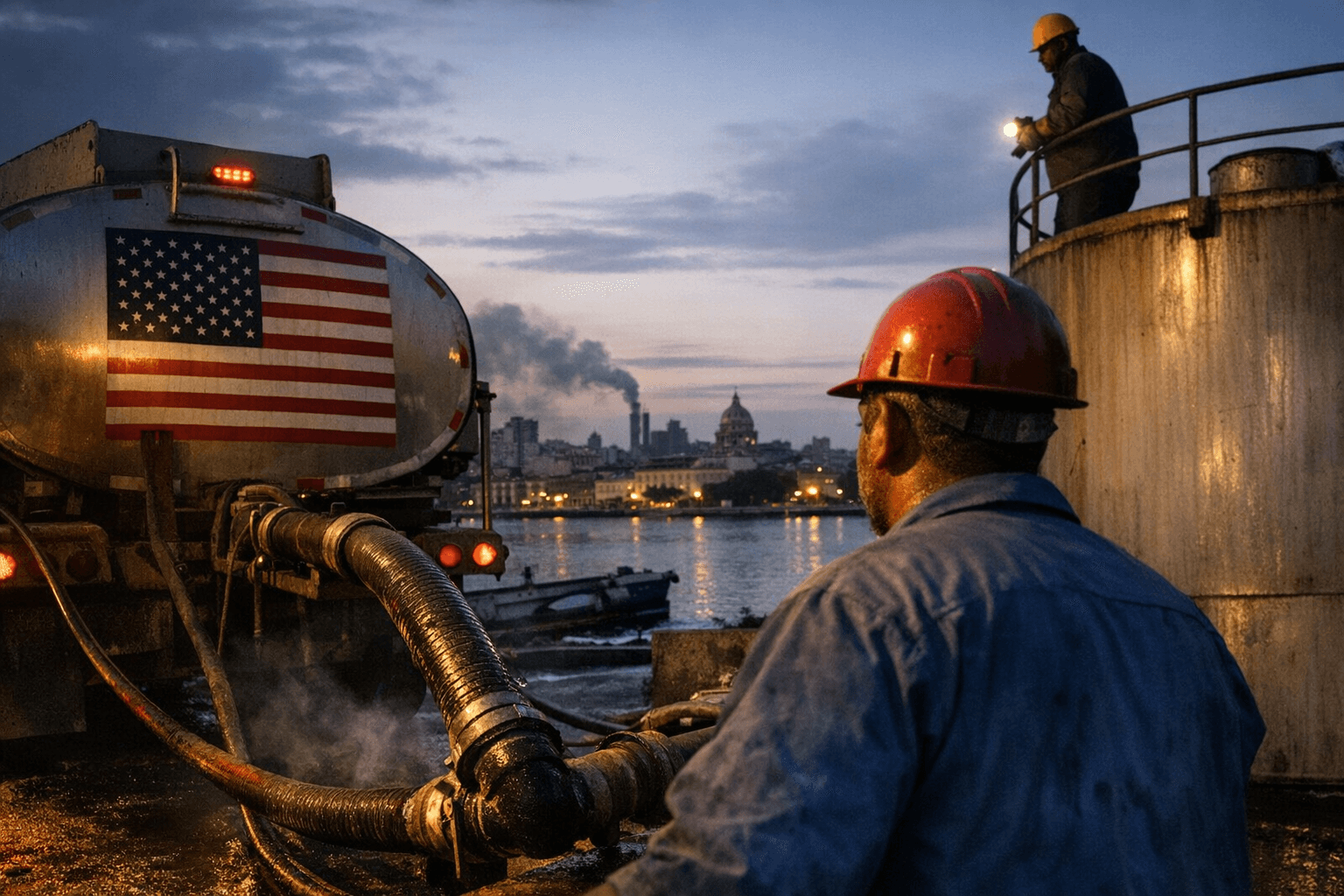
Roughly 30,000 barrels of U.S. diesel have flowed into Cuba since early February, threading through a narrow legal gap in Washington's broader fuel blockade and arriving not at state-run distribution points but at privately owned Cuban businesses, shipping documents and commercial records show.
The deliveries reached ports including Mariel aboard standard container vessels, with the diesel transported in ISO tanks rather than conventional tanker cargo. That distinction matters. Containerized fuel in ISO tanks moves through commercial freight channels, keeps volumes manageable and reduces operational overlap with Cuba's state fuel infrastructure that a full tanker delivery would require. U.S. licenses governing the shipments carry strict conditions prohibiting resale or transfer to state entities, with compliance and monitoring frameworks embedded in the terms.
At 30,000 barrels over roughly six weeks, the volumes are conspicuously small. Before the current energy crisis, Cuba's consumption ran on the order of tens of thousands of barrels per day, meaning the total shipped since February amounts to little more than a single day of the island's former baseline needs. The scale reflects a deliberate choice. U.S. officials have framed the carve-out as "entirely designed to put the private sector and individual private Cubans, those not affiliated with the government or the military, in a privileged position." Secretary of State Marco Rubio has been central to the policy rationale guiding these measures.
The backdrop is Venezuela. After political changes there in January 2026, Washington moved to cut off Cuban state access to Venezuelan crude, the supply line that had long underpinned the island's energy sector. The consequences arrived fast: rolling blackouts stretching for hours daily, flight cancellations disrupting both tourism and diaspora travel, and mounting pressure on hospital generators and public transport. State-run power utilities have had no comparable relief mechanism.
Into that vacuum, the diesel shipments to private firms represent a different kind of intervention. Paladares, private guesthouses, small farms and independent transport operators are among the businesses that make up Cuba's growing non-state economy, and fuel access is existential for them. A restaurant running a backup generator through a six-hour blackout, a private taxi driver keeping a route open in the absence of public buses, a small distributor moving goods between provinces: each depends on diesel in ways that cannot simply be deferred until state supplies normalize.
That is the argument for the carve-out. The case against it sits right beside it.
Critics, including Cuban government officials and some exile voices, point to the arithmetic: 30,000 barrels against a daily need measured in the tens of thousands does not constitute a solution. The volumes cannot restore grid power, reopen grounded flights or keep hospitals fully lit. What they can do, skeptics argue, is create a visible hierarchy between Cubans with access to private-sector fuel and those dependent on state systems that remain starved of supply. That hierarchy was politically engineered in Washington, but it will be lived on the ground in Havana, Santiago and every municipality where the lights are off for eight hours and the paladar down the street has a humming generator.
The diversion risk adds another layer of complexity. Even with compliance frameworks and license conditions requiring that fuel not reach state entities, enforcement is difficult from thousands of miles away. ISO tanks arrive in a container port and are picked up by private firms; what happens next depends on paperwork, inspection and the practical reality that fuel is fungible. The licensing architecture is designed to minimize that risk, but analysts watching the policy have raised the question of whether small-scale diversion to state-adjacent enterprises would be detectable and, if detected, consequential.
For the wider diplomatic landscape, the carve-out introduces fresh complications. Countries and shipping companies operating in jurisdictions worried about secondary U.S. sanctions exposure will be calculating their own risk profiles based on whether cargo destined for private Cuban recipients can reliably be distinguished from cargo that touches state networks.
What the shipments do not do, by design or by scale, is address the fundamental supply gap. Cuba's state grid, its hospitals, its water infrastructure, its public transport and its aviation network all depend on fuel at volumes the current ISO tank deliveries cannot approach. Until larger sources of supply are secured, the national-level crisis continues regardless of what private paladares and guesthouses can keep running on containerized diesel.
That is the paradox the shipments crystallize. The U.S. is quietly and deliberately keeping portions of Cuba's private economy alive with American fuel while simultaneously maintaining the pressure on state infrastructure that causes the blackouts. For the private restaurant owner in Havana with a full diesel tank and a working generator, it is simply Tuesday night service. For the family next door waiting for the power to come back on, it is something else entirely.
This article was produced by Prism’s automated news system from verified source data, official records, and press releases, then run through automated quality and moderation checks before publishing. The system is built and supervised by the people who set the standards it runs under. Read our full AI policy.
Did this article answer your question?