U.S. Tightens Cuba Export Rules, Blocking Jacuzzis for Havana Elites
A Cuban micro-enterprise's $5M jacuzzi purchase triggered a federal crackdown, with BIS narrowing export license exceptions for Cuba-bound luxury goods on April 7.
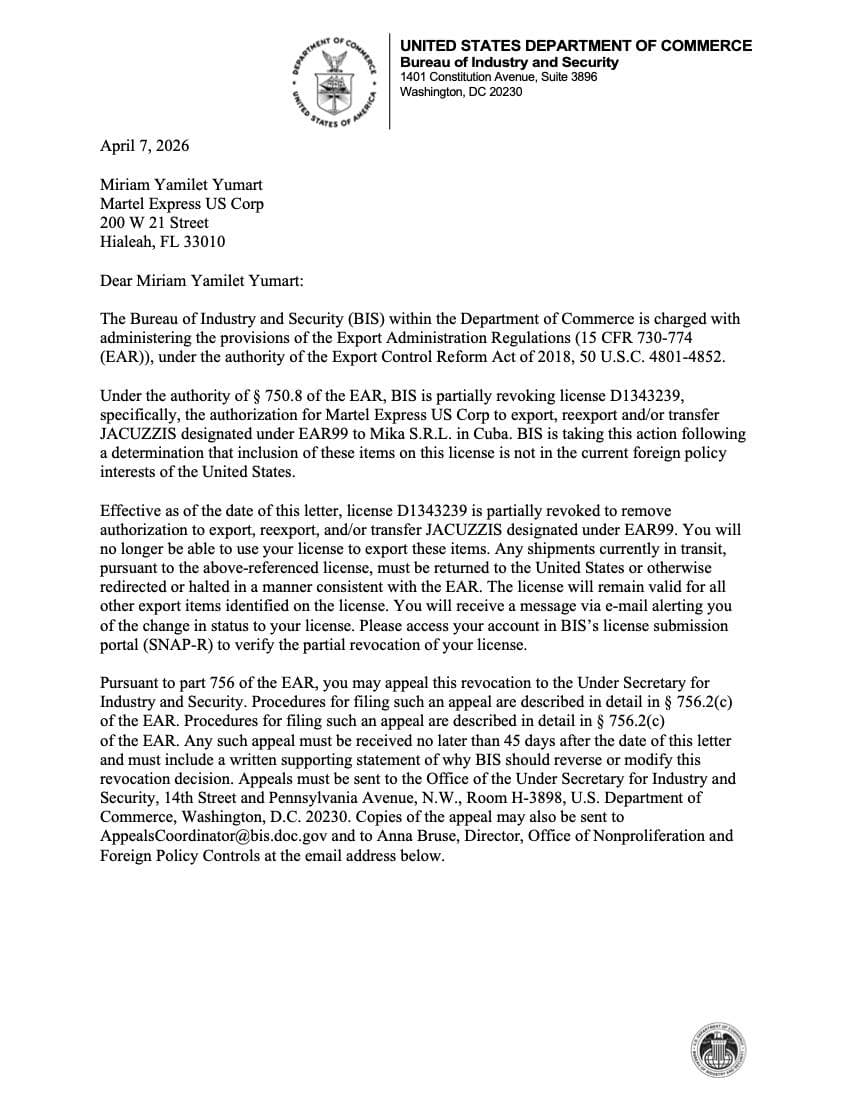
A $5 million purchase of spa and jacuzzi equipment by a Cuban micro-enterprise, approved under a U.S. export license, became the flashpoint that pushed the Commerce Department's Bureau of Industry and Security to narrow the licensing pathways companies can use for Cuba-bound shipments.
The BIS determination, issued April 7, removed authorization for the export, reexport, and transfer of certain items classified under EAR99 to Cuba, effectively blocking transactions that might previously have cleared through license exceptions or specific payment routes. The deal involved a Cuban MIPYME (micro, small, and medium-sized enterprise) that had secured U.S. approval to purchase roughly $5 million in spa equipment, a transaction critics said exploited the humanitarian intent of existing exceptions to funnel luxury goods to Cuban elites.
Miami-Dade officials moved quickly to praise the federal action. The Miami-Dade Tax Collector's office published a blog post framing the BIS step as "closing loopholes" that had allowed luxury items to reach Cuban entities under people-to-people and humanitarian-oriented license exceptions.
The April 7 determination built on an earlier BIS move: effective March 4, 2026, the agency had already suspended or narrowed availability of the Support for the Cuban People license exception under §740.21 for any transaction where payment routes through Cuban-owned banks, citing an unacceptable risk of benefiting the Cuban government or its military and intelligence services. Widely reported in Miami trade and diaspora media, the jacuzzi deal brought sustained public pressure from elected officials and civil society that accelerated BIS scrutiny of how those exceptions were being applied in practice.

The compliance bar has shifted for businesses and diaspora networks with Cuba ties. BIS has made clear that exporters bear responsibility for end-use verification and payment-route due diligence, and trade lawyers following the Cuba file are advising clients to audit vendor contracts, confirm bank routing, and check OFAC and BIS restricted-party lists before proceeding with any Cuba-tied shipment. Where doubt exists, the guidance points toward seeking a specific license or written BIS or OFAC confirmation rather than relying on exceptions that federal regulators have been actively narrowing since early March.
The jacuzzi episode has become shorthand in Miami policy circles for the gap between the letter and the spirit of Cuba export rules, and BIS's April 7 action signals that federal agencies are willing to use technical licensing levers, not just headline sanctions, to press Havana.
This article was produced by Prism’s automated news system from verified source data, official records, and press releases, then run through automated quality and moderation checks before publishing. The system is built and supervised by the people who set the standards it runs under. Read our full AI policy.
Did this article answer your question?