U.S. Tour Operators Keep February Cuba Trips Running With Contingency Plans
Multiple U.S. tour operators ran group departures to Cuba in mid-February 2026 despite a jet-fuel and energy squeeze; airlines and operators say they are using fuel and supply contingencies and legal licensing measures.

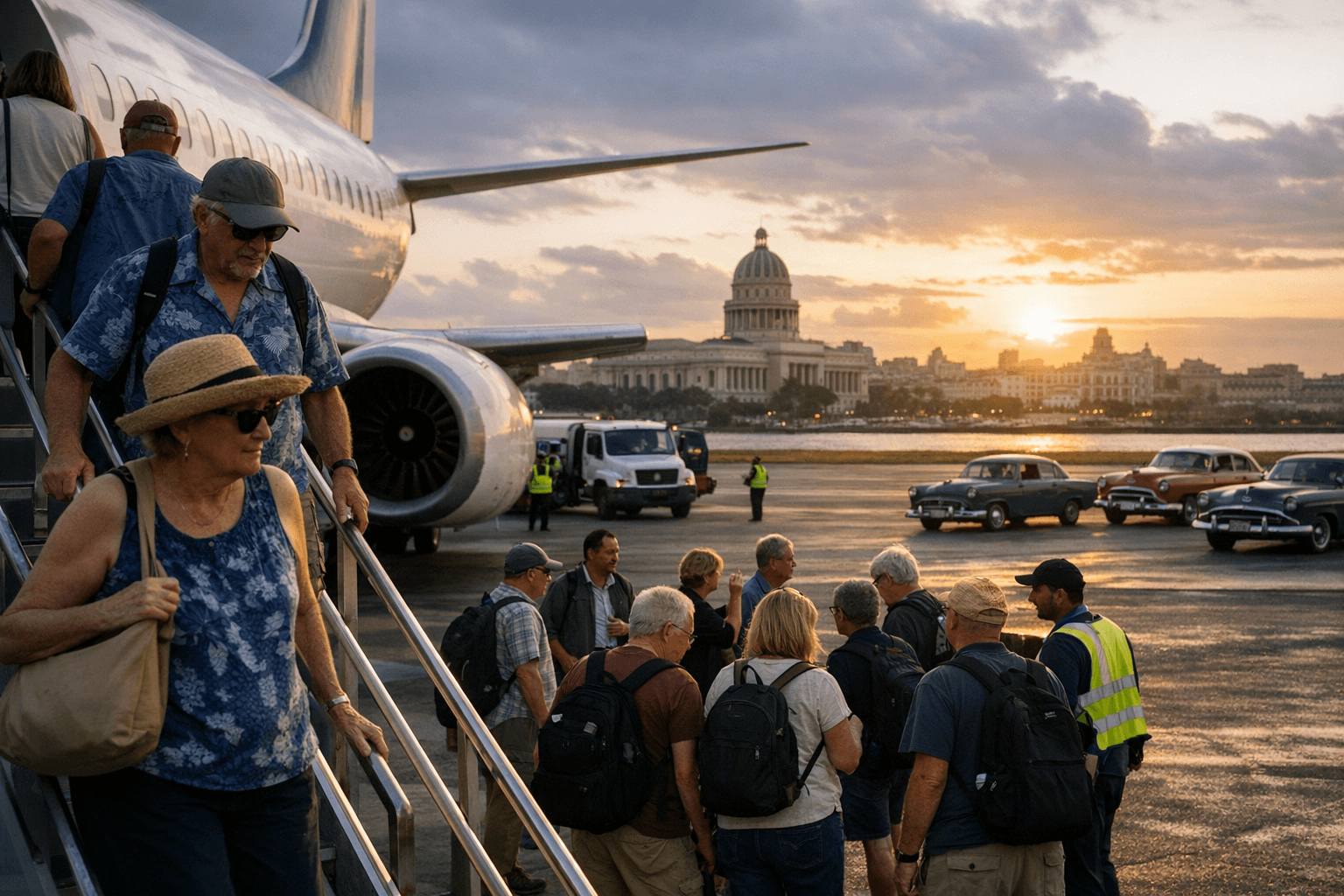
Multiple U.S.-focused tour operators kept organized group trips to Cuba running in mid-February 2026 despite a deepening jet-fuel and energy shortage that forced some international carriers to suspend flights, travel industry reports dated Feb. 20, 2026 show. Operators cite contingency stocks, adjusted itineraries and existing U.S. travel licenses as the reason they continued departures in the week after those reports.
Airline disruptions have been uneven. TravelMarketReport reported that "the small handful of U.S. airlines flying to Cuba continue to do so despite the ongoing fuel shortage that is causing Canadian carriers to cut schedules to the island." Delta Air Lines and Southwest Airlines confirmed to TMR they were operating to Cuba, while Air Canada, Transat and WestJet cut schedules. TMR noted the operational reason U.S. carriers can keep flying is that "the distance from Tampa and Miami to Havana is short enough for those planes to not have to refuel in Havana." A Southwest spokesperson told TMR, "Due to the current status of aviation fuel in Cuba, Southwest Airlines is requiring aircraft that fly to Havana to carry enough fuel to also fly to their next destination. The airline currently operates one flight daily to Havana. Nothing is more important to Southwest than the safety of our customers and employees,"
Tour operators pointed to legal footing and active monitoring of U.S. guidance. Classic Journeys, in posts dated January 28 and January 30, 2026, wrote, "We want to reassure you that this order does not change the legal framework that allows Americans to travel to Cuba under the 'Support for the Cuban People' license, nor does it affect Classic Journeys' ability to operate our Cuba programs." Classic Journeys reiterated that "All compliance details are seamlessly handled on your behalf, as all Classic Journeys Cuba travel programs are operated under the authority of the U.S. Treasury Department's Office of Foreign Assets Control (OFAC), pursuant to the general license in 31 CFR § 515.574, Support for the Cuban People." Their FAQ answer to "Are Classic Journeys tours to Cuba legal under the new rules?" was blunt: "Absolutely."
On the ground, operators warned of continued electricity instability in parts of Cuba. Cubagrouptour said, "Despite the restoration, the government has warned that the power supply remains unstable due to ongoing electricity generation shortages, which means planned outages will continue in some areas." The company added that "Our tours have the water, food, and fuel to ensure safety and enjoyment, and travellers who bring a few essential comfort items will further mitigate the effects of electrical instability." Cubagrouptour also noted precedent for itinerary changes: after "Hurricane Melissa tore through Eastern Cuba the night of October 28th, causing destruction of homes and farms in provinces Santiago de Cuba, Granma, Holguin, and Guantanamo," visits to Bayamo, Santiago and Baracoa were temporarily suspended and the operator ran an alternative 15-day Original tour until those regions were accessible again.
Payments and independent bookings remain a separate operational concern. Cubagrouptour cited a Feb. 22, 2025 notice that "AirBNB notified Cuban hosts that they would no longer be sending payments to Cuba, ostensibly as a result of the US sanctions on Orbit, a Cuban payment processor." Cuban Adventures emphasized its local model, saying its "local team works directly with casas, so this will not affect our operations," and recommended homestay.com, locally run sites, google search, or word-of-mouth to book directly with hosts. TravelMarketReport reminded travelers that U.S. law still requires they "self-certify" which of the 12 authorized travel categories their trip falls under when booking flights to Cuba.
Operators say they will keep monitoring U.S. Treasury, State Department and the U.S. Embassy in Havana for guidance. With Delta and Southwest maintaining flights from Miami and Tampa and tour groups stocking water, food and fuel, organized February departures continued to move forward, though itineraries and carrier options varied by departure city and by the evolving fuel and electricity situation.
This article was produced by Prism’s automated news system from verified source data, official records, and press releases, then run through automated quality and moderation checks before publishing. The system is built and supervised by the people who set the standards it runs under. Read our full AI policy.
Did this article answer your question?