What UNESCO means by rumba in Cuba, beyond a dance style
UNESCO did not inscribe rumba as a stage dance. It recognized a living Cuban practice of music, movement, memory, and neighborhood life.
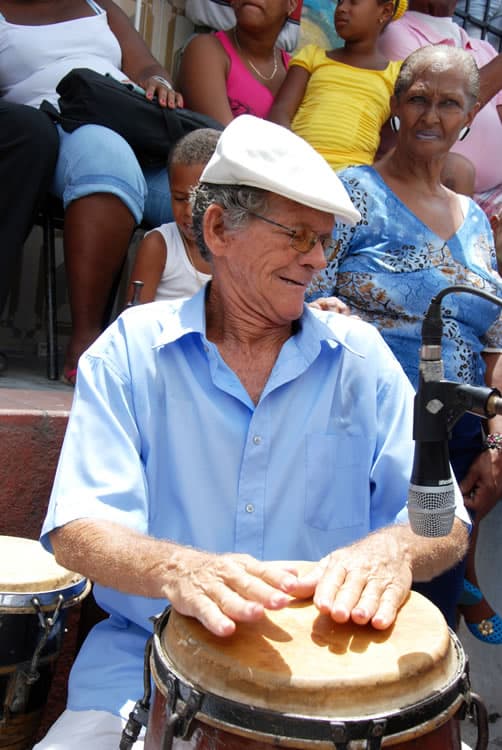
Rumba in Cuba is one of those traditions outsiders often flatten into a single image: a dancer, a drum, a bright costume, a performance for spectators. UNESCO’s 2016 inscription pushes back hard against that reduction. What it recognized was “Rumba in Cuba, a festive combination of music and dances and all the practices associated,” a living social practice rooted in community, oral transmission, and everyday expression.
What UNESCO actually inscribed
The key word in UNESCO’s listing is not dance, but combination. Cuban rumba sits at the intersection of percussion, singing, movement, social gathering, and identity. UNESCO places it on the Representative List of the Intangible Cultural Heritage of Humanity, where the emphasis is on practices people keep doing together, not artifacts locked behind glass.
That framing matters because rumba is sustained in urban community life. UNESCO describes it in relation to social cohesion and livelihood-related intangible heritage, which is another way of saying it belongs to the spaces where people live, work, gather, and remember. In UNESCO’s own video materials, rumba is also described as an expression of resistance and self-esteem, language that captures how deeply it is tied to Afro-Cuban cultural survival.
The three forms that shape rumba
Cuban rumba is not one uniform style. It is commonly divided into three main forms: yambú, guaguancó, and columbia. Those names are more than labels for specialists. They give you a practical way to hear the tradition as a family of related forms rather than a single rhythm.
Yambú is generally the slower and older-feeling form, with a less aggressive pace. Guaguancó is the best-known social rumba style, usually danced by mixed-gender partners in a playful courtship dynamic. Columbia is faster and more virtuosic, and it is traditionally associated with male solo dancing and competitive display. Together, the three forms show how rumba can move from intimacy to challenge, from neighborhood gathering to athletic brilliance, without losing its core identity.
Where rumba grew up
Havana and Matanzas are repeatedly named as key centers in the development of Cuban rumba. The tradition emerged in Afro-Cuban and working-class neighborhoods, where shared music-making and dance became part of social memory as much as entertainment. Some references trace the rumba complex to the nineteenth century, linking it to enslaved African communities and to later spread beyond Cuba.
That history is important because it explains why rumba is not just “folk culture” in the generic sense. It carries the imprint of slavery, survival, and reinvention. One Cuban account describes it as historically linked to the slave trade and still central to modern Cuban culture, which is exactly the kind of continuity UNESCO’s intangible-heritage system is designed to recognize.
How to listen for rumba in real life
If you hear rumba in a neighborhood setting or a staged presentation, listen beyond the surface movement. The percussion ensemble typically includes conga drums and claves, along with supporting instruments that help drive the rhythmic conversation. The singing often works through call-and-response, with a lead voice and a responding chorus creating a communal structure rather than a solo spotlight.
That structure is part of why rumba feels alive even when it is performed on a formal stage. The dancer is not simply executing steps to fixed music. The dancer answers the drums, the singer answers the room, and the room answers back. That interactive quality is one reason UNESCO treats rumba as a social practice, not just a choreography.
Why the inscription matters in Cuba now
UNESCO’s recognition matters because it gives rumba a preservation framework built around transmission. Intangible heritage only survives when elders, teachers, neighbors, and performers pass it on in actual community settings. For Cuban rumba, that means safeguarding not just the steps and rhythms, but the spaces, relationships, and knowledge that make those steps and rhythms meaningful.
The inscription also matters for cultural identity. Because rumba is tied to Afro-descendant memory and to urban working-class life, protecting it is not the same as preserving a museum piece. It is about keeping alive a way of gathering, improvising, and speaking through music. In Cuba today, that distinction is central: rumba is heritage because people still use it.
Why precision matters when people say “rumba”
The word rumba can be misleading because it travels. In December 2021, Congolese rumba was also added to UNESCO’s intangible heritage list, a reminder that the name has multiple cultural lineages. Congolese rumba, Cuban rumba, and broader dance-music traditions in Latin America are not interchangeable, even when they overlap in the public imagination.
That comparison helps explain why UNESCO’s Cuban listing is so specific. It is not honoring a generic party style. It is naming a Cuban cultural system with its own history, its own urban roots, and its own forms, from yambú to guaguancó to columbia. The 2016 inscription, selected at the 11th session of UNESCO’s Intergovernmental Committee for the Safeguarding of the Intangible Cultural Heritage in Addis Ababa, came as part of a group of 33 new elements chosen from 37 nominations, but rumba’s meaning is local even as its recognition is global.
The bottom line
Outsiders often see rumba as a dance to watch. UNESCO’s listing asks for a different kind of attention: to the drums, the chorus, the neighborhood, the memory, and the people who keep the practice moving from one generation to the next. That is what “rumba in Cuba” means beyond the stage, and why the heritage designation matters so much now.
This article was produced by Prism’s automated news system from verified source data, official records, and press releases, then run through automated quality and moderation checks before publishing. The system is built and supervised by the people who set the standards it runs under. Read our full AI policy.
Did this article answer your question?