Chewy says dog yoga brings calm and connection at home
Doga works best as a low-key home ritual, not a stunt. The quiet version, stretching, breathing, and sharing space, is what makes it feel calming for both ends of the leash.
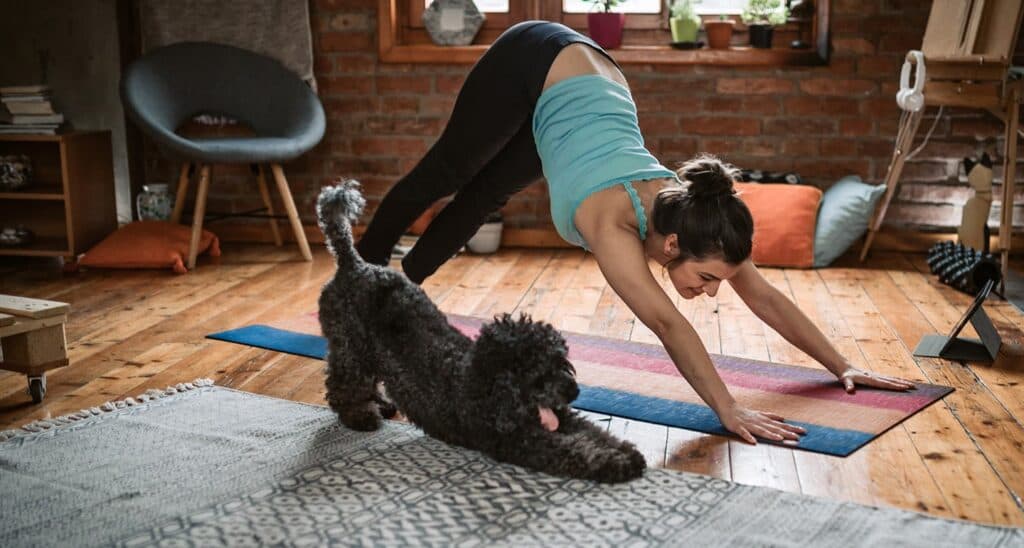
Put down a mat in a quiet corner of the living room and let your dog decide how close to stay. Doga is shared down time, built around stretching, breathing, and being near your dog at home. The point is not to get a terrier to hold a pose, it is to turn an ordinary pause after a walk or play session into something both of you can actually settle into.
What doga really is
At its best, doga is a low-barrier routine that borrows the shape of yoga without turning your dog into a performer. The practice works when it stays close to normal dog behavior: resting, stretching, shifting positions, and responding to the energy in the room. It is an extension of the bond many owners already have with their dogs, not a separate hobby that requires specialized equipment or a studio setup.
That is also why the most useful version of doga is usually the most modest one. You do not need a themed class, matching outfits, or a long list of commands. You need a mat, a calm space, and a dog that is willing to hang out while you move slowly and breathe normally.
Why the practice feels calming
The stress-relief pitch is the reason doga keeps resurfacing. Yoga already has a reputation for helping people reach a calmer state of mind, and doing it with a dog turns it into shared time instead of a solo routine. Florida instructor Suzi Teitelman has described the experience as doubly calming because the human and dog are sharing it together.
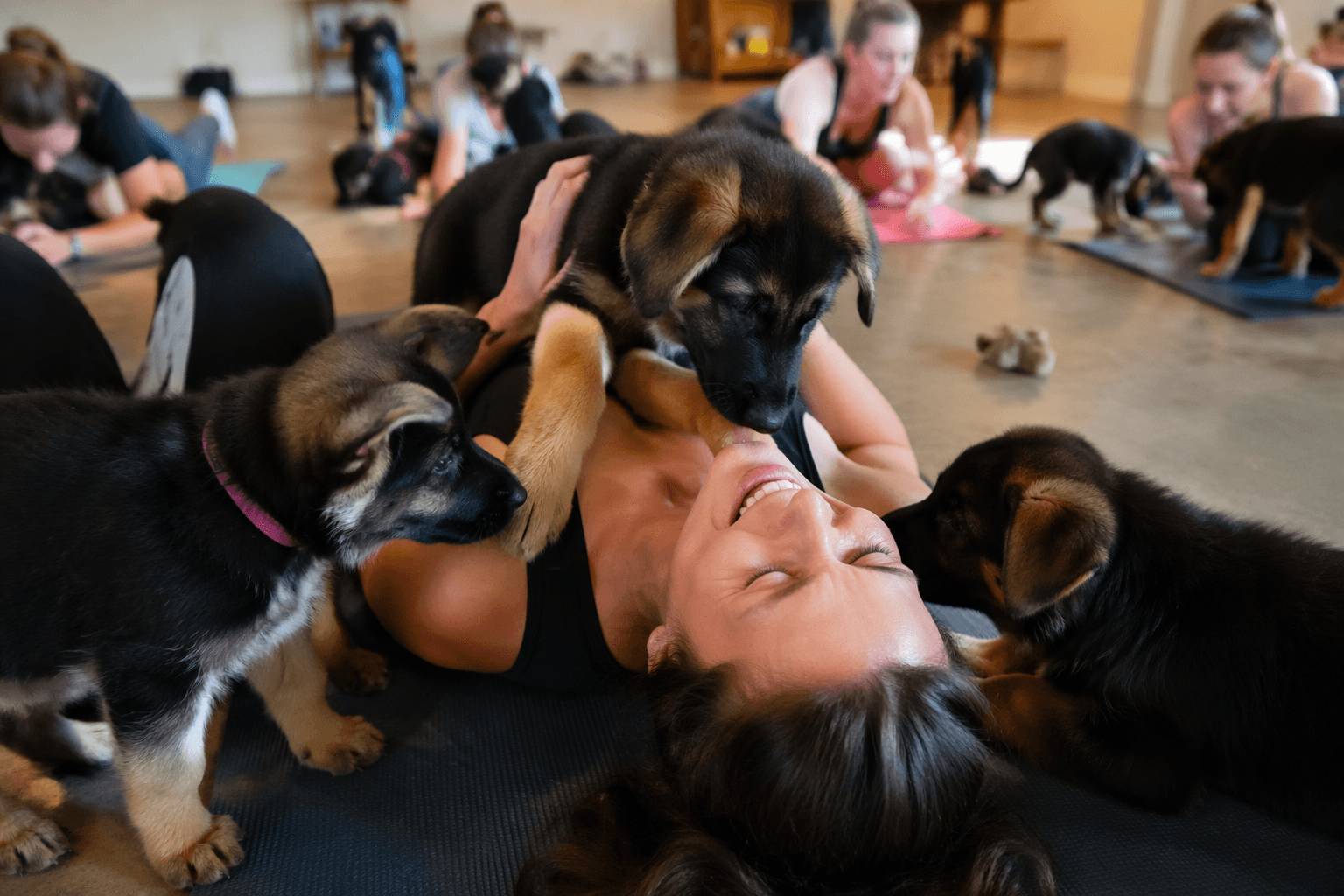
Interacting with a dog can lower stress and anxiety and improve mood, the American Kennel Club says, and puppy yoga can help with puppies’ socialization. A 2021 review in Frontiers and guidance from the American Veterinary Medical Association place dogs within the wider world of animal-assisted support, where the goal is a structured interaction that helps human well-being.
What a first session actually looks like
A first session does not need to look like a class poster. In practice, it is usually closer to a calm floor routine in a quiet room, with the dog free to choose how close to stay. Chewy places doga in the home, and that setting is part of the appeal, because the dog is not being asked to learn a new job before the human has learned to slow down.
The easiest way to think about that first try is in three parts:
1. Pick a quiet spot, like a living room corner where your dog already relaxes.
2. Keep the movement slow and familiar, with stretching and breathing rather than deep or awkward poses.
3. Stop if the dog wants out, because the practice only works when the animal is comfortable enough to remain present.
Doga is not a test of obedience. If the dog is willing to lie nearby, sniff the mat, or simply stay in the room while you breathe and stretch, that is already the session.

Who it helps most
Anxious dogs and older dogs with joint issues may benefit most from this softer kind of routine. The practice is built around low pressure, gentle movement, and a pace that does not demand athleticism from either partner. It also fits owners who already feel better after a walk or play session and want to extend that settled feeling for a few minutes at home.
The practice can be especially useful if your dog is one of those animals that mirrors your mood. A calmer human often means a calmer dog, and the reverse is true too.
How to tell calm from overwhelmed
The simplest way to judge the session is to watch whether your dog is choosing to stay engaged. Relaxed dogs tend to settle into the space, remain willing to be near you, and move at the same easy pace as the room. Overwhelmed dogs push back in obvious ways, by wanting distance, refusing to settle, or showing that the room has become more stimulating than soothing.
If the dog is uncomfortable, the session is no longer doing its job. The right move is to shorten it, simplify it, or try again another day.
Why safety matters in a dog yoga practice
Safety is not an afterthought, especially if you are dealing with dogs that already have needs. The practice may help older dogs with joint issues, but owners should not hurt the animal and should seek veterinary guidance when a dog has an underlying condition. The American Veterinary Medical Association says animal-assisted interventions should follow basic standards, be regularly monitored, and be staffed by appropriately trained personnel.
Behavioral problems and zoonotic disease risks are common concerns. The American Veterinary Medical Association says veterinarians should help protect the health and welfare of animals involved in these programs, and the ASPCA says animals used in animal-assisted interventions should be sourced from shelters or rescues where feasible. The ASPCA also warns that untrained, unevaluated shelter animals are generally not recommended because of stressors and risks.
Why the bigger debate around puppy yoga matters
Doga at home sits in a different lane from the more commercial puppy yoga craze. The American Kennel Club says puppy yoga can help puppies’ socialization, but welfare concerns have pushed some governments to act. Italy’s Ministry of Health banned puppy yoga classes in 2024 amid animal-welfare concerns, and Dutch authorities, including the NVWA, were monitoring puppy-yoga classes after concerns about stress to puppies.
This article was produced by Prism’s automated news system from verified source data, official records, and press releases, then run through automated quality and moderation checks before publishing. The system is built and supervised by the people who set the standards it runs under. Read our full AI policy.
Did this article answer your question?