Chewy says puppy yoga can help rescue dogs, if welfare comes first
Puppy yoga can help rescue dogs, but only when the class is built around rest, supervision, and clear sourcing. Here’s how to spot a welfare-first session before you book.
Start with the checklist, not the cute photos
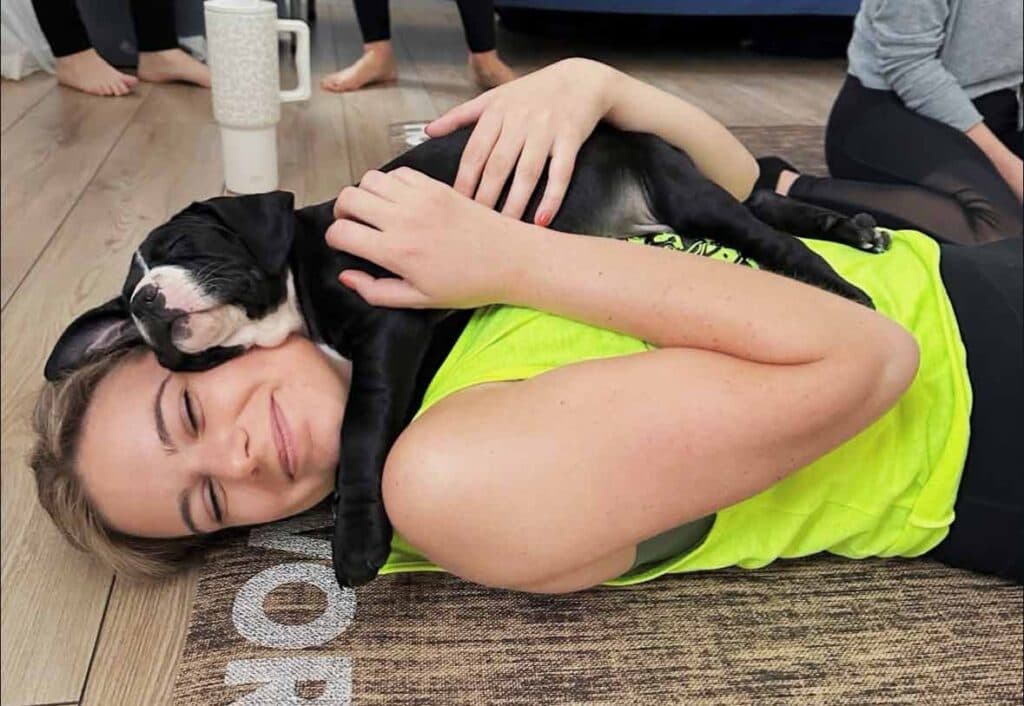
The easiest way to judge puppy yoga is to ignore the marketing and inspect the logistics. Chewy’s practical take is simple: a good class can be fun and genuinely useful for rescue puppies, but only when the animals are treated like animals with needs, not props for a room full of cameras.
Before you buy a ticket, look for these green flags:
- Staff explain exactly where the puppies come from, who owns them, and whether a rescue or shelter is involved.
- The session has clear vaccination, sanitation, and handling rules.
- Puppies get rest breaks and are rotated out before they get overtired or overwhelmed.
- Someone is actively supervising the room and stepping in when handling gets rough.
- The event can spell out what the adoption or fundraising claim actually means.
And watch for these red flags:
- The organizer cannot explain the puppies’ age, source, or vet care.
- The class sounds more like a photo shoot than a structured animal-interaction session.
- There is no mention of hand hygiene, cleaning, or floor sanitation.
- The puppies stay in the room too long without breaks.
- “Rescue” language is vague, but no shelter or partner is named.
If a studio cannot answer those basics clearly, the cutest puppy in the room is not the point. The setup is.
How a responsible class should run
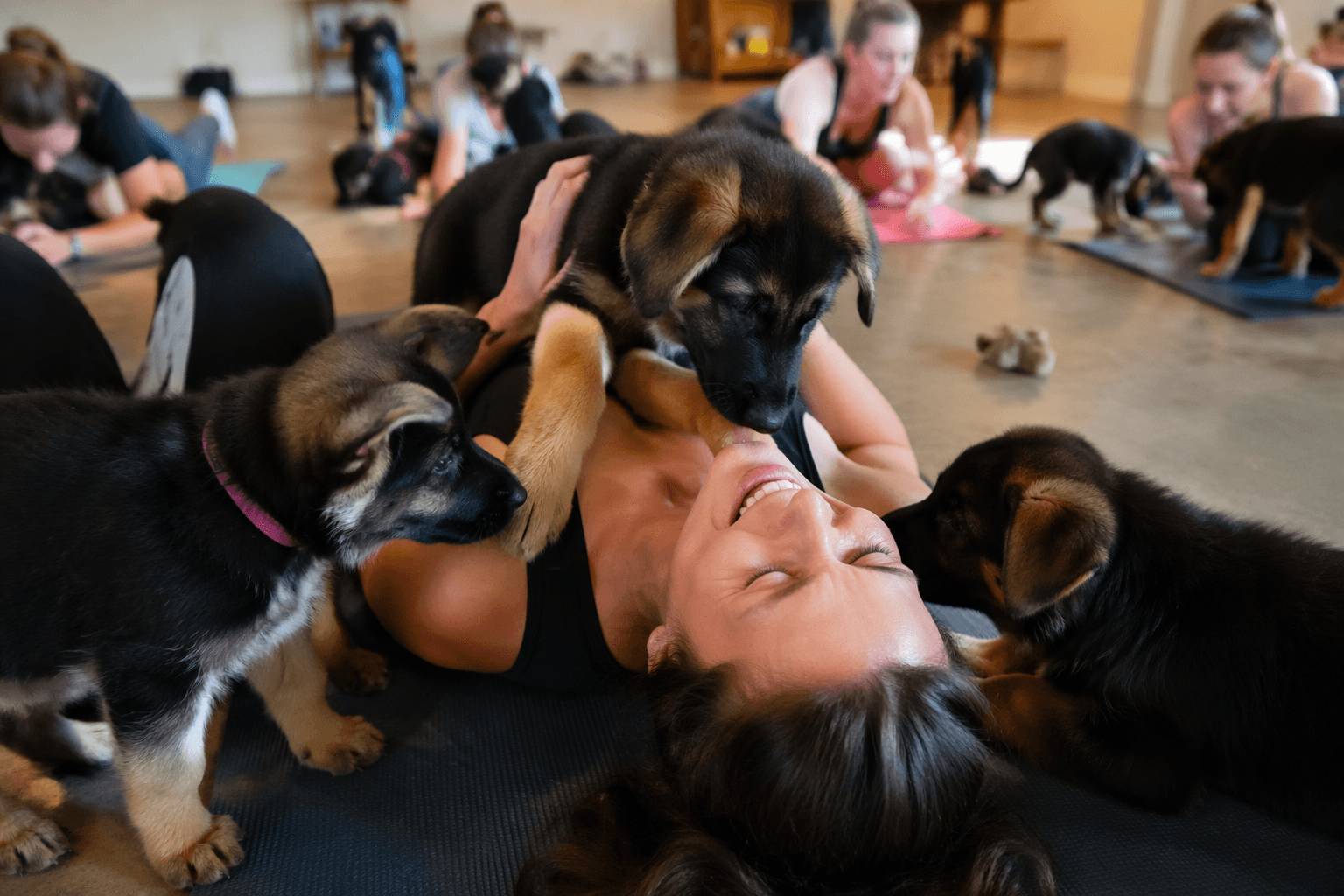
A well-run puppy yoga session should feel calm from the moment you arrive. Chewy describes a typical class as lasting about 45 minutes, beginning with safety guidelines and introductions, then moving into the yoga portion, and often ending with time for gentle play and photos. That structure matters because it shows the organizer is trying to balance participant expectations with the puppies’ comfort.
That format is also a useful test. If the room is noisy, chaotic, or built around nonstop cuddling, the puppies are probably doing more work than they should. The better classes make the exercise portion feel secondary to the welfare plan, which means the humans are being guided as carefully as the dogs.
A sensible session should also feel predictable. Puppies do best when the class has a rhythm, with short bursts of interaction and planned downtime, rather than one long stretch of grabbing, cooing, and chasing. If the operator cannot explain how the class is managed minute by minute, that is a problem worth taking seriously.
When puppy yoga actually helps rescue dogs
The strongest version of puppy yoga is not about novelty. It is about giving adoptable rescue puppies a low-stress environment where they can build confidence and social skills around people. Chewy’s guide makes that point clearly: when the format is handled responsibly, it can help make puppies more adoptable while also giving rescue groups and shelters a way to raise money and encourage adoption.
That is not just theory. The Humane Society of the Tennessee Valley held its first Puppy Yoga class in 2018 after earlier success with kitty yoga, showing that shelters have been using the format as a practical engagement tool for years. In Southern California, Laughing Frog Yoga said it had been offering puppy yoga since 2019 and that around 58 puppies had been adopted through the class by August 2024. Those are the kinds of numbers that matter because they show a class can have a real placement outcome, not just a social-media footprint.
The commercial side of the market has grown too. Puppies&Yoga says its classes run in New York, Chicago, Los Angeles, Miami, and other cities, and claims more than 45,000 guests have experienced the format. One of its class descriptions says a session can include 45 minutes of all-level yoga followed by 30 minutes of cuddles and fun with the puppies. That scale makes the welfare question even more important: once an idea becomes this popular, sloppy operators move in fast.
The welfare yardstick you should use
There is a reason some animal-protection groups have pushed back hard. In 2024, Italy banned puppy yoga on animal-welfare grounds, and the Italy Ministry of Health asked regional authorities to carry out checks to make sure classes do not take place. Italy’s National Board for Animal Protection welcomed the decision, which shows that some regulators see this format as risky enough to restrict rather than simply refine.
That does not mean every class is bad. It does mean you need a higher standard than, “the puppies looked happy in the promo video.” The RSPCA offers a useful benchmark here: section 9 of the UK Animal Welfare Act places a duty of care on people to take reasonable steps to meet animals’ welfare needs, and the RSPCA’s best-practice guidance says animal welfare establishments should avoid unnecessary suffering and seek veterinary advice. Those are basic principles, but they are exactly the right ones for puppy yoga too.
Use that standard when you are sizing up an event. If the organizer cannot explain who is monitoring the puppies, how often they rest, how sanitation is handled, and whether a veterinarian is involved in the broader care plan, the welfare claim is weak. If the organizer can answer those questions plainly, the class starts to look much more credible.
The test before you book
A welfare-first puppy yoga class should leave you with the sense that the puppies were protected, not performed. The room should be calm, the schedule should be short and structured, and the rescue or adoption story should be specific enough that you can tell who benefits.
The yes-or-no test is straightforward: if the event cannot show you the puppies’ source, the handling rules, the rest rotation, and the rescue connection, skip it. If it can, then you may be looking at one of the rare wellness classes where the animals, not the branding, come first.
This article was produced by Prism’s automated news system from verified source data, official records, and press releases, then run through automated quality and moderation checks before publishing. The system is built and supervised by the people who set the standards it runs under. Read our full AI policy.
Did this article answer your question?