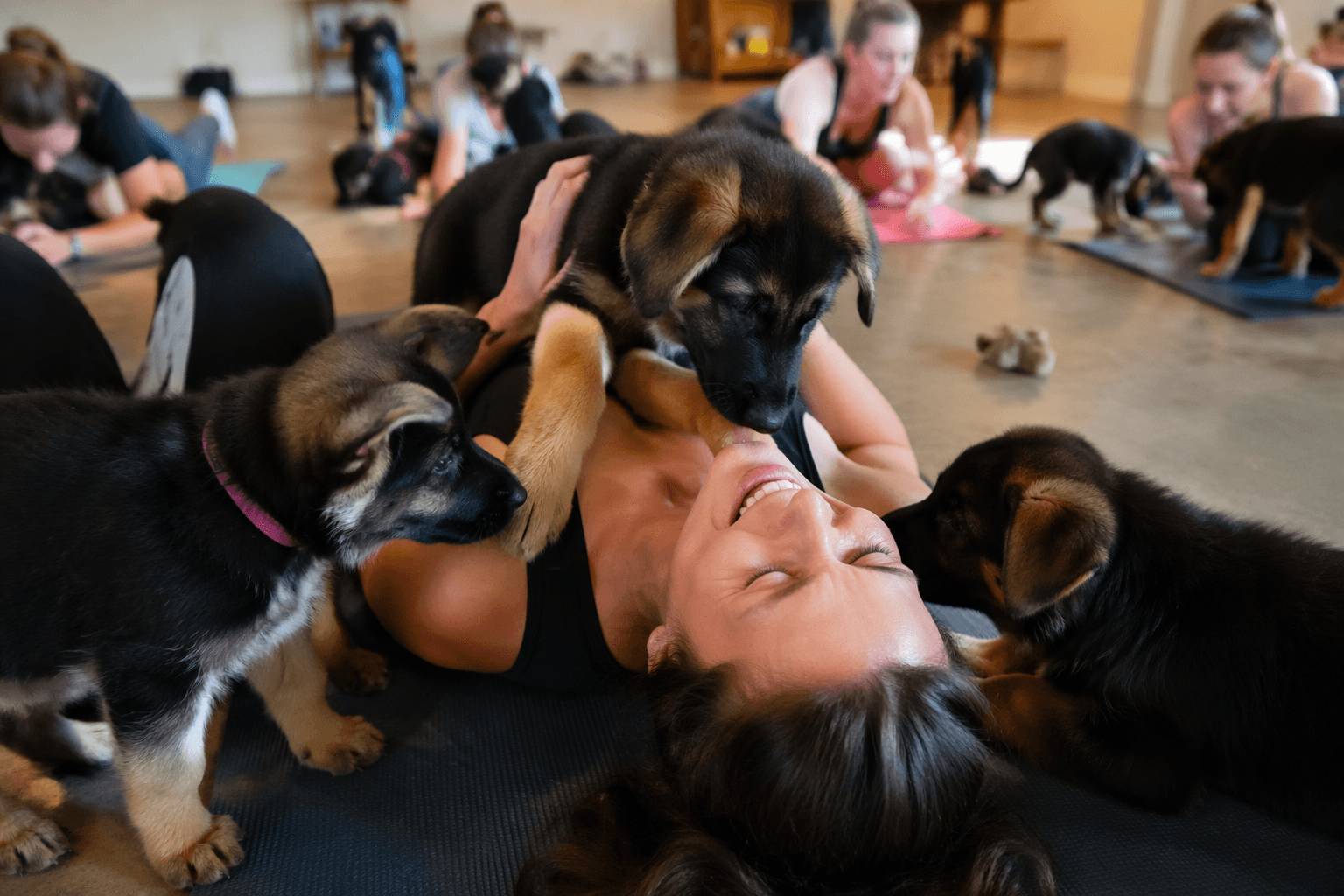
Harvard's Shad Hall Offers Dog Yoga Class Featuring Campus Canine Sasha
Harvard Business School's Shad Hall offered doga as an official group fitness class, pairing instructor Elizabeth with Sasha, a university police department community dog.
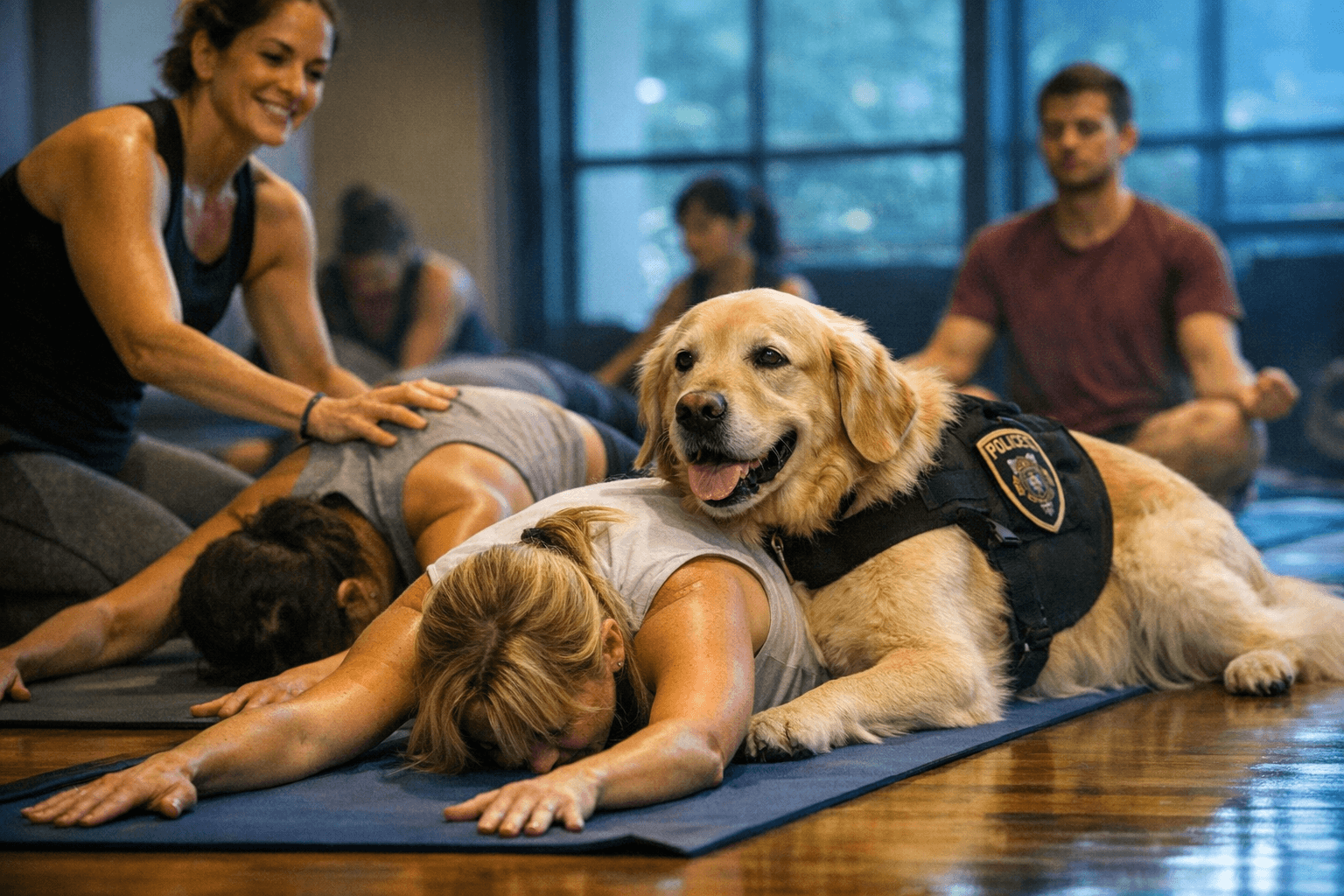
Shad Hall, Harvard Business School's on-campus fitness facility, hosted "Dog Yoga with Sasha" this April, pairing yoga instructor Elizabeth with Sasha, a community engagement dog from the Harvard University Police Department. The one-hour, all-levels session showed how a shared gym space can fold canine companionship into a traditional yoga class without sacrificing pacing, structure, or participant safety.
The co-teaching format is the key design feature. Elizabeth guided the room through postures and breathwork; Sasha handled social contact. The session description captured the division simply: she was available "for pets, kisses and lots of smiles." In a group fitness environment, that clarity matters. When the instructor owns the technical content and the dog owns the ambient warmth, neither role bleeds into the other and the flow of the class stays intact.
For anyone adapting this format into a tighter window, the Shad Hall session compresses well into 30 minutes. The protocol breaks into four phases, each with a specific job.
Arrival starts ten minutes early. Designate a corner for Sasha before the room fills: a mat, a blanket, and a clear sightline to the front. This gives the dog an anchor point and signals to every participant walking in that the animal has assigned space, not a roving role.
The greeting phase runs the first five minutes of class time. Let everyone approach and interact with Sasha before any yoga begins. This is not socializing for its own sake; it is distraction management. Front-load the novelty so participants can settle into practice without breaking focus every time the dog shifts positions. A dog who has already read the room is a dog who will lie down during cat-cow.
The core 20 minutes should stay close to the floor. Cat-cow, child's pose, seated forward folds, supine twists, and gentle hip openers all bring practitioners to Sasha's eye level without triggering the quick lateral movement, jumping, or loud verbal cueing that unsettles dogs in enclosed spaces. Skip any flow involving chaturanga transitions or fast directional changes. Keep cues verbal and steady; avoid clapping adjustments or percussive prompts entirely.
Exit strategy is where most first-time doga instructors lose control of the experience. Build five minutes of wind-down after savasana specifically for a second round of interaction with Sasha, then release participants one or two at a time. A surge of bodies moving at once is the highest-risk moment in any doga session for overstimulating the dog. A trickle exit protects Sasha's welfare and sends participants out calm rather than in a crowd.
The Shad Hall session ran as part of the facility's regular group fitness calendar, which meant it had to meet the same scheduling standards as every other class in the building. That institutional rigor is part of what makes this format worth studying. Booking a community engagement dog through an official fitness portal forces organizers to think about capacity limits, sign-up rules, and membership requirements before the session ever begins. The structure does not come from the yoga. It comes from treating the dog as a serious program element from the first line of the listing.
This article was produced by Prism’s automated news system from verified source data, official records, and press releases, then run through automated quality and moderation checks before publishing. The system is built and supervised by the people who set the standards it runs under. Read our full AI policy.
Did this article answer your question?