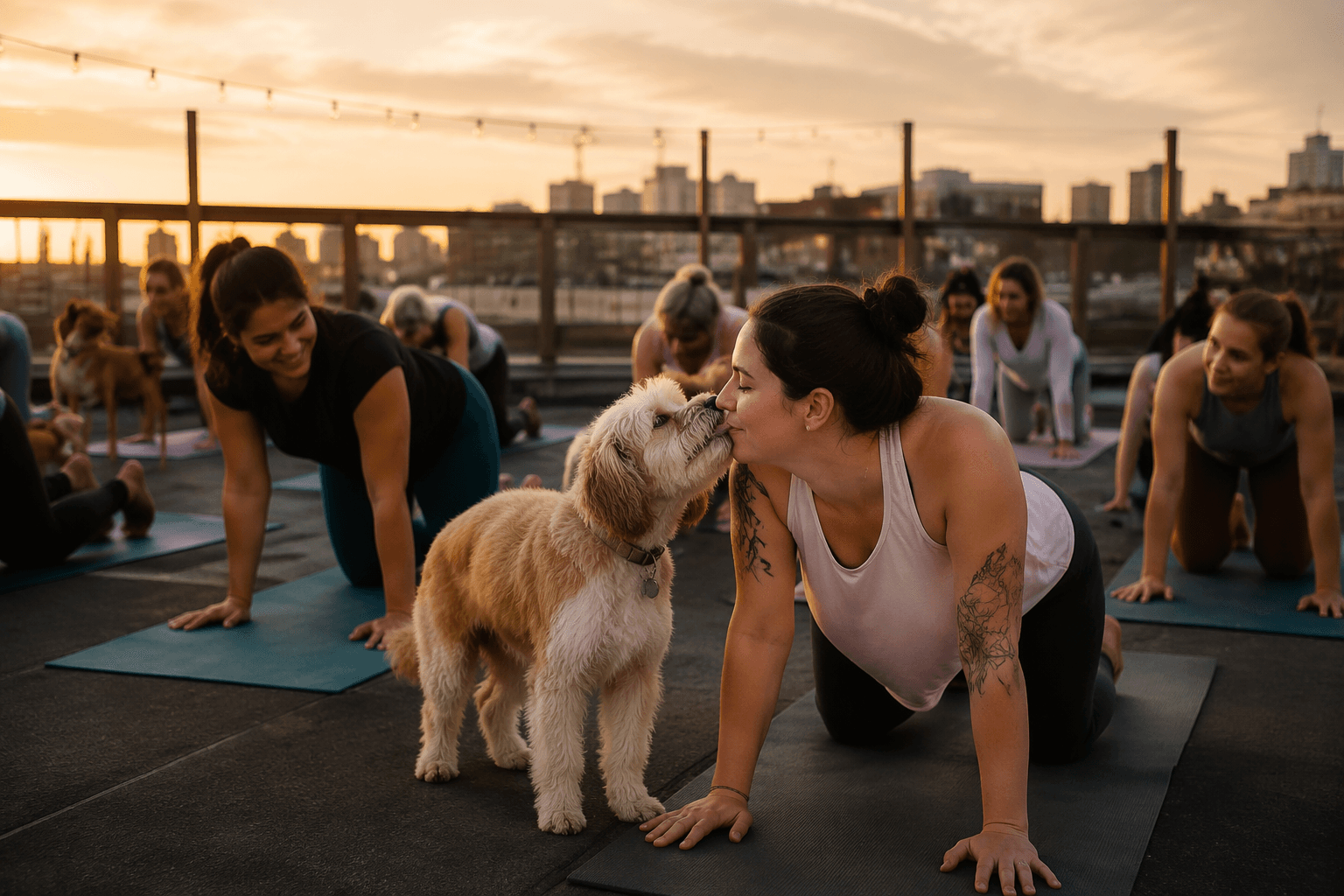
How to read your dog’s signals in doga sessions
The real doga skill is reading your dog, not perfecting your pose. Use a stoplight check for comfort, stress, and the moment to end the session.
Five to ten minutes counts as a real first doga session. If your dog is relaxed enough to stay in the room, choose a spot, and opt out when they want to, you are doing the important part right. The real test is not whether your dog can mimic a downward dog stretch, but whether the session still feels calm, curious, and voluntary.
Start with the dog, not the pose
Petco and Hill’s Pet both treat early doga as short, calm interaction rather than a performance, with Petco counting even five to ten minutes as a real session. If you begin by letting your dog sniff the room, choose where to lie down, and step off the mat without being corrected, you are already setting the session up correctly.
A good first session is not long, flashy, or crowded with movement. It is quiet enough for your dog to settle, simple enough to repeat, and flexible enough to end early if the mood changes. Reward voluntary calm behavior, not forced positions, and remember that a puppy, adolescent, shy adult, and senior dog will each bring a different pace to the mat.
Green-light cues: your dog is comfortable enough to continue
The American Kennel Club’s body-language guidance focuses on the whole body, so the best signals show up in more than one place at once. A green light usually looks loose and soft. The body is wiggly rather than rigid, the face is relaxed, the ears sit in a neutral position, and the tail moves naturally instead of clamping down or whipping tight.
This is also the moment when your dog stays engaged without pressure. They may choose to remain near you, take treats normally, or settle into the room without needing constant prompting. If the dog looks comfortable enough to keep participating on their own terms, the class can keep moving at that pace.
Yellow-light signs: slow down before the session tips over
The AKC updated its stress-sign guidance on Mar. 6, 2024. In doga, watch closely for lip licking, yawning when the dog is not tired, pinned ears, whale eye, hard staring, pacing, freezing, turning away, and a tucked tail. None of those should be treated as a cute quirk when they show up together or repeat.
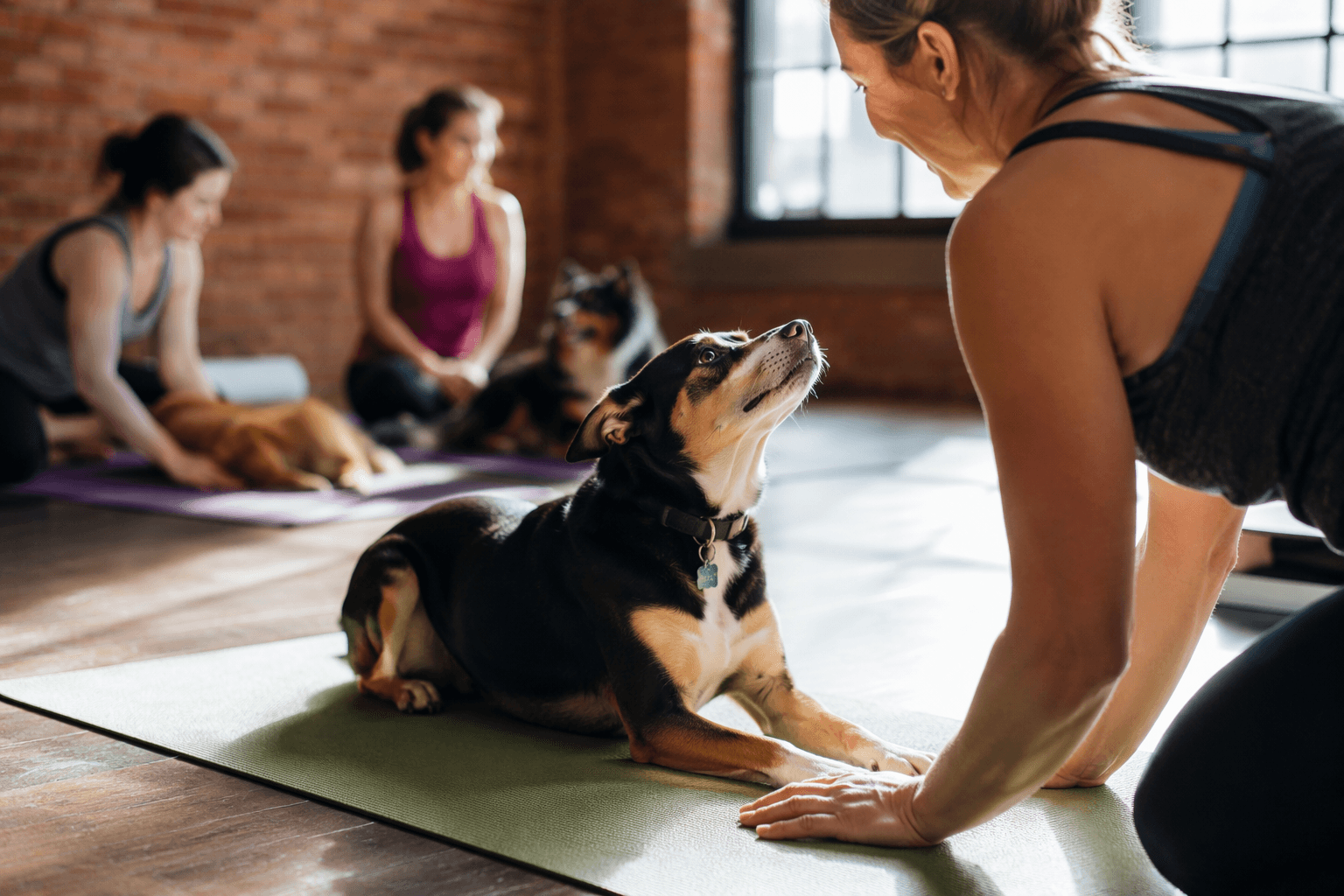
ASPCAPro advises assessing the dog as a whole and reading the situation around them. That matters in doga because a dog may pant for reasons that have nothing to do with exercise. If the room is cool and the dog is not working physically, panting can point to uncertainty, overstimulation, or social pressure instead of simple heat.
Yellow-light signals are your cue to reduce the ask. Back up a step, increase distance, remove handling, or let the dog leave the mat and watch from the side.
Red-light moments: stop, separate, or leave
Some signals mean the dog is past “let’s slow down” and into “stop now.” Repeatedly moving away, hiding behind the owner, scratching, shaking off, or refusing food are not little objections to push through. They are the dog telling you the class no longer feels worth it.
Trigger stacking is the other piece that makes red-light moments easy to miss. The AKC uses that term for the way multiple stressors build on one another until a dog feels overwhelmed. In a doga class, those stressors can stack fast: unfamiliar people, other dogs, slippery floors, tight proximity on mats, and repeated handling all add up, even if each one seems mild on its own.
That is why a dog can look fine for the first few minutes and then unravel later. If the body gets tighter, the interest drops, and the stress signs multiply, the kindest move is to pause or leave.
How to set the session up so the signals stay readable
The easiest way to read your dog is to make the environment simple enough that their signals are obvious. Start with distance and choice, keep the first session short, and let the dog decide where to be in the room. If the mat becomes a magnet for pressure, the session stops being doga and turns into obedience theater.
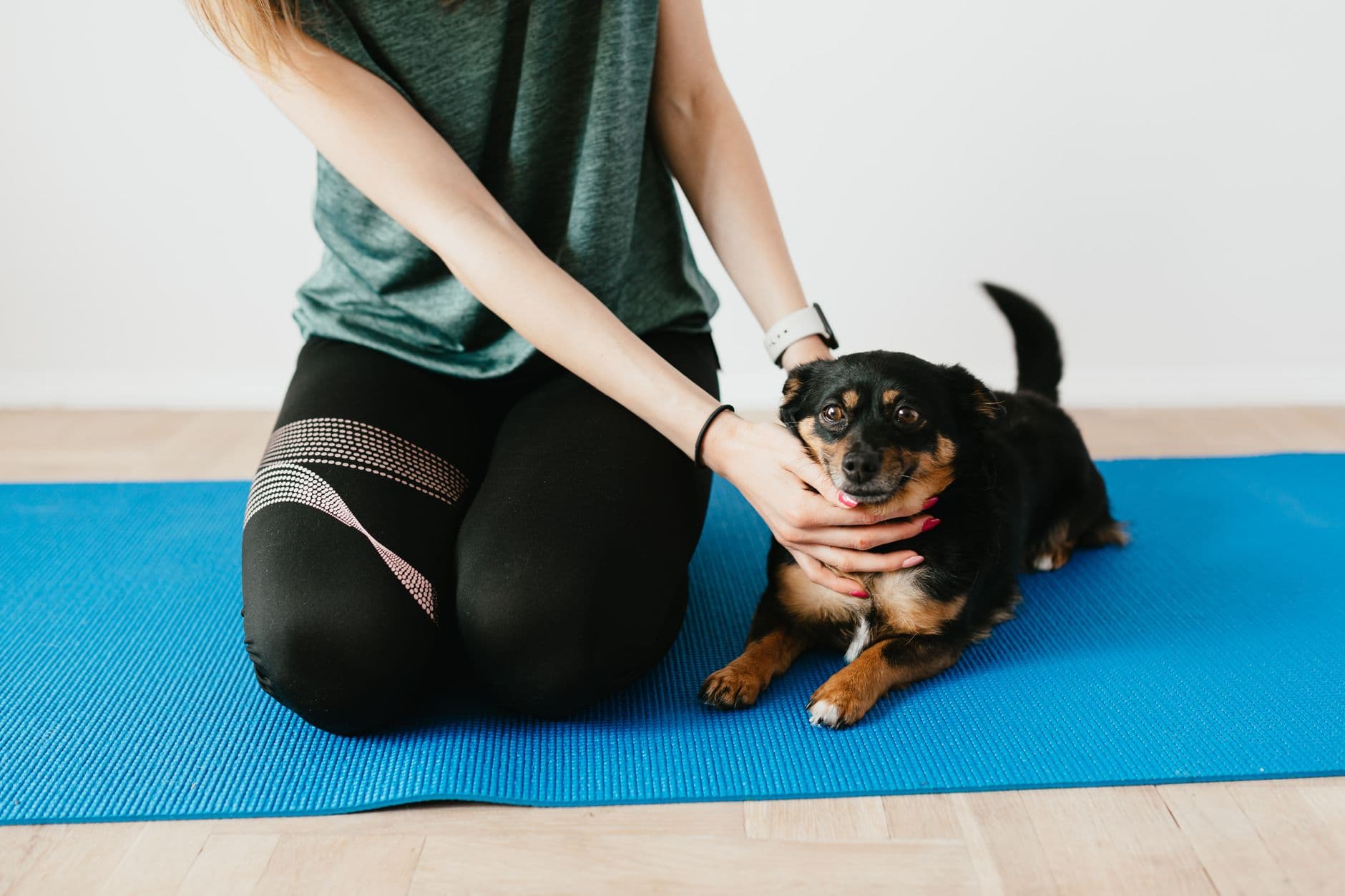
- Enter the space and let the dog sniff before any posing starts.
- Watch for voluntary calm, then reward it without crowding the dog.
- If the dog turns away, hides, or stops taking food, end the session cleanly.
A useful routine is plain and practical:
That approach also leaves room for your dog’s mood to change day by day. A young dog may need more breaks, a shy dog may need more distance, and an older dog may be content to lie nearby rather than join every movement. The point is not to get the same behavior every time. It is to notice the difference and adapt.
Why doga grew out of organized dog fitness, not just a trend cycle
Suzi Teitelman founded Doga in New York City in 2001. Paw of Now calls her the original dog yoga teacher. By then, organized canine fitness was already part of the conversation, with The New York Times running a 2001 story about dog agility that showed how quickly structured dog exercise was moving beyond novelty.
Why puppy yoga criticism belongs in the same conversation
The recent criticism of puppy yoga is a useful warning for any class that puts dogs in close quarters for human benefit. In the United Kingdom, puppy yoga became a growing wellness trend in 2023, and animal-welfare experts wanted it restricted or banned, especially because crowded classes and repeated handling can be stressful for very young dogs. The same rule applies in doga: the dog’s comfort comes first.
If the room is too busy, the handling is too much, or the dog keeps trying to get away, end the session.
This article was produced by Prism’s automated news system from verified source data, official records, and press releases, then run through automated quality and moderation checks before publishing. The system is built and supervised by the people who set the standards it runs under. Read our full AI policy.
Did this article answer your question?