American Legion Drum and Bugle Corps Kicks Off 2026 Season With Big Horn Ballyhoo
Believed to be the last American Legion drum corps in the country, Wyoming's 97-year-old 7th Cavalry opened 2026 with a ballyhoo at the Barn in Big Horn.
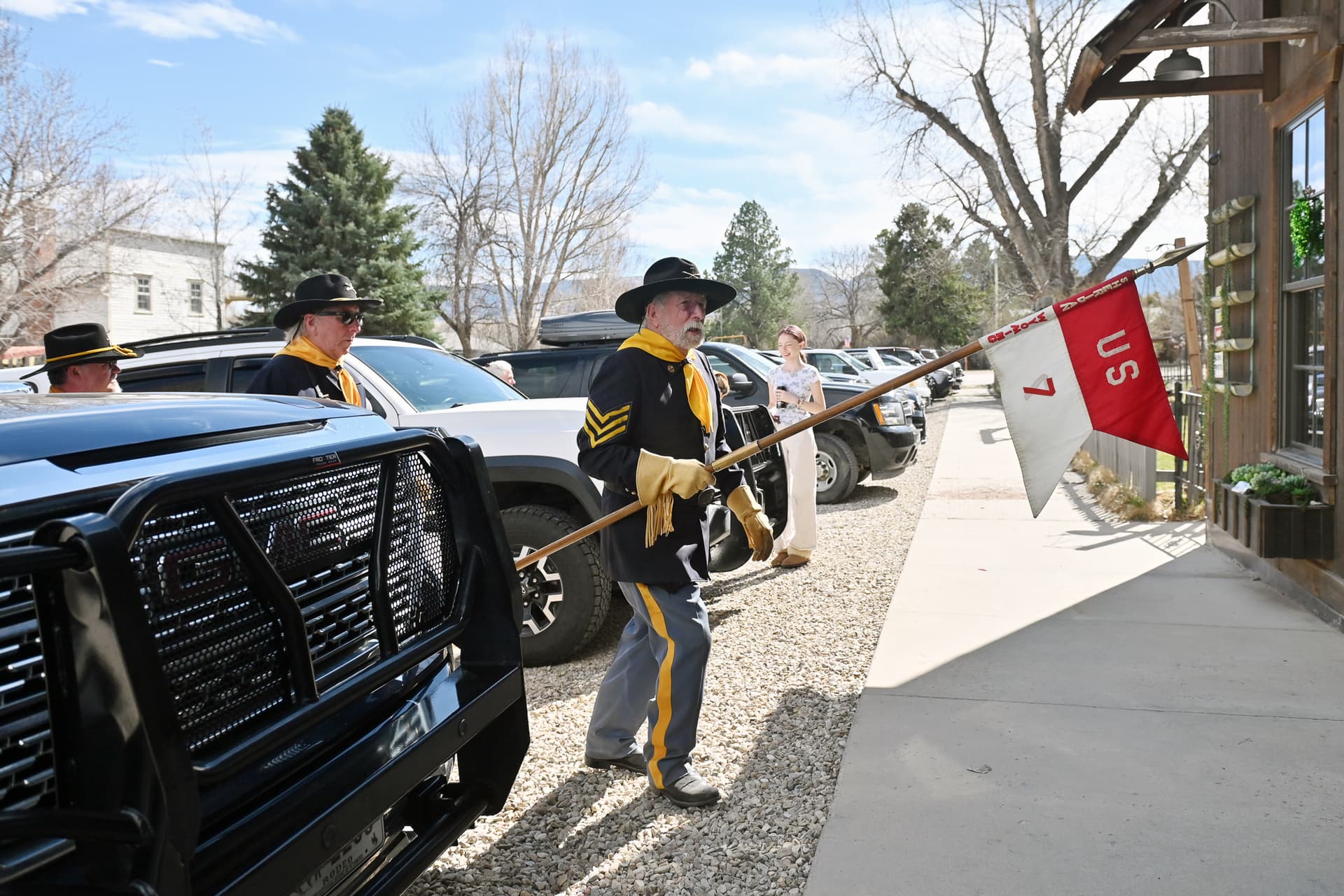
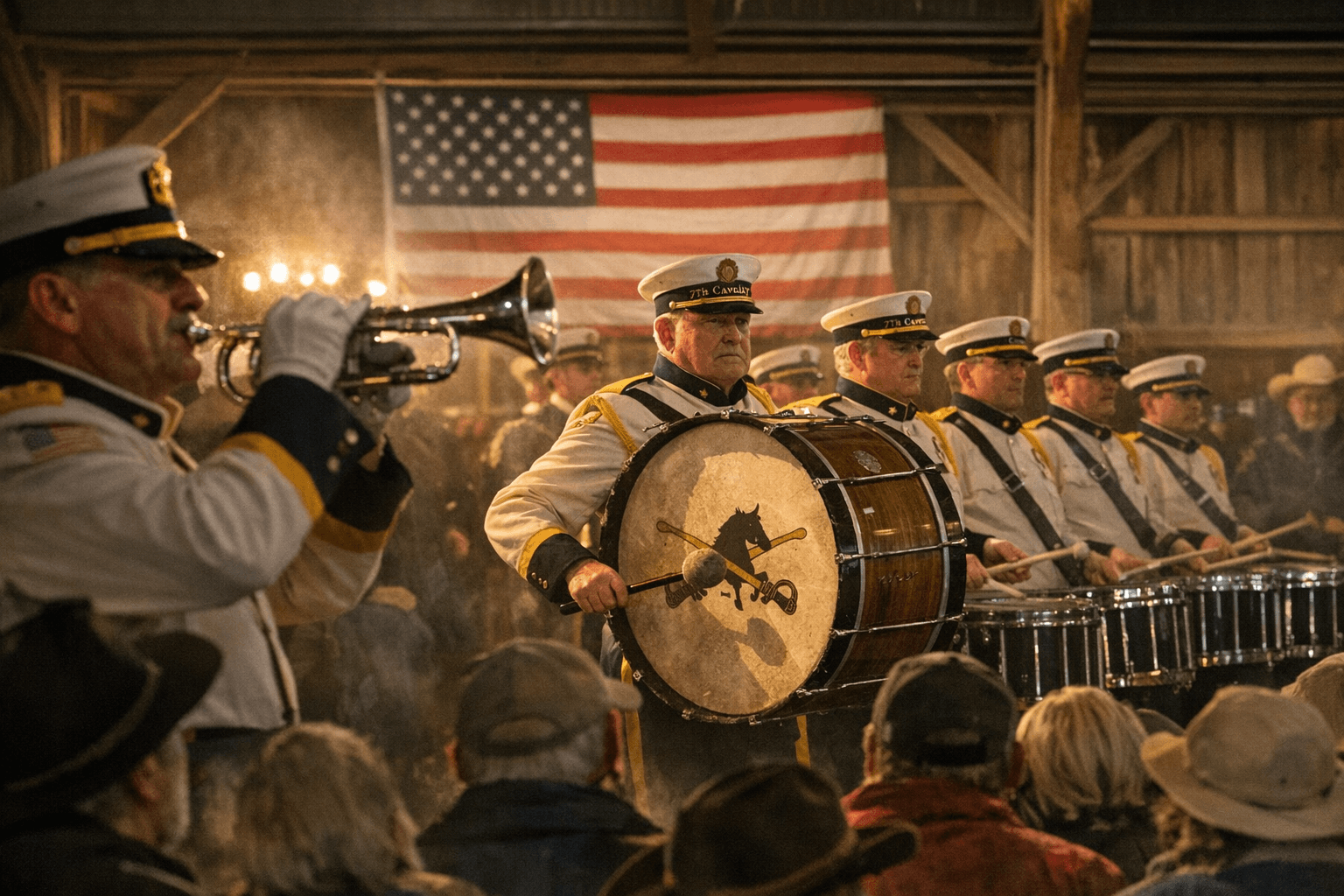
After the last horn call faded from Big Horn's St. Patrick's Day Parade, the American Legion Post #7 Cavalry Drum and Bugle Corps didn't pack up and go home. They marched to the Barn and played a ballyhoo.
That's how the tradition works. A ballyhoo is a drum corps institution: a post-parade informal performance, played not for judges or competition rubrics but for whoever followed the corps through the door. Rolls and flams bounce off walls instead of carrying down a street. The bugle calls that organized the march become the signal vocabulary for a close-quarters set. It's loud, it's direct, and it's the kind of percussion experience that reminds you why this music was built around human presence rather than amplification. The corps held its first ballyhoo of 2026 on March 21 at the Barn in Big Horn, Wyoming, with photographer Clint Wood on hand to document it.
The 7th Cavalry Drum and Bugle Corps has a 97-year head start on 2026. T.T. Tynan founded the American Legion Sheridan Post #7 Drum and Bugle Corps in 1929, and Corps Manager Wayne Hoff has long maintained it is believed to be the only drum and bugle corps in the United States still formally affiliated with an American Legion post. The corps plays out of Sheridan and its repertoire is anchored by "Garryowen," the Irish jig that served as the 7th Cavalry's marching song under George Custer. In parades, Monte Johnson leads the corps as General Custer in period buckskins with a saber. The uniforms are military-authentic, wool-blend jackets that members can dress with their own service medals.
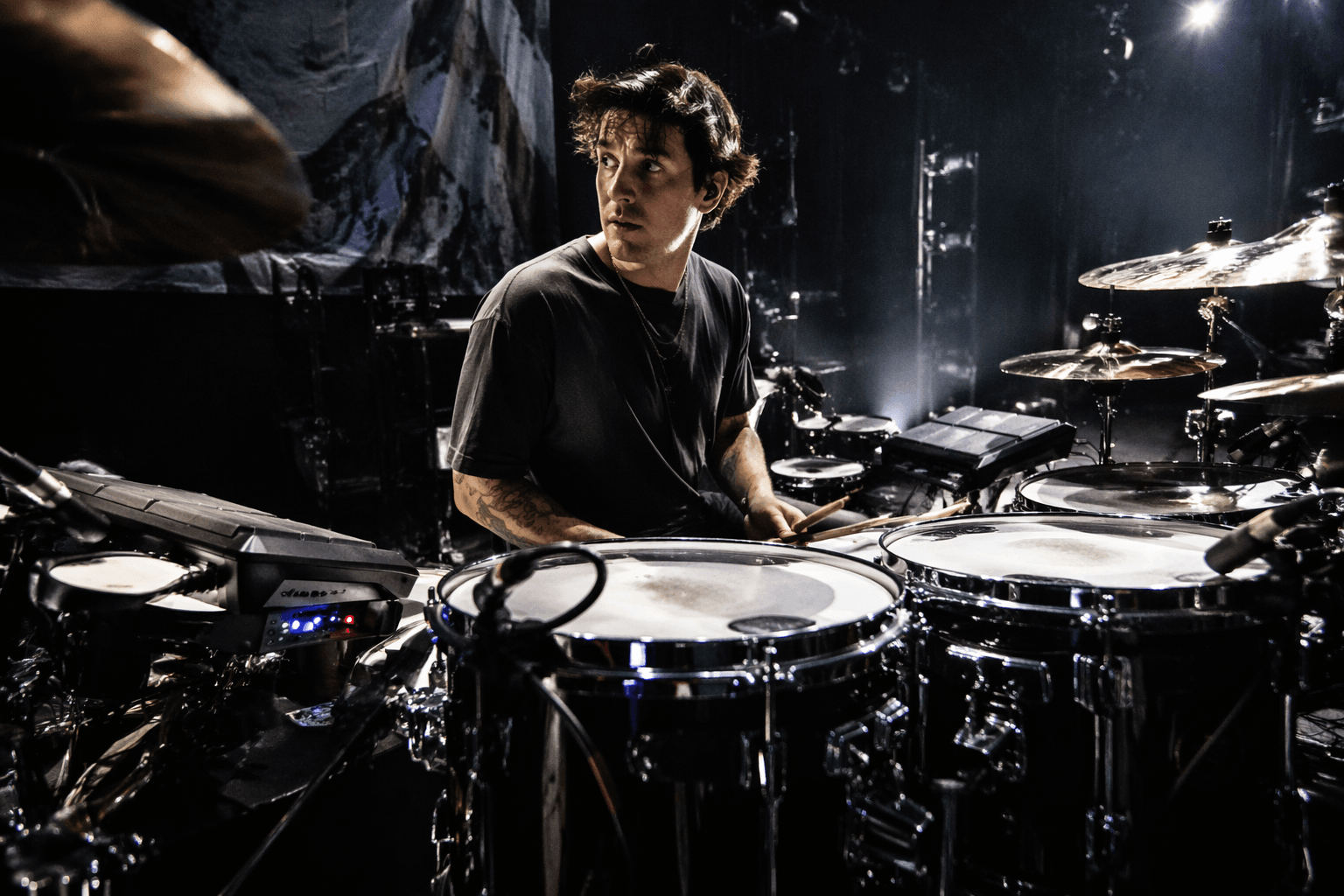
For drummers tracking the battery at a ballyhoo, the rudimental vocabulary is the core of the listen. The snare line drives sequences built around five- and seven-stroke rolls, flams, drags, and paradiddles linked into street beats and rolloffs. Tenor drums carry rhythmic color in the breathing space between primary accents. Bass drums anchor the pulse with the kind of low-register ring that a close-quarters venue amplifies naturally. The bugle section's signal calls, "Assembly," "Attention," "To the Colors," function as structural markers, cueing transitions in the ensemble and prompting a physical response from any veteran in the crowd who knows the calls by reflex.
The 2026 season opens with a financial headwind. The corps runs entirely on volunteer labor and community fundraising, and it did not receive certain grant funding it had sought. Sustaining travel, equipment maintenance, and operations now depends increasingly on local advocacy, a pressure familiar to nearly every community corps still active. The infrastructure for rudimental tradition is expensive, and the institutions that once funded it have contracted.
The 7th Cavalry's record counters the idea that small-town corps are museum pieces. They marched in the National Memorial Day Parade in Washington, D.C. in 2006, participated in the 97th American Legion National Convention parade in Baltimore in 2015, and were cited by True West Magazine as a factor in naming Sheridan the No. 1 Western Town in the United States. Getting from St. Patrick's Day in Big Horn to any of those stages took the same thing the ballyhoo runs on: people who showed up and played.
SIDEBAR: Parade Chops: A 15-Minute Street-Ready Routine
If watching a ballyhoo has you thinking about your own street drumming, here's a focused warm-up built around parade-essential rudimental fundamentals.
Start at the practice pad with five minutes of alternating single strokes at 60 bpm, concentrating on matched stick height at nine inches. The point is not speed; it's teaching both hands the same trajectory before layering any rudimental vocabulary on top. From there, move into five-stroke rolls. Set up four sixteenth notes into a downstroke, work the rebound back up, and let the stick return without forcing it. Five strokes appear constantly in corps street beats, in rolloffs, and in transitions between written phrases. Spend another two minutes on flams, making certain the grace note is genuinely quiet against the principal stroke. Sloppy grace notes stand out immediately in ensemble playing, and corps writing places flams at accent-heavy moments where the contrast matters most.
Close with five minutes of paradiddle combinations, moving from single to double paradiddle at a tempo that makes the sticking feel automatic. Paradiddles underpin much of the connective tissue in rudimental corps writing: the short fills between sections, the rolloff endings, the passages that set up a unison bass hit.
When you catch a corps in the street, the rolloff is the first thing to track. It's the rudimental phrase that cues the ensemble into play or movement, appearing at the top of nearly every sequence. After the rolloff, listen to what the lead snare plays in the breathing space between phrases; that's where individual rudimental vocabulary lives. Then pull back and listen to the bass drums as a section. If they ring and decay together, the battery has been working. If each drum has a slightly different ring, the corps still has rehearsal work ahead. That last test, requiring no sheet music and no trained ear, is the fastest way to hear whether a drum corps is truly locked.
This article was produced by Prism’s automated news system from verified source data, official records, and press releases, then run through automated quality and moderation checks before publishing. The system is built and supervised by the people who set the standards it runs under. Read our full AI policy.
Did this article answer your question?