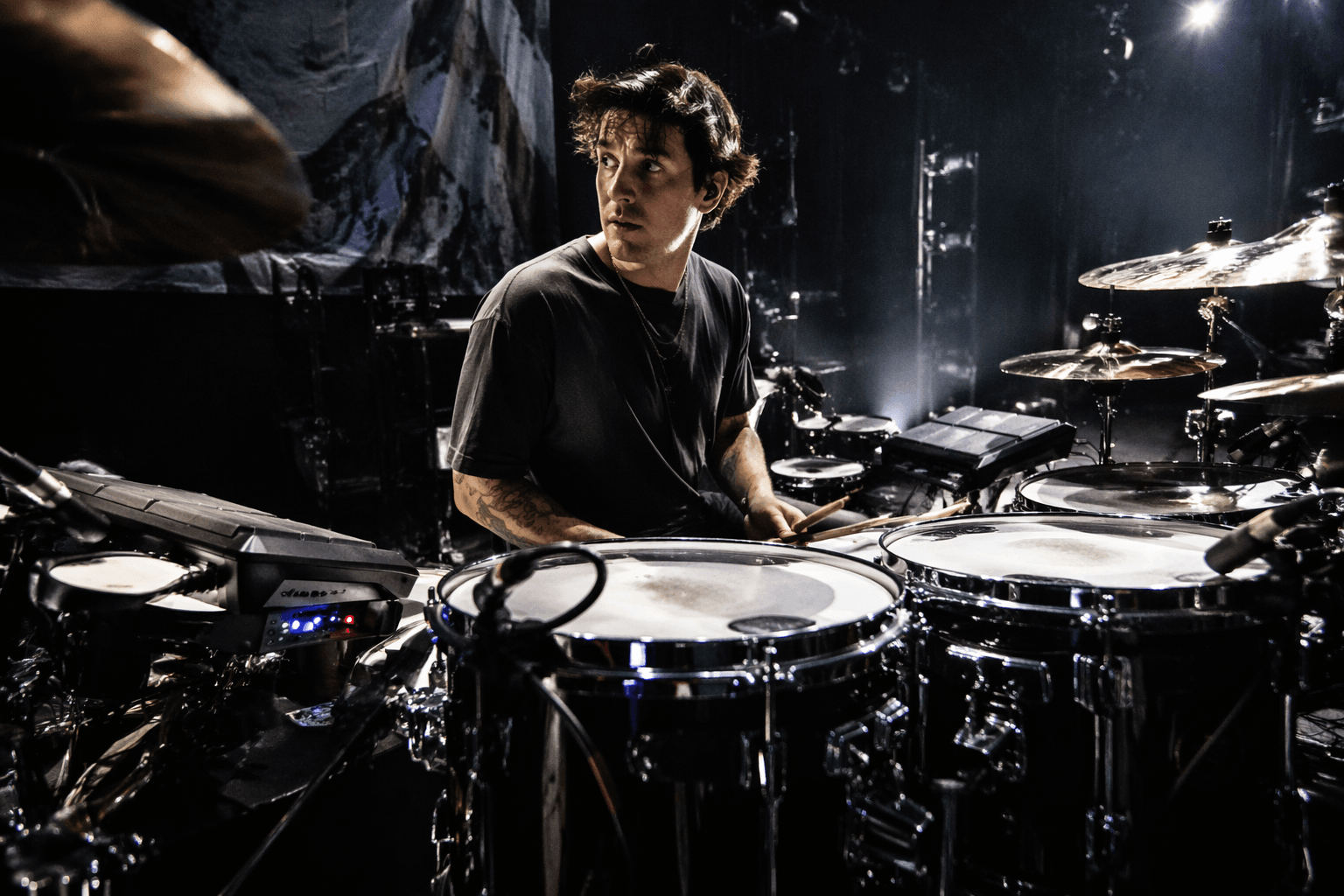
Classic drum-machine plugins bring vintage punch to modern production
Vintage drum-machine plugins work best when they back up a real kit, not replace it. TR-808, TR-707, TR-909, and LinnDrum-style tools still deliver the fastest path to punch.

About 12,000 TR-808s were made from 1980 to 1982, and Roland built the box to help pro musicians make demos. The strongest classic drum-machine plugins do not try to turn a drummer into a programmer. They give you the snap, thump, and oddball groove of the old boxes without the upkeep of old hardware. For live drummers and hybrid creators, that means one thing: these tools earn their place when they add character fast, then get out of the way.
Why these machines still hit
The reference points still matter because the original hardware was built for real production problems, not museum shelves. Late-1970s analog technology could not reproduce realistic drums very well, which is part of why the 808’s synthetic kick, snare, and handclap became so distinctive.
Roland followed with the TR-909 in 1983, combining tweakable analog circuitry for the kick, snare, clap, and toms with digital cymbal samples and MIDI. Then came the TR-707 and TR-727 in 1985, Roland’s first drum machines built around PCM samples. The LinnDrum, made by Linn Electronics from 1982 to 1985, sold about 5,000 units, and MoPOP attributes its popularity to high-quality samples, flexibility, and price.
Demo writing: the fastest route from idea to groove
If you are sketching songs quickly, the TR-808 family still makes the most sense. Designed with demo use in mind, its software descendants inherit a workflow that favors speed, simple parts, and immediate attitude. That is ideal when you need a beat that communicates the song before the band ever reaches the room.
The TR-707 and TR-727 software versions are especially practical here because Roland built in modern workflow tools alongside the old sound. Their Analog Circuit Behavior modeling pairs with drag-and-drop audio and MIDI export, plus tuning and decay controls. That combination matters when you are writing around a live drummer: you can sketch a pattern, move it into the DAW, and reshape it without rebuilding the part from scratch.
For demo writing, the least friction usually comes from whichever plugin gets you to a usable loop in the fewest clicks. The 707-style tools are especially efficient when you want a pattern with clear transient shape and instant midrange bite. The 808-style tools make more sense when the song needs a low-end anchor and a simple, memorable pulse.
Layering under acoustic kits
This is where classic drum-machine plugins become a drummer’s ally instead of a substitute. The job is not to fake the whole kit, but to reinforce the kick, sharpen the snare, or add a machine-floor under a live performance. The TR-909 is the obvious fit when you want that hybrid punch, because its analog drums and digital cymbals were built for contrast, and its MIDI-friendly design makes it easy to sync with a performance rig.

The LinnDrum style sits in the same lane for a different reason: those high-quality samples were always part of its identity. In a live context, that makes it useful for layering under acoustic toms or snare accents when you want a more finished, record-like edge without dragging in a giant hardware setup. A plug-in based on that sound can sit under a real kit without crowding it, especially when the goal is definition rather than domination.
If the arrangement already has a drummer in the pocket, these sounds work best as texture and reinforcement. A 909 kick layered under an acoustic beater gives the low end a hard boundary. A LinnDrum-style clap or snare sample can make backbeats feel more produced while still leaving room for cymbal decay and stick detail.
Electronic textures for gigs
Onstage, the value of a classic drum-machine plugin is not just the sound. It is the ability to bring a recognizable rhythmic color into a live set without hauling vintage hardware or relying on a complicated side rig. Roland’s software versions of the TR-606, TR-707, TR-727, and TR-909 add features such as tuning, decay, attack, flams, sub-steps, and multiple outputs, which makes them easier to integrate into hybrid setups.
That matters when a gig calls for a drummer to trigger fills, intro loops, or song-specific textures from pads or a laptop. The 707’s lo-fi punch is especially useful in that setting because its character comes in part from 25 kHz, 8-bit sample playback and downstream circuit quirks. In practice, that gives you a sound that lands quickly in a room, without needing much processing to cut through a band mix.
For live work, the best plugin is usually the one that keeps routing simple. Multiple outputs and direct export tools make it easier to send kick, snare, hats, and percussion to separate channels, while the original character stays intact.
Retro production without the hardware chase
When the brief is pure era color, the old machines still define the palette. The 808 covers the early-1980s low-end thump. The 909 brings the more aggressive blend of analog drums and digital cymbals. The 707 and 727 deliver the sharper, sample-based mid-1980s bite. The LinnDrum adds polished, sample-driven snap that helped shape a huge amount of pop and electronic music.
The broader drum-machine market is still active. By 2026, MusicRadar still had drum-machine buying guides and reviews, and Akai’s June 2026 MPC 3.9 update added built-in oscillator synthesis to Drum and Keygroup tracks.
This article was produced by Prism’s automated news system from verified source data, official records, and press releases, then run through automated quality and moderation checks before publishing. The system is built and supervised by the people who set the standards it runs under. Read our full AI policy.
Did this article answer your question?