Devon Stixx Taylor, from church kits to Super Bowl stages
Devon “Stixx” Taylor shows how church-rooted feel, hybrid gear, and high-profile visibility can turn a drummer into a full-stage creative force.

Devon “Stixx” Taylor and the new drummer’s job description
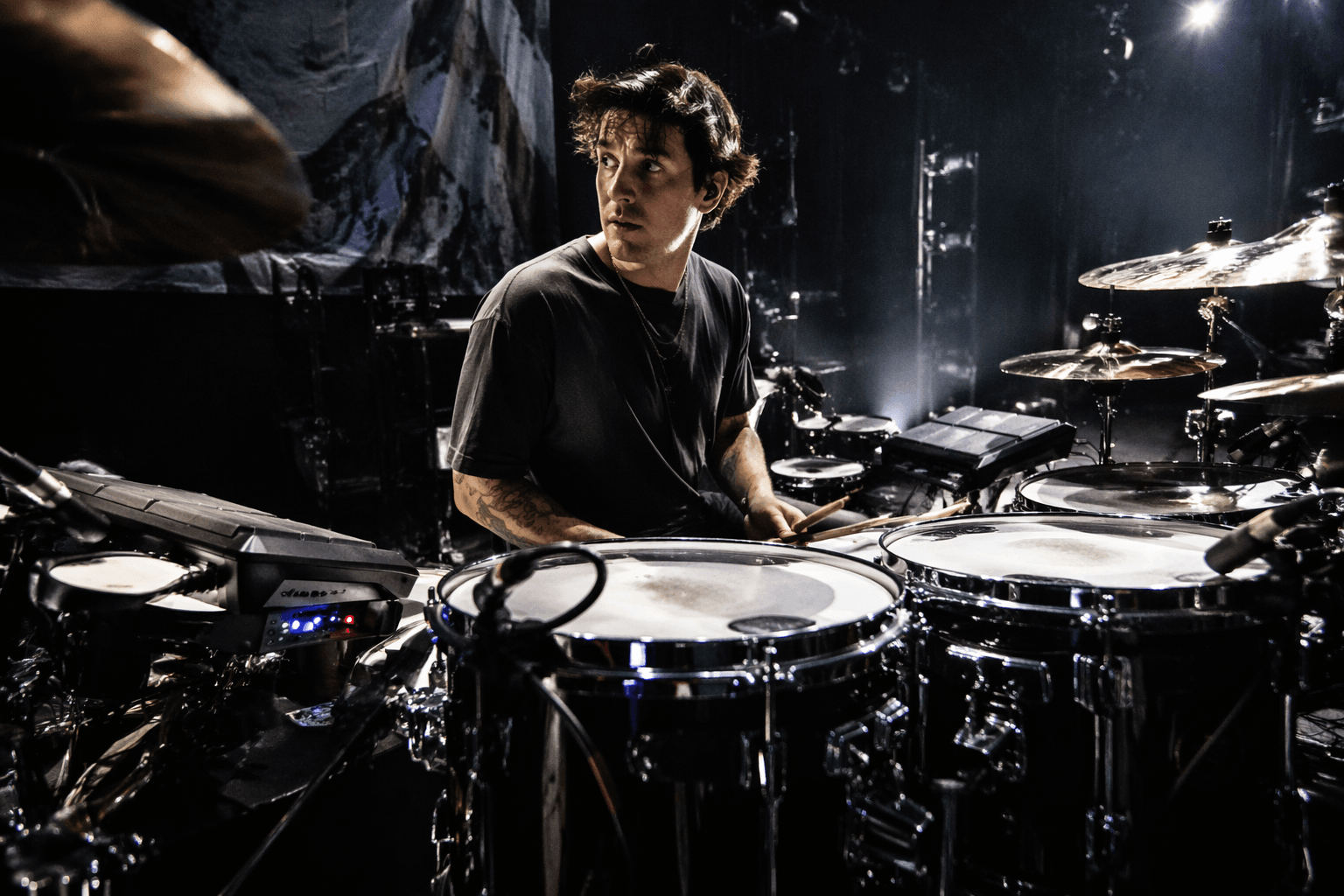
Devon “Stixx” Taylor is a blueprint for how a modern drumming career actually gets built. His rise runs from a drum kit at age 2 in Atlanta, Georgia, to church and gospel playing, then onward to stadiums, residencies, and the Super Bowl stage, where his name now sits inside the conversation around elite live performance. What makes his story especially useful is that it does not reduce success to chops alone. It shows how feel, versatility, showmanship, and visibility now matter just as much as speed or vocabulary.
Taylor’s profile in Modern Drummer, published on May 1, 2026, frames him as one of the clearest examples of the way the job has changed. A working drummer today is not just a backline timekeeper. Taylor’s path points to a musician who can support a star, shape the look and feel of a production, and move comfortably between acoustic playing and tech-heavy stage environments without losing identity. That is the real lesson embedded in his career: the drummers who last are the ones who can make themselves useful on multiple levels.
The church pipeline still builds elite players
Taylor’s foundation was laid in Atlanta church music, where gospel playing trained his ear, feel, and sense of pocket long before arena lights entered the picture. Splice says he grew up outside Atlanta, where his father was a pastor at a Baptist church, and that he developed his skills in the worship band. That detail matters because church settings often demand more than clean technique. They require responsiveness, dynamic control, and the ability to lift the room without overpowering it.
That background also explains why Taylor’s playing reads as musical rather than mechanical. In gospel environments, the drummer learns to serve the song, react to the band, and create momentum that feels alive. Those are the same skills that translate cleanly into pop, R&B, and stadium productions. The path from church kit to global stage is not accidental here. It is the result of years spent learning how to make groove, not just hit notes.
Why he fits the hybrid-drumming era
AIMM describes Taylor as a world-class drummer and multi-instrumentalist, and that label reflects the reality of the current touring world. He has performed with Justin Bieber, Rita Ora, Zendaya, Musiq Soulchild, and more, which tells you he operates in the multi-artist touring lane where adaptability is currency. Modern Drummer also names Usher, Justin Bieber, and Mary J. Blige among the artists he has worked with, reinforcing that his resume stretches across major platforms and styles.
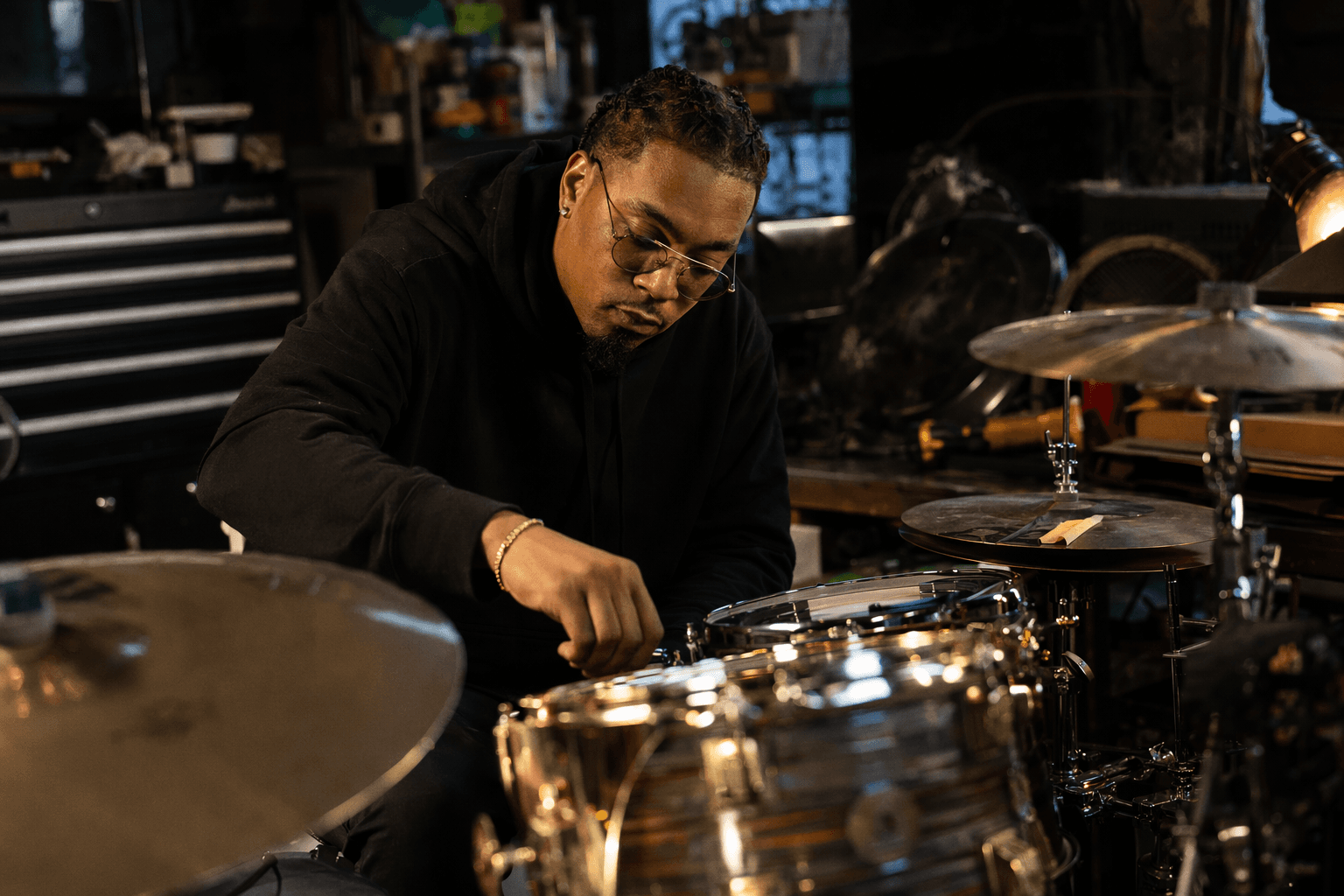
That range matters because the job has expanded. Drummers are now expected to navigate samples, triggers, electronic textures, click tracks, and large-scale production demands while still sounding human and distinct. Taylor’s profile emphasizes exactly that balance. He is not presented as a player who hides inside the machinery. He is presented as someone who uses the machinery to extend his voice.
For younger players, the practical takeaway is simple:
- Build deep time first, because every other skill sits on top of it.
- Learn how to lock with a band in real time, not just practice in isolation.
- Get comfortable with tech, because arena shows rarely run on acoustic drums alone.
- Develop a recognizable feel, since identity is now part of employability.
- Stay flexible enough to move across artists, genres, and production scales.
The Super Bowl moment put his role in the spotlight
Taylor’s most visible high-pressure moment came on February 12, 2024, when MusicRadar reported that he filled the drummer role for Usher’s Super Bowl halftime performance. That performance carried extra weight because Usher paid tribute to the late Aaron Spears with an empty golden drum kit onstage. Billboard also confirmed the tribute context around the halftime show, placing Taylor inside a moment that honored lineage as much as spectacle.
That staging says a lot about where Taylor stands in the modern ecosystem. He was not just playing a televised show. He was helping carry the musical weight of a tribute tied to one of the most respected drummers in contemporary R&B and pop. In a setting like the Super Bowl, every visual choice is amplified, and every part onstage becomes part of the story. Taylor’s presence there showed that a drummer can be both a functional player and a symbolic one.
The moment also underscored how the live industry now values drummers who can hold down a production at the highest level while understanding its emotional architecture. It is not enough to keep time on a big stage. You have to help shape the statement the stage is making.
We The Band shows how the sideman role has evolved
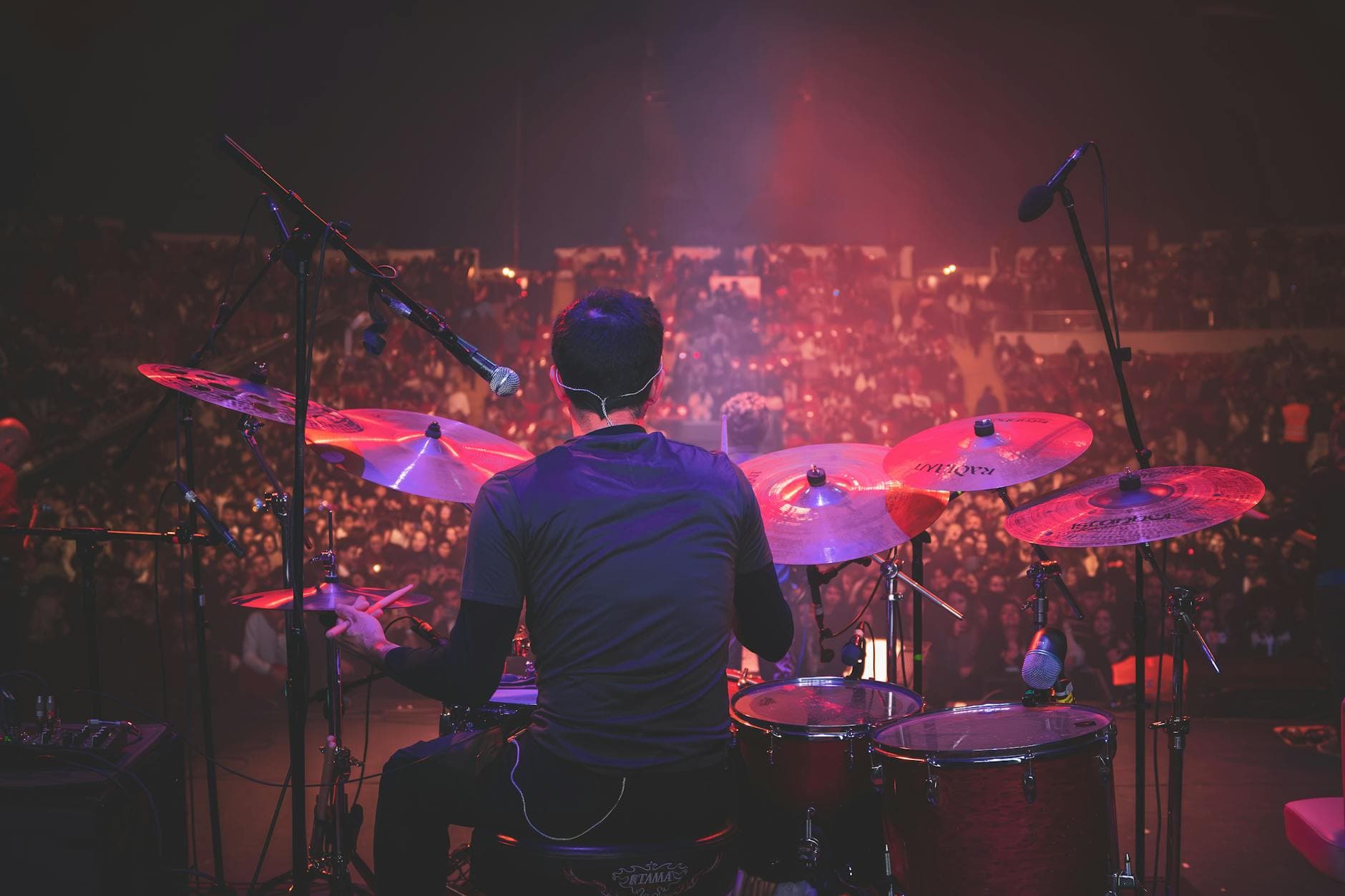
Taylor is publicly associated with Justin Bieber’s live band We The Band, and that connection is important because it shows how touring musicians are increasingly operating as branded creative units, not anonymous hired hands. Avex Music Group announced on June 5, 2025, that it signed We The Band, a move that reflects the group’s standalone value in the market. Taylor’s role as drummer in that ecosystem places him in the center of a modern touring model built around chemistry, brand recognition, and repeatability.
This is where the old idea of the sideman falls short. Taylor’s career lives in multiple lanes at once: artist support, live production, multi-instrumental work, and media visibility. That mix is becoming the new standard. A drummer with a strong personal brand can move through different projects while remaining recognizable, and that recognition can open doors that pure technique alone might never unlock.
What Taylor’s rise says about the next generation of working drummers
Taylor’s story is not a sudden breakout story. It is a long development arc that started in early childhood and matured through church, gospel, touring, and high-profile television. Essence reported in 2023 that the Trap Jazz documentary followed Devon “Stixx” Taylor, Chris Moten, and Cassius Jay in Atlanta, which places him inside a broader creative scene rather than an isolated success story. That matters because scenes still build careers, and Atlanta remains one of the most important places where rhythm, culture, and professional opportunity meet.
The bigger lesson is that the modern drummer is now expected to be a creative architect. You need the chops, but you also need the judgment to know when to drive, when to support, when to lean into technology, and when to let your personality come through without crowding the artist. Taylor’s path shows that the most valuable players are the ones who can make themselves indispensable in more than one way.
Modern Drummer’s May 2026 issue placing him among the featured voices of the moment confirms what the live world has already been saying. Devon “Stixx” Taylor is not just keeping up with the demands of the job. He represents the job as it now exists: deeply musical, highly adaptable, visibly branded, and built for stages that expect drummers to contribute far beyond the backbeat.
This article was produced by Prism’s automated news system from verified source data, official records, and press releases, then run through automated quality and moderation checks before publishing. The system is built and supervised by the people who set the standards it runs under. Read our full AI policy.
Did this article answer your question?