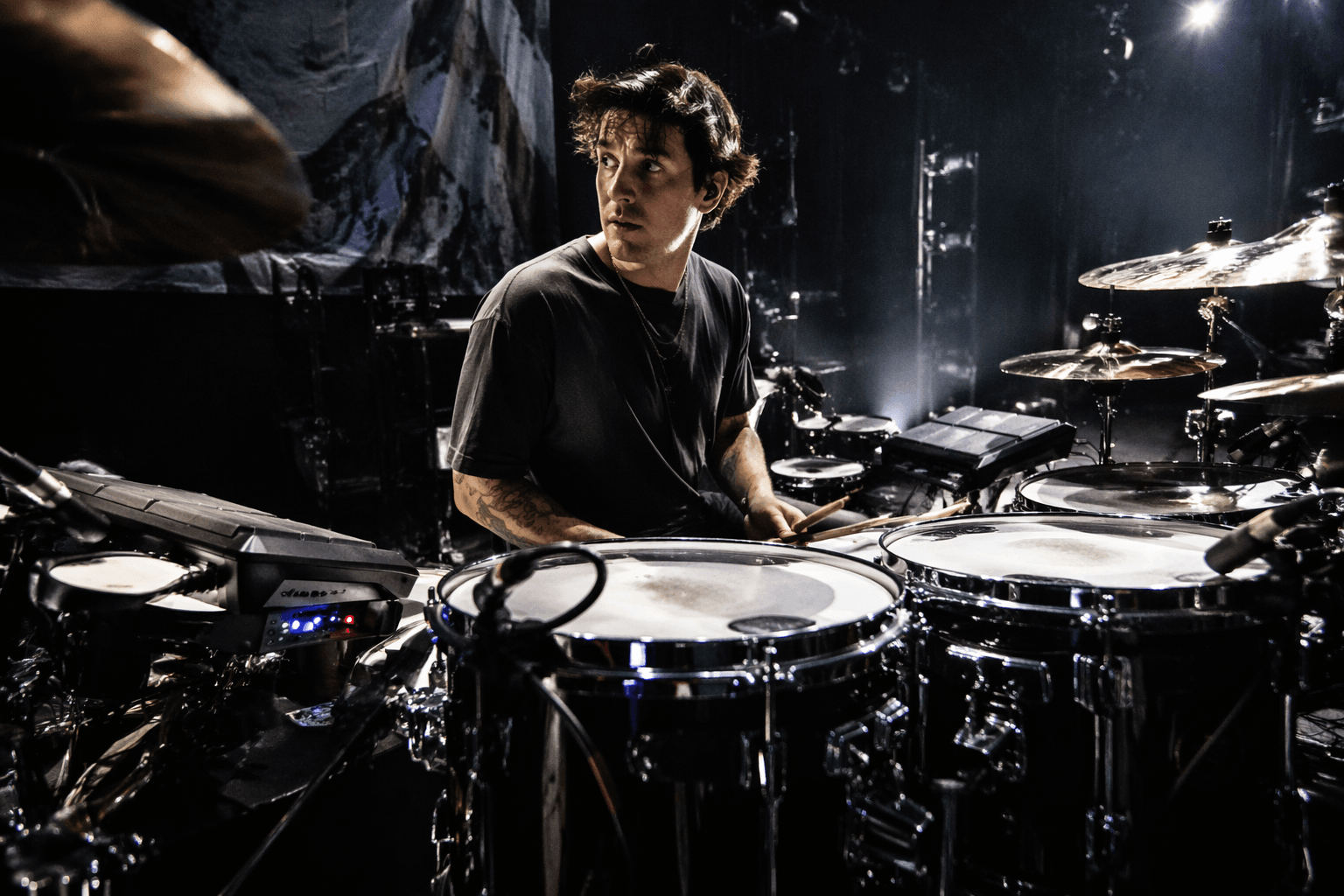
digitalDrummer spotlights the hidden history of electronic percussion
DigitalDrummer traces e-drums back to patents, mesh heads, and trademark fights, showing how 1997-98 Roland breakthroughs still shape feel and triggering.

Every digital kick drum carries a history most players never see: engineers arguing over response curves, patent holders protecting ideas, and manufacturers chasing a more acoustic feel without losing electronic control. DigitalDrummer’s latest feature pulls that story out of the shadows and places the people, decisions, and disputes at the center of electronic percussion.
The people behind the hidden circuitry
What makes this piece land for drummers is that it treats electronic percussion as a community of builders, not just a catalog of products. DigitalDrummer says it has spent almost 15 years interviewing inventors, developers, and brand managers who shaped modern e-drums, and that long-running archive gives the story real weight. The site’s earlier profiles point to the same pattern again and again: Dave Simmons and the SDX workstation trademark standoff, Steven Fisher and the V-Drums development path, Mike Snyder and the Trigger Perfect patent, Mario DeCiutiis and Alternate Mode’s conductive-ink work, Mark Moralez and the Versatriggers wireless proof-of-concept, and Wolfgang Flür and the Farfisa Rhythm 10 transduction array.
That list matters because it shows how broad the hidden history really is. E-drums did not evolve through one neat product line, but through a chain of patents, prototypes, and technical bets that reached across different brands and eras. When you play a modern kit, you are not just hearing samples and pads, you are also feeling the aftereffects of those early engineering choices.
The breakthroughs that changed pad feel
Roland provides one of the clearest markers in that timeline. In 1997, the company launched the TD-10 V-Drums, which it describes as the first V-Drums kit and the first electronic drum kit with mesh head pads for snare and toms. For players, that is the moment when the category started to move from novelty toward a more convincing playing surface, because mesh heads brought a different rebound, a more familiar stick response, and a more acoustic-like sense of control under the hands.
The next step followed quickly. Roland says the KD-120, introduced in 1998, was the first kick pad with a mesh head. That mattered just as much as the snare and tom pads, because kick feel is where many e-kits either win you over or lose you. A more responsive kick pad changes how your foot settles into the pedal, how the beater returns, and how the module reads the strike, which is why this breakthrough still echoes through today’s hardware decisions.
Roland also says the mesh-head design was developed in partnership with Remo Inc., which is a useful reminder that electronic drum innovation has never belonged to electronics companies alone. Drumhead manufacturing knowledge was part of the solution from the beginning, and that partnership helped bridge the gap between acoustic sensibility and digital triggering. The TD-10 also brought COSM technology for realism and sonic flexibility, so the hardware and the module were advancing together rather than separately.
Why patents and trademarks are part of the story
DigitalDrummer’s framing makes one point very clearly: electronic percussion history is also legal history. The Simmons example shows that brands can disappear, return, and then become the subject of disputes over who gets to use the name. DigitalDrummer says that when the Simmons era had ended, the name reappeared when Guitar Center used it without Dave Simmons’ permission, turning a brand revival into a trademark fight.
That is not just inside-baseball business drama. Trademark battles and patent claims shape which ideas survive, which names carry authority, and which design paths get funded or protected. For drummers, that affects the products that actually reach rehearsals, studios, and stages. It also explains why hidden history matters so much in this corner of the gear world: the playable surface you trust on a gig often sits on top of years of corporate risk, legal pressure, and technical problem-solving.
How thin launches get preserved
The same archive instinct shows up in DigitalDrummer’s 2022 coverage of Drum Workshop’s wireless acoustic/electronic convertible drum set, known as DWe. The outlet says the public unveiling was short on detail, so it reconstructed the facts from official release material, public-record documents, and its own archive. That approach fits the broader mission of the feature: when a launch is light on specifics, the record can vanish quickly unless someone documents it properly.
For drummers, that kind of record-keeping has practical value. It preserves the details that matter when you compare products across eras, especially in areas like triggering, conversion, and hybrid design where the marketing language can outpace the engineering explanation. DigitalDrummer’s hidden-history approach keeps those facts attached to the names of the people who actually built them.
The takeaway is simple: the modern e-kit you set up today still carries the fingerprints of the engineers, inventors, and legal fights that made mesh heads, kick pads, trigger systems, and modules possible. That is why this story starts with a digital kick drum and ends with the people who taught it how to feel like one.
This article was produced by Prism’s automated news system from verified source data, official records, and press releases, then run through automated quality and moderation checks before publishing. The system is built and supervised by the people who set the standards it runs under. Read our full AI policy.
Did this article answer your question?