Drummers Reveal Why Guitarists Are Making Band Rehearsals Unbearable
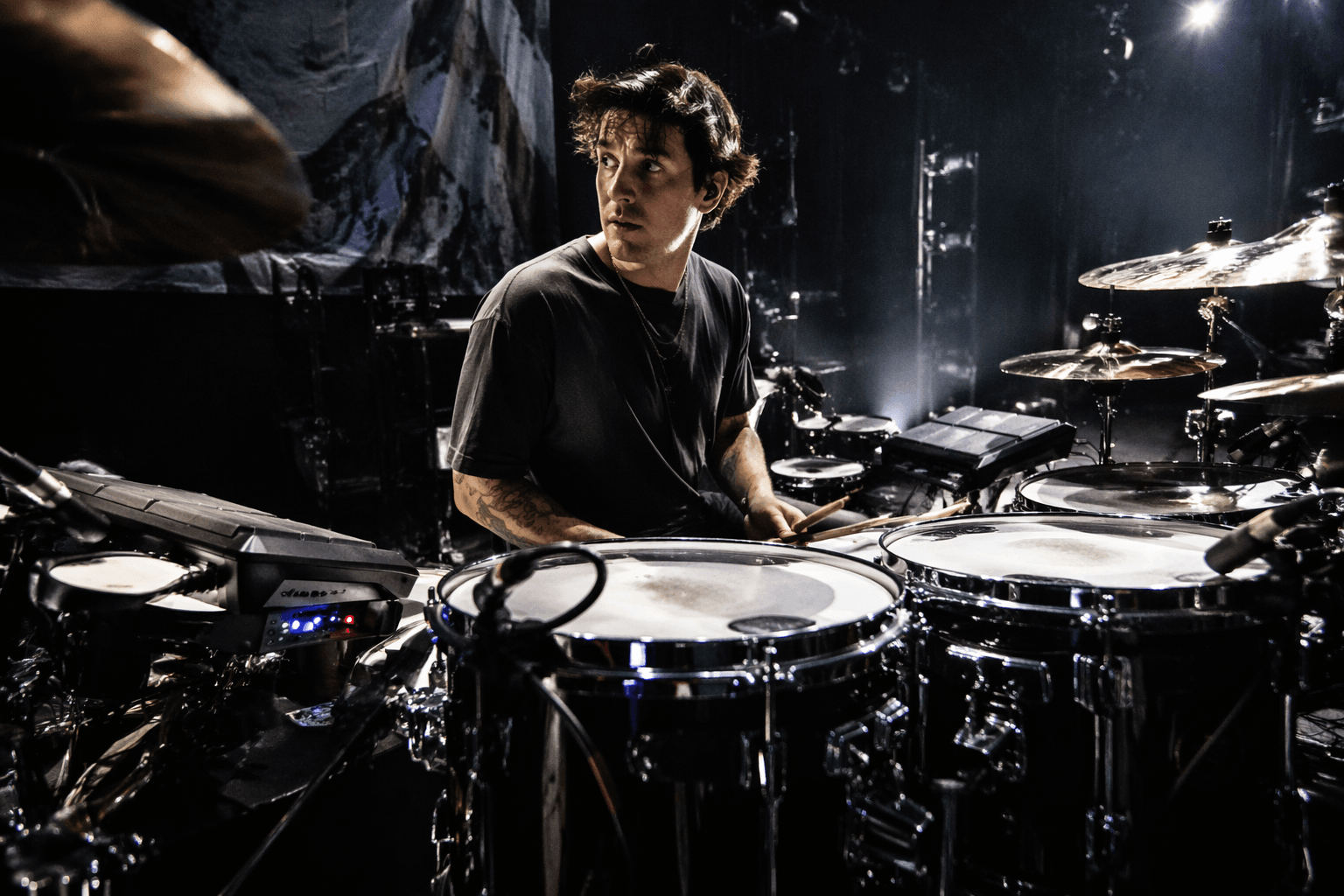
A drummer's viral rant coins the term "egotarists" for guitarists who make rehearsals unbearable, and every beat player who's hauled a kick drum up two flights of stairs knows exactly what he means.

I try to avoid rehearsals at all costs now. It's the only way I can survive to the fun bit of getting on stage and doing it." That sentence, from a Guitar World opinion piece by a professional drummer, has been ricocheting around the drumming community for good reason. It says out loud what most of us have been muttering under our breath for years, sticks in hand, waiting for someone to finish tweaking their modular synth so we can actually run the song.
This isn't a screed against guitarists as a species. It's a specific, well-documented complaint about rehearsal culture, and the case being made is hard to argue with once you've lived it.
The Egotarist Problem
The drummer at the center of this piece introduced a word that deserves to enter the permanent vocabulary of every rhythm section: "egotarist." His definition is precise and damning: these are "the players rapidly turning me into a 'drumkit owner' rather than a drummer." The distinction matters. A drumkit owner shows up, sets up, and sits there while everyone else does what they want. A drummer plays music with a band. The egotarist, whether consciously or not, collapses that difference every single rehearsal.
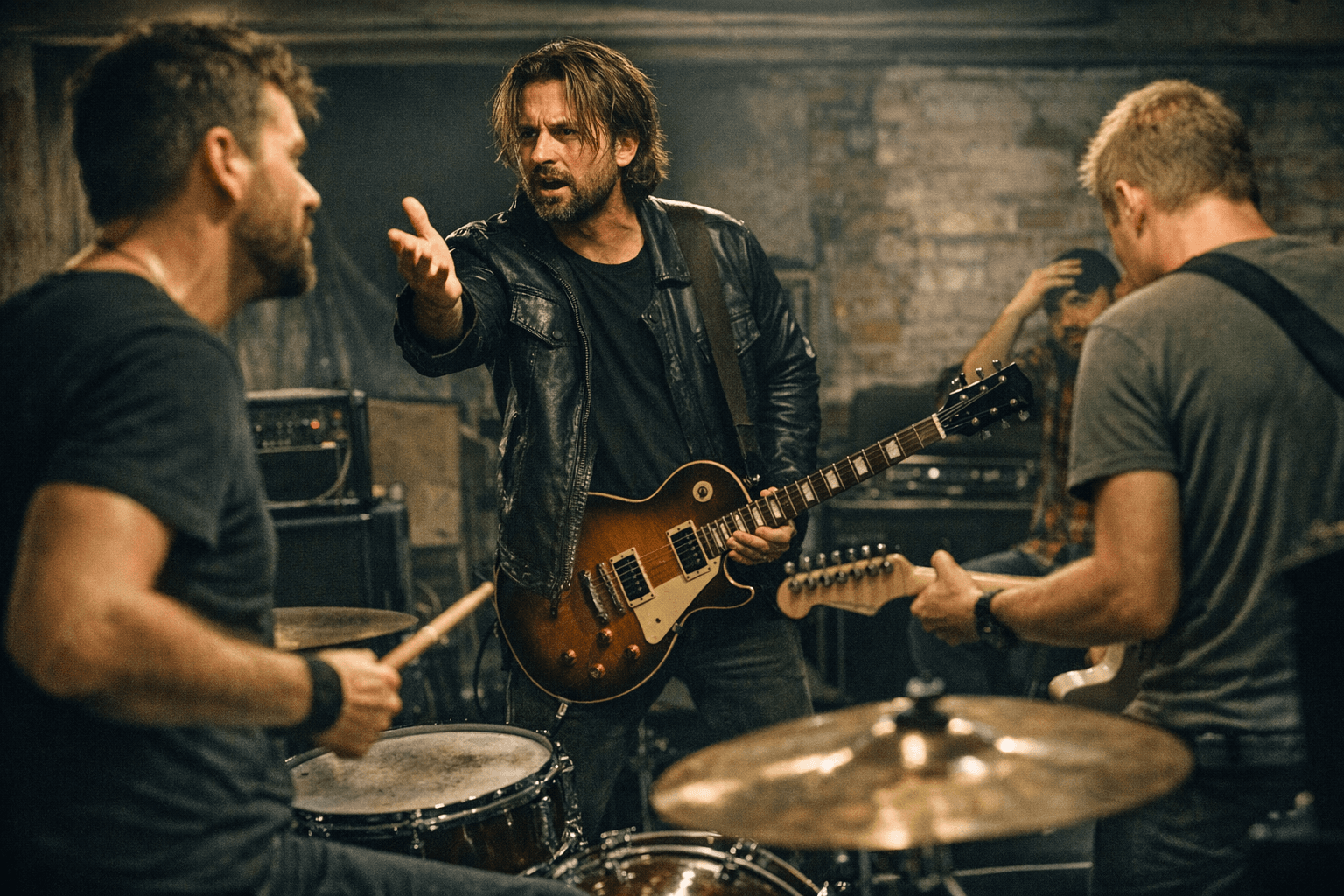
The complaint isn't about skill level or genre. It's about "a simple, but pervasive lack of rehearsal etiquette, and a weird status quo in which certain behaviour is acceptable from guitar players." That status quo is the real problem. Somewhere along the line, bands normalized behavior in the rehearsal room that would be completely unacceptable on stage, and guitarists, more than any other instrumentalist, seem to have benefited from that double standard.
The Widdly-Widdly Setup Problem
Here's where the piece gets surgical. The opening offense isn't bad tone or forgetting chord changes. It's noodling during setup, what the drummer colorfully calls "the widdly-widdly." His point lands because it's backed by a concrete time comparison: "It can take me up to 15 minutes to get ready as a drummer, and you're messing about, addicted to the finger motion, rather than getting ready too."
Fifteen minutes is not a trivial amount of time. A drummer arriving at a rehearsal space is hauling hardware, positioning stands, tuning heads, mounting cymbals, adjusting throne height, running a quick check across the kit to make sure nothing rattled loose in transit. That's legitimate, time-intensive physical work. Meanwhile, the guitarist plugs in, immediately begins running pentatonic shapes at half tempo, and calls it setup. "Once you've sated yourself, only then will you get into proper setting up. By which point everyone else is waiting for you."
The subhead from the original Guitar World piece names the offenses directly: "Your noodling, new toys, bad cables, and blasé attitude to learning songs is turning me into a rehearsal-hating retiree." Each item on that list is its own rehearsal-room crime. New toys is particularly sharp, because every drummer knows the feeling: band books the room for two hours, the guitarist shows up with a new pedal board configuration or a modular unit full of cables, and the first 40 minutes evaporate into dialing in sounds that could have been dialed in at home.
The Shared Space Argument
The drummer's central philosophical point is so obvious it shouldn't need stating, yet apparently it does: "The rehearsal space is a shared space, so share it." He follows that with a rhetorical question that stings precisely because the answer is self-evident. "Would you dare to exasperate an audience by asking them to bear with you while you try a new setting during a show? Don't answer that."
That's not a trivial comparison. Bands generally hold themselves to a higher standard of consideration toward paying audiences than toward each other. Which is backwards. Your bandmates are the people you're supposed to trust most in a musical context. Treating rehearsal time as personal practice time, or as an opportunity to audition new gear at everyone else's expense, is a failure of that trust.
The Drummer's Logistical Reality
Part of what makes the egotarist behavior so grating is the asymmetry of logistics that drummers deal with before anyone even plays a note. The piece puts it plainly: "A car full of cumbersome gear, first in and, inevitably, last out, and often unable to really go to town in the bedroom or home environment."
That last clause is worth sitting with. Guitarists can practice at home at nearly any hour, at low volumes, through headphones, with the exact pedal chain they'll use at rehearsal. A drummer's home practice options are genuinely limited. The electronic kit, as the piece notes with some sharpness, "is effectively a different instrument, before you pipe up." Playing an e-kit with mesh heads and a practice module is useful, but it doesn't replicate the feel, the rebound, the stick response, or the physical engagement of a real acoustic kit in a live room. So when a drummer finally gets into a proper rehearsal space with a real kit, that time is precious in a way it simply isn't for a guitarist who's been woodshedding the parts on their couch all week.
Getting in first, loading in a kick drum, a snare, a hardware bag, a cymbal bag, and everything else while other band members are still parking is just the cost of being a drummer. Getting out last, after breaking everything down and repacking while the guitarist has already rolled up their cable and is checking their phone, is the other end of that cost. The egotarist who burns 20 minutes of setup time noodling is eating directly into the time a drummer sacrificed significant physical effort to be there for.
Is There Hope?
The original Guitar World piece ended its subhead with a qualifier: "But there's hope for you yet." That's not nothing. The drummer making these arguments isn't calling for guitarists to be expelled from band life. He's calling for basic reciprocal respect in a shared space, which is a low bar that any serious musician should clear without much difficulty.
The solutions implied by the complaints are straightforward enough:
- Save the new pedal experiments for home, or arrive early enough that the dialing-in is done before anyone else needs the room to function.
- Treat setup time as setup time, not noodling time. The finger motion can wait.
- Learn the songs. Actually learn them. A "blasé attitude to learning songs" wastes everyone's rehearsal hours and insults the people who did their homework.
- Recognize that the rehearsal room clock is running for everyone simultaneously, not just for you.
The drummer writing that Guitar World piece is experienced enough to know how to "get away with" skipping rehearsals without it hurting his live performance. That's a skill born of necessity, not preference. The fact that he'd genuinely rather risk a mistake in front of an audience than spend another hour in a small room watching someone run through a wah-wah collection says everything about how corroded the rehearsal experience has become.
The egotarist isn't ruining music. But they are quietly, persistently, rehearsal by rehearsal, making band membership feel less worth it for the people they're supposed to be making music with.
This article was produced by Prism’s automated news system from verified source data, official records, and press releases, then run through automated quality and moderation checks before publishing. The system is built and supervised by the people who set the standards it runs under. Read our full AI policy.
Did this article answer your question?