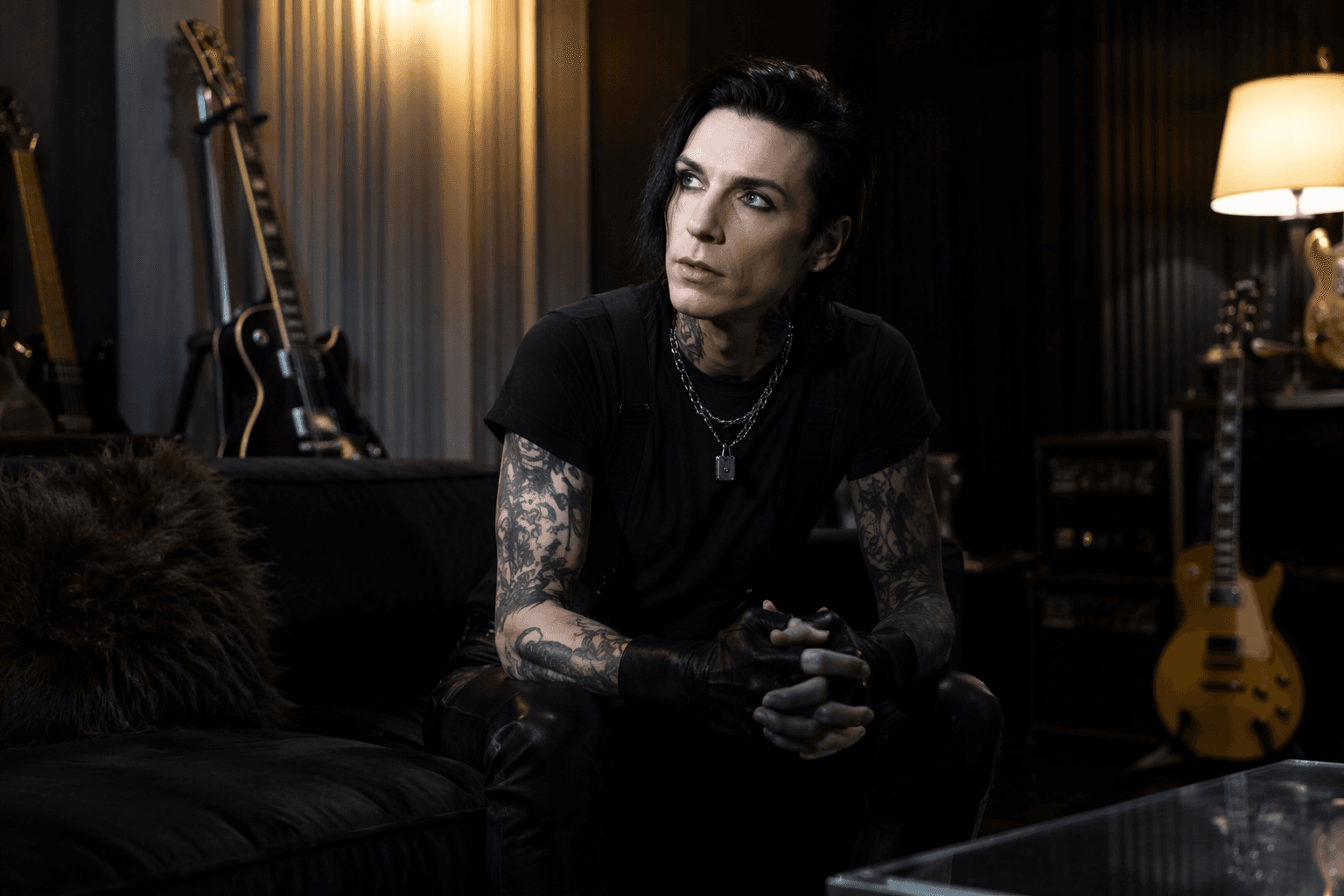
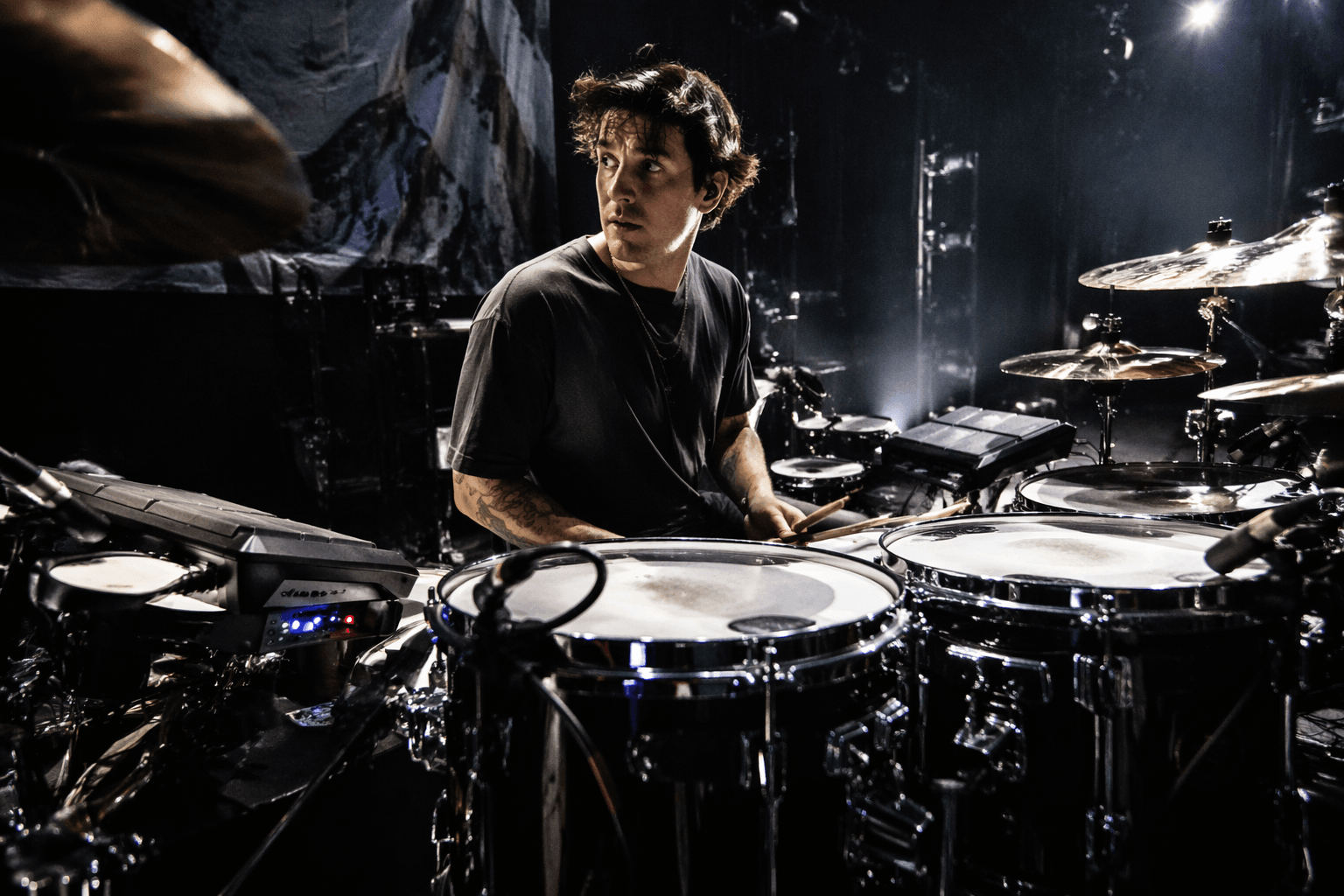
Greg Clark Jr. moves from church drums to Will Smith and Stanley Clarke
Greg Clark Jr. keeps his voice intact by playing with taste, not muscle. That is how a church-rooted drummer can move cleanly from Will Smith’s pop scale to Stanley Clarke’s fusion world.

Greg Clark Jr. is the kind of drummer whose résumé only makes sense if you listen for the thread underneath it. He can come out of church, step into Washington, D.C. club work, back a global pop tour, and still sound like himself, and the new Modern Drummer profile makes that the whole point. The recurring words in his own way of talking about music are “interesting” and “100 percent!”, and that feels less like a catchphrase than a working philosophy at the kit.
A voice that holds together across different worlds
Modern Drummer dated the profile to June 1, 2026 and credited it to Mark Griffith, but the story it tells reaches much farther back than that issue. Clark was born and raised in Washington, D.C., started playing in church at about age 4, and was already around clubs by roughly age 17. That early split between sacred pocket and working-band flexibility explains a lot about why he lands so naturally in very different settings now.
His public bios place him in Los Angeles today, where he works as a musician, producer, clinician, and recording artist. One artist page lists him as 36, while a newer page lists him as 37, a small but useful reminder that his profile has been moving upward in real time. The important part is not the number. It is that the paperwork around him keeps getting updated because the work keeps expanding.
The D.C. background matters because it built range, not just chops
Clark’s Washington, D.C. years gave him a vocabulary that stretches well beyond one lane. The Modern Drummer feature points to work with Raheem DeVaughn, Cody Simpson, Daniel Weatherspoon, Tamar Braxton, Manhattan Transfer, Take 6, Ricky Minor, Snarky Puppy, SWV, and Ledisi. His artist bios add even more range, including Ciara, the Los Angeles Philharmonic Orchestra, LeAnn Rimes, En-Vogue, Alice Smith, Kinga Glyk, Coi Leray, and Billy Porter.
That list is not just a pile of credits. It shows the basic survival skill of a modern working drummer: be credible in R&B, pop, vocal music, orchestral environments, fusion, and television without flattening your own feel. Clark’s career suggests that the goal is not to sound identical in every room, but to keep a recognizable center while changing the outer shape of the part.

What “interesting” and “100 percent” mean behind the kit
The strongest lesson in the profile is that Clark’s musical personality seems to live in the decisions he makes, not in the amount of notes he plays. “Interesting” suggests curiosity, arrangement awareness, and a refusal to sleepwalk through a chart. “100 percent!” suggests commitment, the kind that lets a groove feel fully inhabited even when the part is simple.
That combination is why the piece reads like a quiet master class for working drummers. Clark’s playing is described as taste-driven rather than ego-driven, which is exactly how you stay employable when the gigs swing from giant-pop visibility to elite fusion detail. The drummer who can hold back, support the song, and still leave a fingerprint is the one who keeps getting called back.
Will Smith is a scale test, not just a celebrity credit
The Will Smith connection gives the story a huge-stage context. Smith announced his first-ever headlining tour, the Based On A True Story Tour, on March 17, 2025, and listings showed the run stretching from June 25, 2025 through September 2, 2025, with stops across Rabat, Morocco, France, Spain, Germany, Switzerland, Italy, Belgium, Denmark, Austria, Norway, the United Kingdom, and Paris. That is not a novelty cameo. It is a real touring framework with international audiences and the pressure that comes with it.
For a drummer, that kind of gig demands more than feel. It asks for stamina, command, fast adaptation, and the discipline to make a show feel huge without turning it into a clinic. Clark’s value in a setting like that is that he can deliver visibility without losing the pocket that made him useful in the first place. The audience gets the scale; the band still gets the drummer.
Stanley Clarke puts him in a different kind of high-level conversation
The Stanley Clarke side of the story is just as telling, but in a different register. Stanley Clarke’s official site describes him as a multi-Grammy-winning bassist, composer, and producer, which places Clark Jr. in a serious jazz-fusion lineage rather than a nostalgia circuit. That matters because fusion players and bandleaders are often listening for detail, time feel, phrasing, and the ability to shape the architecture of a tune on the fly.
A drummer who can move from Will Smith’s large-format pop world into Stanley Clarke’s language has to carry more than chops. He needs context, ears, and a sound that stays personal even when the gig changes vocabulary. That is the exact kind of versatility younger players spend years trying to build, and Clark’s current work shows what it looks like when that process pays off.
The gear and the TV date both point to the same reputation
Clark’s endorsement pages list TAMA, Evans, Sabian, Vater, Protection Racket, and Puresound, which fits the profile of a player trusted to show up prepared and consistent. Hardware and heads matter here not as branding points, but as clues about a drummer whose reliability spans styles, stages, and setup demands. The gear list makes sense because the career makes sense.
That same reputation showed up when he guest-drummed on Late Night with Seth Meyers and the 8G Band from October 9 to 12, 2023. TV work is one of the clearest pressure tests in the business: the chart has to be right, the time has to sit, and the feel has to translate instantly on camera. Clark’s earlier church roots, DC club years, and wide credit list all point to a player who had already learned how to make a part land cleanly under the brightest lights.
Greg Clark Jr. is compelling because he does not treat versatility like camouflage. He uses it to stay recognizable. That is the real lesson in the new Modern Drummer profile, and it is why the path from church drums to Will Smith and Stanley Clarke feels less like a leap than the natural result of playing every room with the same 100 percent commitment.
This article was produced by Prism’s automated news system from verified source data, official records, and press releases, then run through automated quality and moderation checks before publishing. The system is built and supervised by the people who set the standards it runs under. Read our full AI policy.
Did this article answer your question?