How a 1973 drum break became a hip-hop classic
Biggie opens the door, but the real story is the break’s pocket, spacing, and loop-ready tone. A 1973 Queens protest single became hip-hop’s reusable drum DNA.
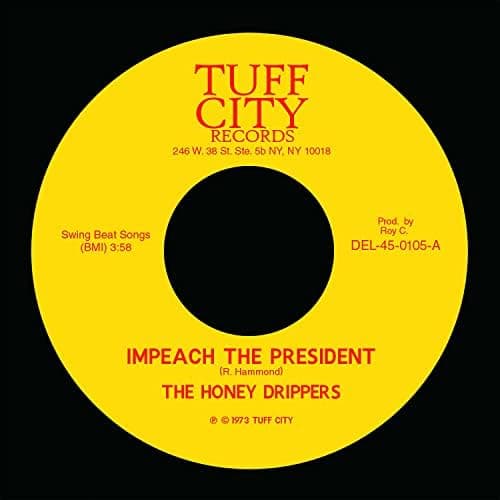
Biggie’s “Unbelievable” is the easy way in, but the real fascination is how a few bars of drums kept finding new lives for decades. The Honey Drippers’ “Impeach the President” has the kind of feel beat-makers chase on purpose now: clean enough to loop, loose enough to breathe, and human enough to keep changing once it hits a sampler.
The single that started as a protest and became a crate-digger prize
“Impeach the President” first came out in 1973 on Alaga Records, written and produced by Roy C. Hammond. The Honey Drippers were not a polished touring act but a group of African-American high school students from Jamaica High School in Jamaica, Queens, recorded by Hammond in New York City. The record was a protest song aimed at impeaching Richard Nixon during the Watergate era, and the B-side was “Roy C’s Theme.”
Part of the mystique comes from how scarce the original single reportedly was. One source says only about 100 copies were pressed, which is the kind of detail that turns a local 45 into something like folklore. Long before it became a hip-hop staple, it already had the two things collectors love and producers need: obscurity and a drum part with a shape you could hang a song on.
Why the break works so well
The reason this break survived the jump from record bins to MPC pads is not nostalgia, it is design. The groove is tight and stripped-down, with enough pocket to feel alive but enough spacing that the drums do not crowd the bar. That leaves room for a bassline, a vocal, or another sample to sit on top without fighting the backbeat.
Tone matters too. The kick and snare sit in a sweet spot that reads clearly when lifted, and the hi-hat motion gives the loop a forward pull without turning it into clutter. For drummers, the lesson is simple: a beat does not have to be flashy to be durable. If the pulse is stable, the accents land right, and the parts leave air around them, the loop can survive almost anything producers throw at it.
How the reconstruction shows the mechanics
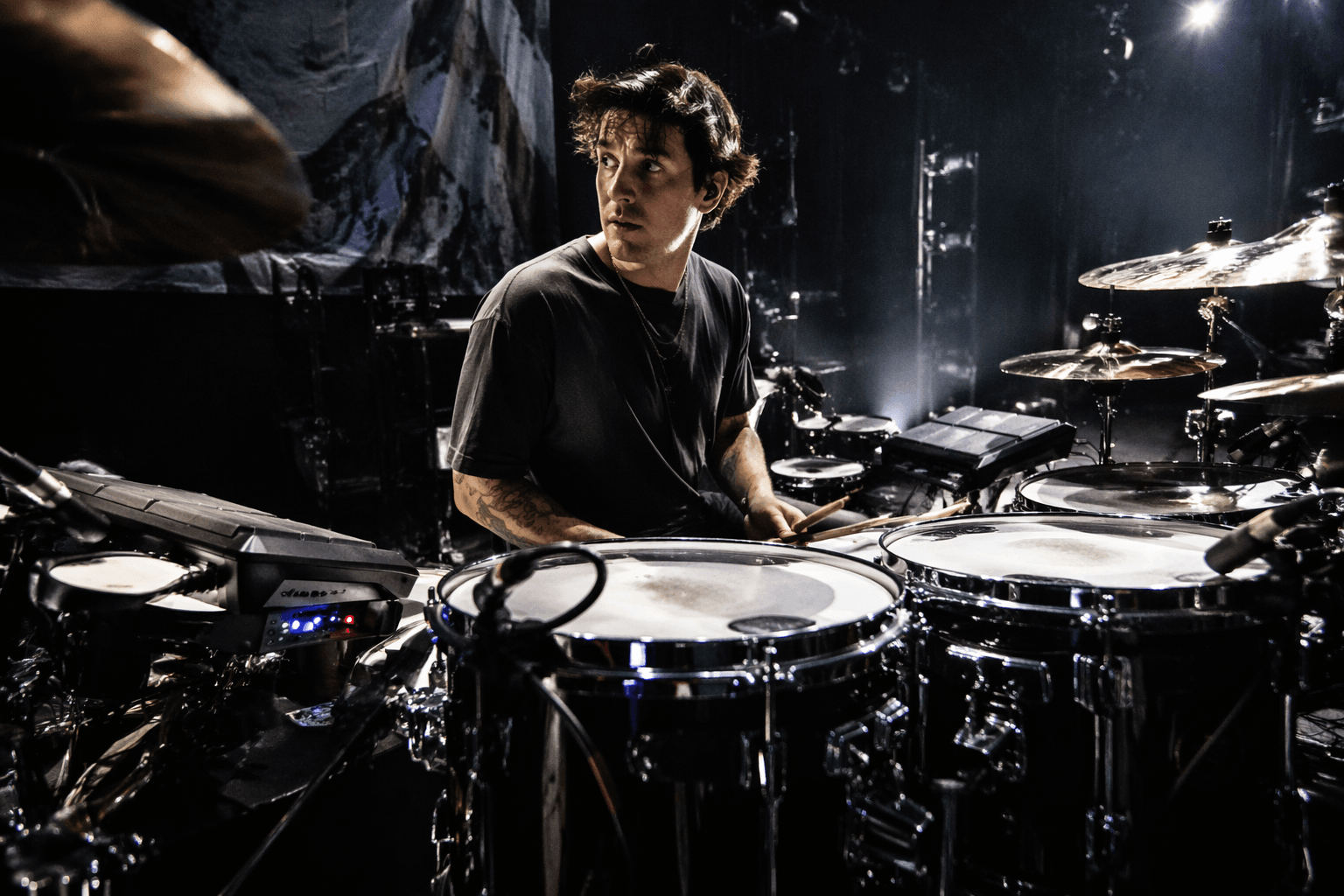
The recreation built that feeling from the ground up with a deliberately minimal acoustic setup. Jessica and Noam used a Ludwig Vistalite kick, a Ludwig Acrolite snare, and two hi-hat pairings made from Zildjian and Istanbul top hats, keeping the kit lean so the groove could stay exposed. They tracked it with an AKG D12 on kick and a U 47-style overhead, then pushed the sound through Pultec-style EQ, tape saturation, vinyl-style processing, and heavy compression to mimic the worn, slightly degraded character producers often wanted from dusty source material.
That degraded texture is part of the recipe, not a flaw in it. Early sample culture prized records that sounded as if they had already lived a life, and the recreation leans into that on purpose. Once the beat moves into an MPC-style sampler, it gets 12-bit character, slowed down, chopped up, and replayed by hand so the timing shifts, pitch movement, and noise become part of the groove rather than something to clean away.
From Marley Marl to Biggie
The break’s reach is staggering. Sources describe “Impeach the President” as having been sampled hundreds of times, and WhoSampled credits Roy C. Hammond with 817 sample uses overall. Hip-hop history often points to Marley Marl as the first producer to sample and reconfigure the drum break in 1986 on MC Shan’s “The Bridge,” with Audio Two’s “Top Billin’” following in 1987 using a two-second slice. By the time The Notorious B.I.G. used it on “Unbelievable,” the language of the break was already established.
“Unbelievable” appears on Ready to Die, released on September 13, 1994, and DJ Premier produced the track. Reports say Biggie wanted a quick joint for the streets and was fine with Premier using “Impeach the President,” which makes sense only if the break already feels like shared vocabulary. When a producer and rapper both know a drum break is part of the culture’s common grammar, the sample can sound both familiar and brand new at once.
Why the legacy still feels active
The story never stopped at the record. A 2026 report said Roy C. Hammond’s heirs reached a royalty settlement over the song on the eve of trial, a reminder that this break is still culturally and economically alive fifty years later. That matters for drummers because it shows how a single pocket can outlast its original context, then keep generating value every time a new generation hears the same few bars and hears possibility instead of oldness.
That is the deeper Biggie connection. “Unbelievable” did not make “Impeach the President” important, it revealed how important the break had already become. What started as a Queens protest single with a spare drum feel ended up teaching hip-hop how to loop time, and the groove is still doing the work.
This article was produced by Prism’s automated news system from verified source data, official records, and press releases, then run through automated quality and moderation checks before publishing. The system is built and supervised by the people who set the standards it runs under. Read our full AI policy.
Did this article answer your question?