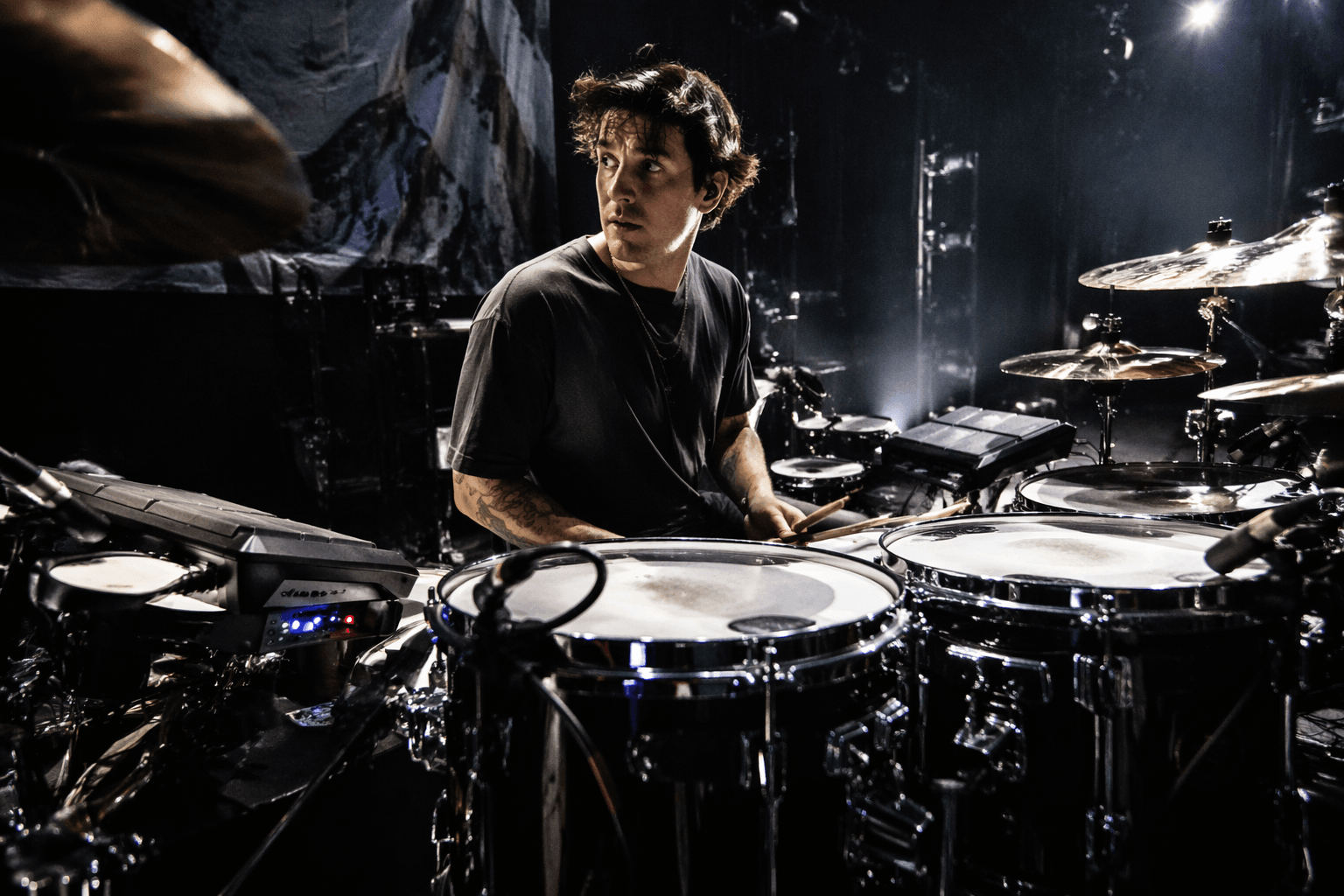
How to Mic a Drum Kit, From 2 Mics to 9 for Any Style
Three overhead placement mistakes are killing your drum sound; here's every mic setup from a 2-mic sketch to a full 9-mic studio rig, with a phase checklist to fix it fast.
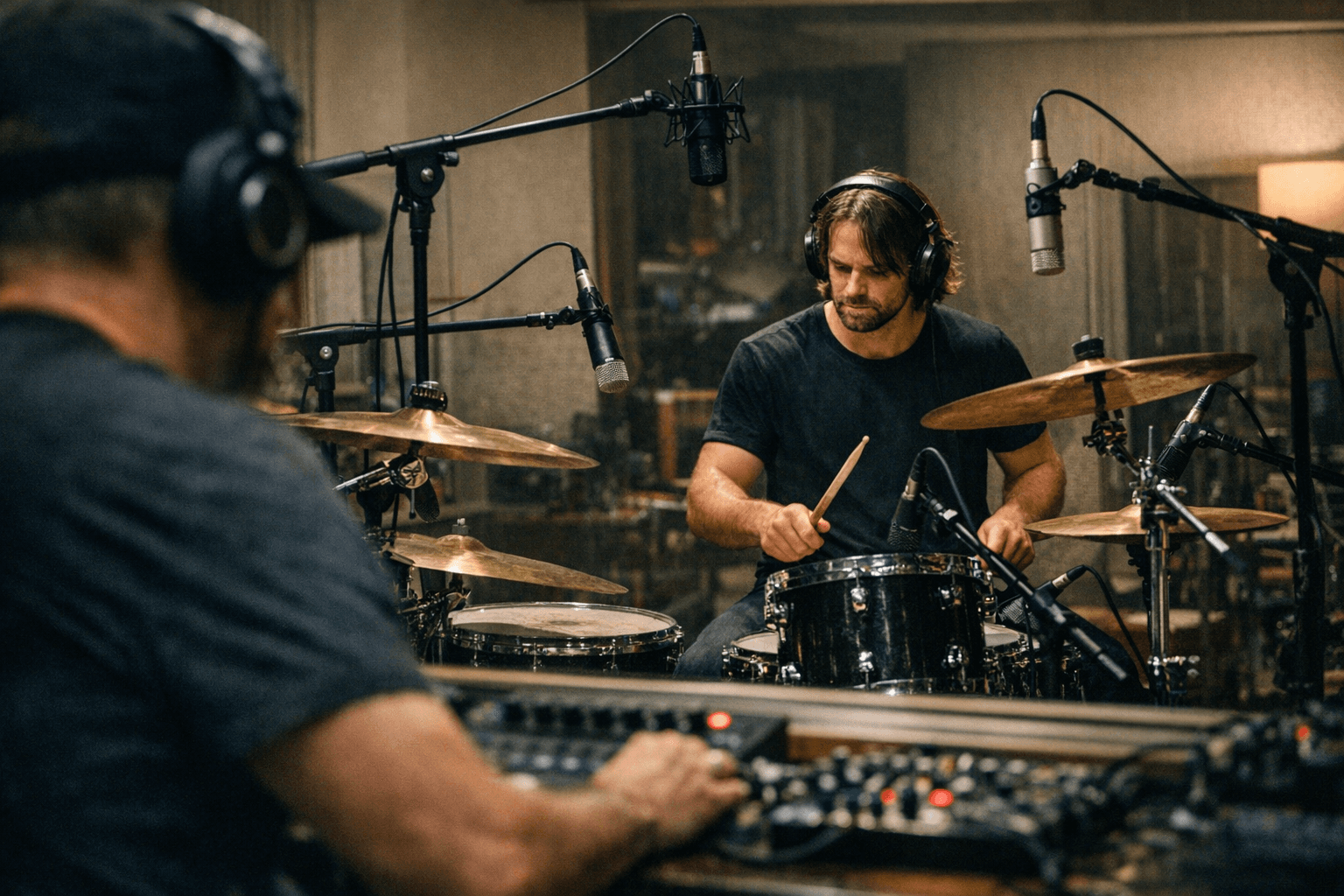
There's a moment every drummer or producer hits: you've tracked a kit that sounded enormous in the room, and the playback is thin, phasey, and weirdly small. The drums didn't shrink. The microphones just weren't working together. Getting a great drum recording isn't about mic count; it's about understanding how sound travels, how mics interact, and which placement decisions create the biggest gains. Here's how to build from the ground up, starting with the setup that gets you 80% of the way there with the least gear.
Start Here: The 2-Mic Approach
Two mics, placed well, can capture a full, musical kit. The classic method is an ORTF or spaced pair of small diaphragm condensers positioned above the kit as overheads. The spaced pair configuration offers a great deal of flexibility in placement: position the mics low above the cymbals to remove emphasis from the rest of the kit, or at a higher elevation for a more balanced sound. For demos, home sessions, or jazz and vintage pop where room tone is the point, this approach sounds natural and cohesive in ways that a hastily built 8-mic rig rarely does.
The single most important rule at this stage: get both overheads equidistant from the snare. This isn't aesthetic preference, it's physics. Time-of-arrival differences between the two mics cause comb filtering that hollows out the center image and smears the snare. Measure with a tape. It takes 90 seconds and the difference is not subtle.
The 3-Mic Setup That Actually Works
Add a kick mic and you have a session-ready rig for almost any style. Placement inside the shell, near the beater, emphasizes attack and transient punch. Position it outside the port hole and you get more low fundamental and air. The style of music should drive that choice: metal and hard rock generally want the close, aggressive inside position; blues and jazz benefit from the rounder outside placement. The mic itself matters too; not every kick mic sounds right in both positions.
This 3-mic approach works because a well-placed stereo overhead pair already contains a usable snare sound, tom bleed, and cymbal wash. You're not missing the kit; you're capturing it with phase-coherent information from a single vantage point. For bedroom producers especially, this is the lesson worth internalizing: a good stereo image often makes a kit sound larger than a dozen badly balanced close mics.
Building to a Full Studio Rig (5-9 Mics)
When a track demands more control, more separation, or a modern multi-mic sound, here's the full configuration used in most professional sessions:
- Kick in (inside the shell, beater emphasis)
- Kick out (outside the port, for low fundamental and depth)
- Snare top (SM57-style dynamic, angled toward the center of the head)
- Snare bottom (small diaphragm condenser or dynamic, phase-inverted)
- Rack tom (dynamic, close-miked)
- Floor tom (dynamic, close-miked)
- Overhead left and right (small or large diaphragm condensers, X-Y or spaced pair)
- Room pair (AB spaced pair, pulled back to taste)
Once you have all the microphones in place, it's important to check phase relationships between each channel. Failure to do so can result in a weak sounding recording. That check is non-negotiable before you roll a single take.
Mic Types: Match the Tool to the Job
Dynamic mics, the SM57 being the most field-tested example, are the right call for snare and toms because they handle high SPL without distorting and deliver the mid-forward attack those drums need. The SM57 is a common choice because of its midrange focus that complements the predominantly midrange frequencies of a snare, and its directional pattern helps with isolation in a dense multi-mic setup.
Condenser mics capture the sound of the snare as you would hear it in person, and you tend to get more information because these mics are inherently more sensitive. That sensitivity is exactly why condensers belong on overheads and room mics, where capturing the full frequency picture of the kit from a distance is the entire point. Large diaphragm condensers color the sound slightly and suit vintage or warm tones; small diaphragm condensers are more neutral and work well for accurate stereo imaging in X-Y or ORTF configurations.
The Phase-Check Checklist (Save This)
Phase problems are the most common reason a well-placed drum recording sounds weak in the mix. Run through this before every session:
1. Solo each mic individually. Listen for low-frequency buildup and obvious comb filtering from bleed. Apply a highpass filter to toms and overheads to clear low-end mud.
2. Flip polarity on the snare bottom mic. This is standard practice, not a fix for a mistake. The mic faces the opposite direction from the snare top, so its polarity is naturally inverted relative to the top mic. Flipping it produces a fuller, more powerful combined snare sound.
3. Check the kick against the overheads at the mix bus. Sum to mono and listen. If the kick loses low end when the overheads are added in, invert the polarity on either the kick or the overheads and compare. On each one, listen to how the mic sits in the mix, then listen to it with the phase inverted, and then do the same thing in mono. In each case, use the phase switch position that gives you the fullest sound with the most low end.
4. Apply the 3:1 rule as a spacing guide. The 3:1 rule suggests that mics should be three times farther apart than their height above the drum kit. In practice, the more critical measurement is keeping each mic equidistant from its primary source, but the 3:1 ratio gives you a starting framework that reduces excessive phase interaction between adjacent mics.
5. Check mono compatibility of the full mix. This is the final test. If the kit sounds dramatically different in mono versus stereo, there are phase relationships that need attention.
The chances for a phase problem are far greater on the drum kit because it usually has more mics on it than any other instrument. You will never have all microphones completely in phase, but some problems will be diminished by reversing the polarity on some of the channels.
Overhead Placement: The Move That Changes Everything
Of all the variables in drum recording, overhead positioning produces the largest improvement per minute of effort. Under the X/Y technique, you'll achieve the best results when overheads are placed directly above the snare with each mic pointing left and right respectively. The X/Y technique's inherent phase coherence is particularly valuable when using lots of mics on a single kit.
For a spaced pair, the equidistant-from-snare rule is the non-negotiable baseline. Beyond that, height matters: lower overheads emphasize cymbals; higher overheads pick up more of the full kit and room. If your overheads are producing harsh, washy cymbal sound, raise them before reaching for an EQ. The fix is usually spatial, not spectral.
The Session Workflow
Set your input levels conservatively, build a headphone mix the drummer can actually play to, then capture a 30-second test take before committing. Immediately check that test take in mono. Make small placement adjustments, one mic at a time, and re-test. When you land on positions that survive the mono check and feel right in the headphone mix, lock everything and track. Resist the urge to keep tweaking between takes; the right placement should be something you can return to, not a moving target.
Room treatment, or at least room selection, deserves a mention here. Close mics minimize the room, but overheads and room mics capture it fully. A live, reverberant space works for classic rock; a drier room suits modern pop and metal. If the room is the problem, no mic technique fully rescues the recording. Choose the room first, then build your mic setup around what it offers.
The difference between a phasey demo and a record-ready drum sound isn't gear. It's the equidistant overhead check, the polarity flip on the snare bottom, and the 30-second mono test after placement. Those three moves, applied consistently, are what separate sessions that feel controlled from ones that feel like damage control.
This article was produced by Prism’s automated news system from verified source data, official records, and press releases, then run through automated quality and moderation checks before publishing. The system is built and supervised by the people who set the standards it runs under. Read our full AI policy.
Did this article answer your question?