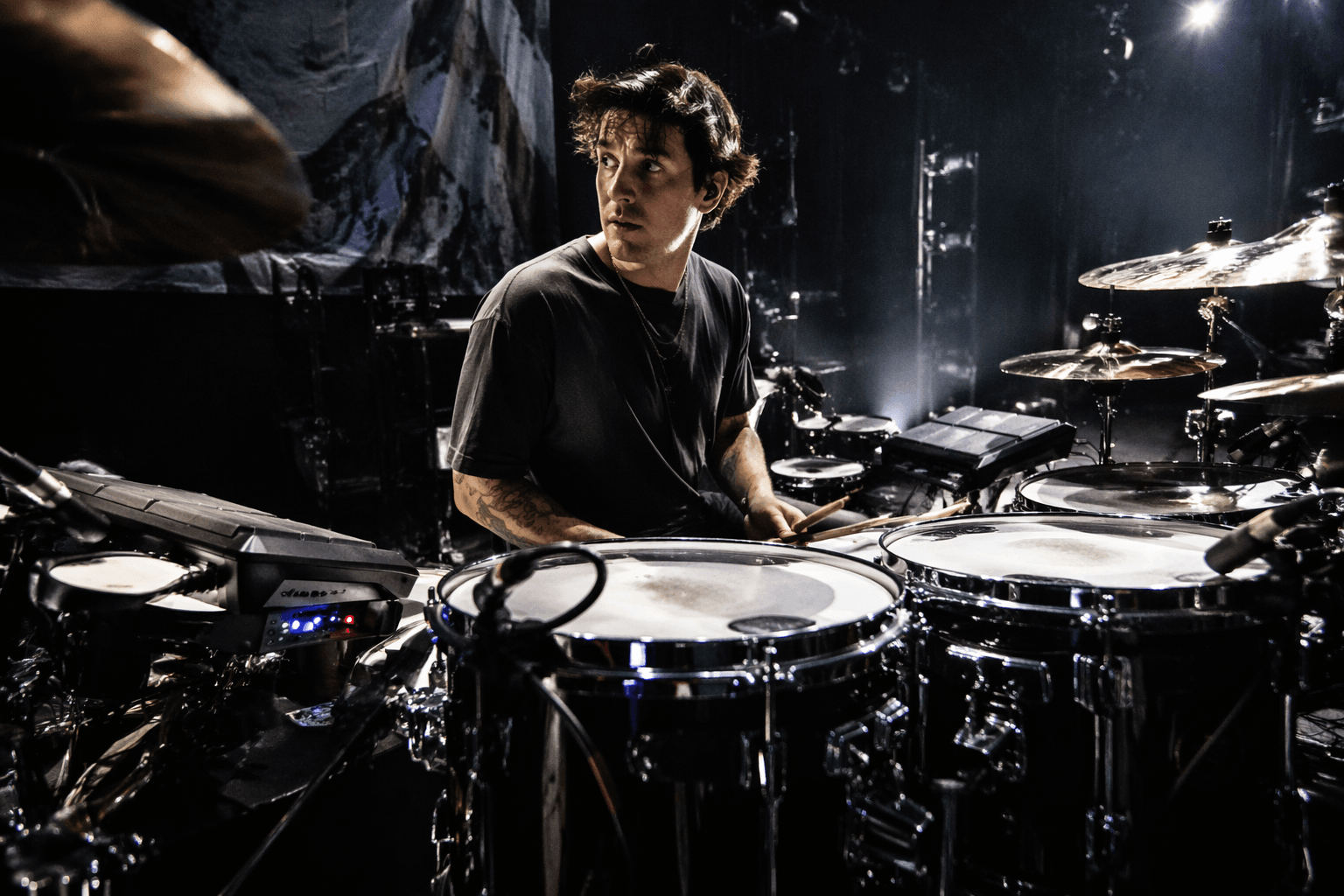
How to Prepare Your Drum Kit for Professional Recording Sessions
Get your kit studio-ready with a checklist from DRUM! Magazine, focus on ergonomics, heads and tuning, mic choices and placement, damping, and the routing/communication steps that stop sessions from derailing.

1. Clean and inspect every piece before you roll in
DRUM! Magazine and standard teaching resources all start here: a clean, inspected kit saves time and sound in the studio. Wipe shells, rims, hoops and hardware, check tension rods and key fit, and run the kick pedal and hi-hat for smooth action; loose or corroded parts are the fastest route to retakes. Treat this like a preflight: replace stripped lugs, tighten snare-throw springs, and confirm all wingnuts operate without binding so nothing squeaks during overdubs.
2. Set ergonomics for performance and consistency
The guides recommend dialing your throne, snare height, and pedal distance to match how you play live, comfort equals consistency, which equals fewer bad takes. Sit so your feet and legs can operate pedals without overreaching; if your throne height changes later, retune and re-mic since head tension and stick angles shift tonal balance. Note the exact throne height and snare position (mark with tape on the riser if needed) so you can return to the same setup between tracking days.
3. Choose drumheads with the session in mind
Teaching resources emphasize matching head selection to the song and mic plan: single-ply coated heads for open, attack-forward pop/rock; double-ply or coated with control rings for heavier, tighter sounds. Bring spares of what you intend to use, producers hate replacing a head mid-session with a different tone, and label them so the tech can swap quickly. If the session calls for a vintage, open drum sound, bring at least one extra coated single-ply; if it's heavy, bring a matched pair of double-ply batter/resonant heads.
4. Follow a tuning strategy, top down and consistent
The common, battle-tested approach is to tune from resonant head to batter head, seating lugs and then tuning in consistent increments around the drum. Start by finger-tightening all lugs, use a drum key to bring lugs up in star patterns, and then play test notes while adjusting to avoid dead spots. Keep a written reference of pitch relationships (for example: toms tuned to relative intervals across the kit) so you can recreate or tweak tone on later sessions.
5. Plan damping and muffling before you play
Studio tracking often demands controlled sustain; teaching sources advise preparing several damping methods, gels, moongel, tape, O-rings, and felt strips, and testing quickly. Don’t over-muffle on first pass; record a few bars dry and then add damping to address problematic frequencies. Pack a small damping kit and label where each material produced the best result so you can replicate it for parallel takes.
6. Select cymbals and sticks for the mic setup
Cymbal choice changes mix balance: darker crashes and medium rides sit better with distant room mics, while bright, cutting cymbals work with close overheads. Bring a couple of stick types, a heavier 5B or 5A for punchy tracking, and a lighter stick if the song needs more shimmer, because stick weight alters attack and cymbal response. Also bring at least two hi-hat options if you have them; subtle hat texture can be the difference between a cut that sits and one that fights the vocal.
7. Pick microphones with the session’s sound in mind
DRUM! Magazine’s studio roundups suggest a basic mic locker: a large-diaphragm condenser or dynamic for kick (or both), a short-throw dynamic like an SM57 for snare top and a small-diaphragm condenser for snare bottom, matched small condensers for stereo overheads, and a room mic if the room and budget allow. If you only have a few mics, prioritize snare, kick, and stereo overheads, those three capture the kit’s identity. Label each mic and cable before setup so the engineer can route quickly.
8. Employ practical mic placement basics
Place the overheads to capture a balanced stereo image, a spaced pair or XY about 2–3 feet above the cymbals is a common starting point, and use snare top with a slight angle toward the center of the drum to capture crack without rim click overload. For kick, experiment with beater-side placement for attack and in-port placement for low-end; small positional moves of 1–3 inches materially change tone. Keep placement choices consistent and document distances and angles so you or the tech can recreate a preferred sound.
9. Check phase, bleed, and the minimal-mic plan
Phase issues kill punch. After miking, flip polarities and listen with kick/snare/off-soloed tracks to confirm phase adds, not subtracts. If overheads thin the snare, move a mic a few inches or alter its angle before EQ, often an inch or two restores body. Teach engineers your minimal-mic plan (e.g., three close mics plus stereo overheads plus optional room) so they can build a stable mix bus while tracking.
10. Set the signal chain and monitor plan
Make sure preamps, DI needs (if any), and headphone sends are pre-arranged; slow routing during a session wastes expensive studio time. Confirm pad settings on mics with high SPL, and have gain staging set to give a healthy signal without clipping, engineers prefer operating with 6–12 dB of headroom on peaks. Agree on headphone mix priorities (more click vs. more room) and whether the drummer will use a stereo or mono click feed.
11. Cover tempo, arrangement, and click strategy
Before recording, agree on tempo map and whether parts will be click-based or live tempo tracked; DRUM! and teaching resources stress that knowing the plan avoids wasted takes. If you record to click, run a rehearsal pass and record a scratch track to verify feel and comp points. Mark down bar counts, fill expectations, and section transitions in a simple sheet for the engineer and producer to reference.
12. Bring spares, labels, and a simple kit map
Pack spare drumheads, sticks (a dozen), extra snare wires, a replacement pedal chain/sprocket, spare cables, gaffer tape, and a multi-tool, these are the session’s insurance policy. Label drums, mics, and channels with tape and a Sharpie during setup; a one-line kit map (kick=1, snare top=2, snare bottom=3, toms=4–6, OH L/R=7/8, room=9) saves scramble time when producer asks for mute/solo changes. Teaching resources highlight that the small administrative moves, labels, a map, and spares, are what keep momentum during long tracking days.
13. Run a focused soundcheck and quick test recordings
Do a short session check: tap every drum, sweep the frequency wheel on headphones to identify ringing tones, and run a 30–60 second live take with the intended arrangement. Listen back critically with the engineer and producer and make one change at a time, don’t chase too many tonal tweaks before you’ve captured a reference take. Save that take as a reference file so you can revert if later changes push the sound offcourse.
Conclusion When you treat the kit like studio gear, cleaned, documented, ergonomically set, tuned to a plan, mic’d with phase awareness, and backed by spares and a clear click/monitor strategy, sessions go faster and the takes sound better. This approach, distilled from DRUM! Magazine and established teaching resources, reduces guesswork and keeps the focus where it belongs: playing the best parts.
This article was produced by Prism’s automated news system from verified source data, official records, and press releases, then run through automated quality and moderation checks before publishing. The system is built and supervised by the people who set the standards it runs under. Read our full AI policy.
Did this article answer your question?