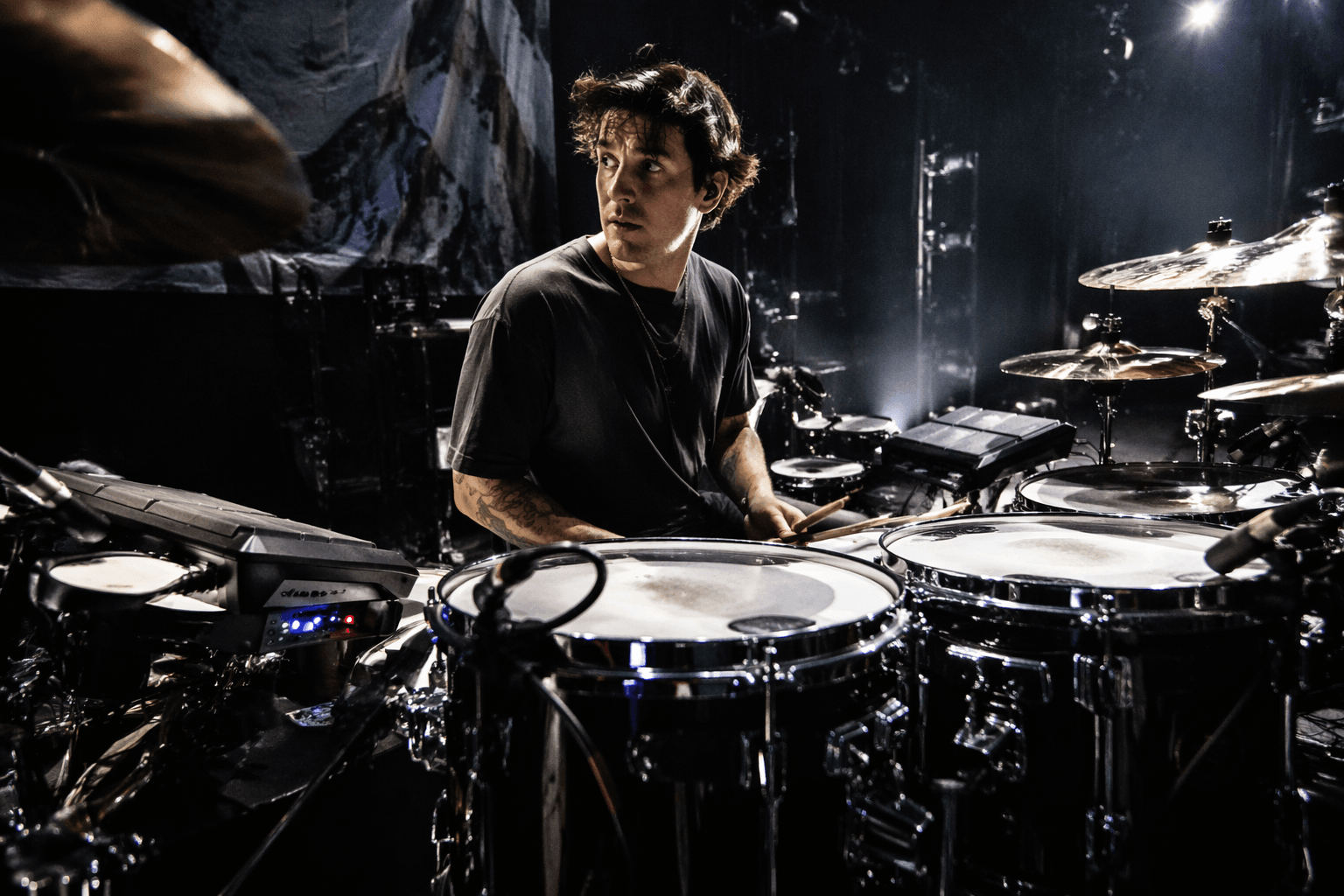
Hudson Music Publishes Updated New Breed II, Gary Chester's Advanced Independence Method
Gary Chester's New Breed II, updated by Hudson Music, carries 50-plus Bonuses and extends five-way independence into its most demanding territory.

Gary Chester never intended five-way independence to be the ceiling. One of the most recorded studio drummers of the 1960s and 70s, Chester kept developing harder coordination challenges after the original New Breed reached print, and those exercises, the ones he called Bonuses, form the core of The New Breed II. Hudson Music published an updated edition of the sequel, now available in physical and digital formats for $19.99.
The original New Breed, considered one of the all-time classic drum instruction books, built its reputation on a specific architecture: three limbs lock a groove while a fourth plays a written melody against them. Chester's central demand was that all four parts had to feel good, not just technically correct. That principle of groove-first playing carried the original into studio curricula, private lessons, collegiate programs, and self-taught practice rooms for decades. New Breed II continues that architecture and pushes it significantly further.
Co-author Chris Adams oversaw the updated edition, adding new examples that extend the melodic-limb concept into material Chester left unexplored. The 96-page book is aimed squarely at players who have already worked through the original. If you are still building basic independence patterns from Book One, New Breed II will feel steep: it assumes fluency with Chester's notation system and the ability to hold three-limb grooves without deliberate concentration. For players at that threshold, the more than 50 Bonuses represent the book's real value, each one a coordination challenge Chester designed to disrupt comfortable patterns and force creative problem-solving under pressure.
The single biggest upgrade over the original is that Bonus density. The first New Breed delivered a system; New Breed II delivers situations, dozens of them, that test whether the system has genuinely taken hold. That gap between understanding a method and surviving its hardest problems is exactly why educators and working players will forward this book to students and bandmates alike.
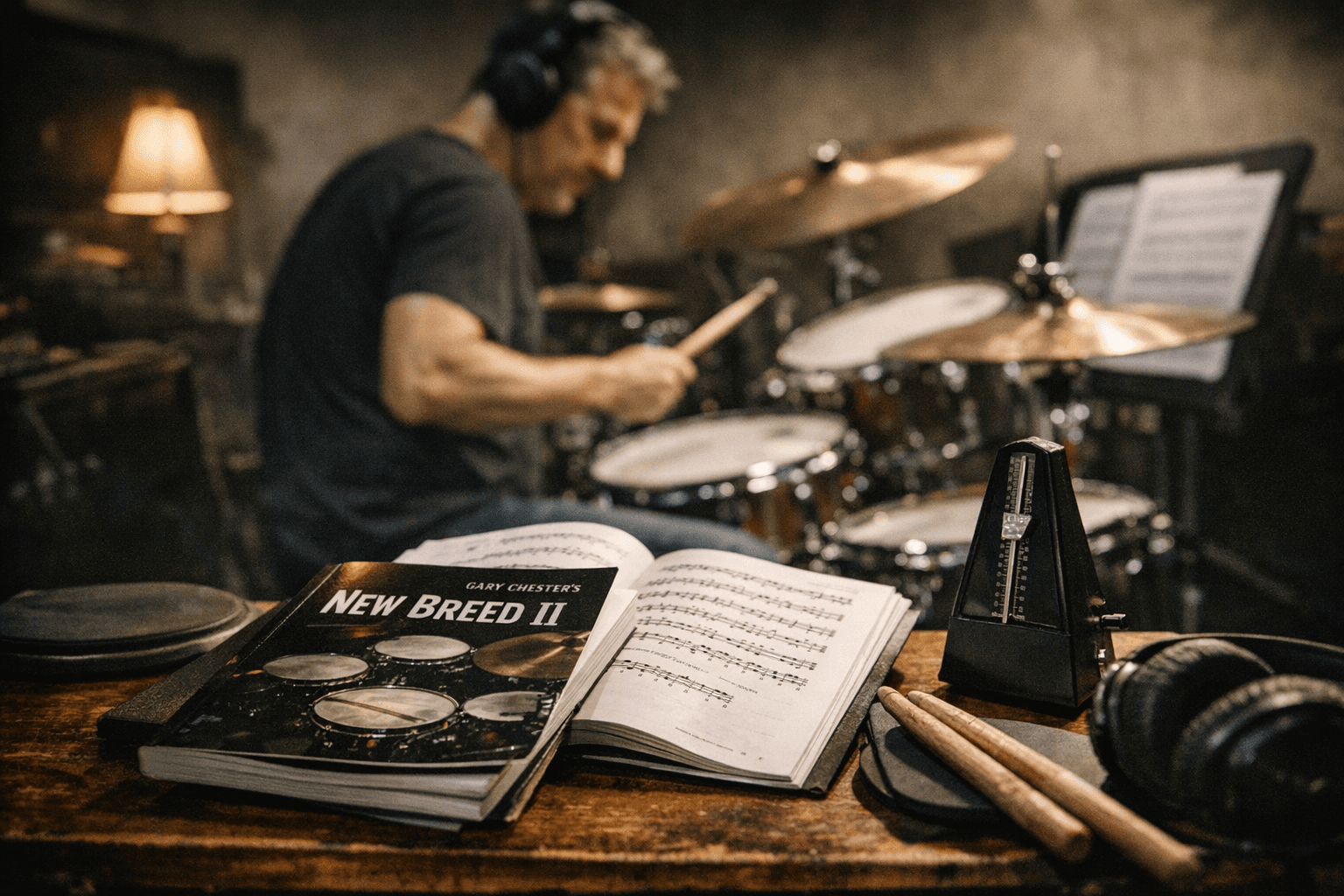
Chester's pedagogical voice runs through the text unchanged. "Take your time in learning. Play each part correctly, and make it feel good. It is so important that everything really grooves." That instruction applies at every tempo and every layer of the book.
For players ready to commit, here is a practical one-week entry point. Days one and two: work through the opening groove combinations and confirm all three groove limbs are truly locked before touching the melodic-limb reading, Chester's foundational requirement before anything else. Days three and four: enter the first Bonus exercises, treating each as a separate coordination problem rather than a transition between patterns. Days five and six: return to the material from days one through four at ten BPM below comfortable tempo, shifting focus entirely to the melodic limb's phrasing rather than pattern completion. Day seven: record the full week's work and listen back. Chester's groove-first standard is far easier to evaluate on playback than in the heat of playing.
Hudson Music's distribution reach places the book into retail channels, educational supply networks, and online lesson platforms worldwide, giving instructors who build Chester-based curricula a reliable restock path and giving international students access to a text that was previously hard to locate.
This article was produced by Prism’s automated news system from verified source data, official records, and press releases, then run through automated quality and moderation checks before publishing. The system is built and supervised by the people who set the standards it runs under. Read our full AI policy.
Did this article answer your question?