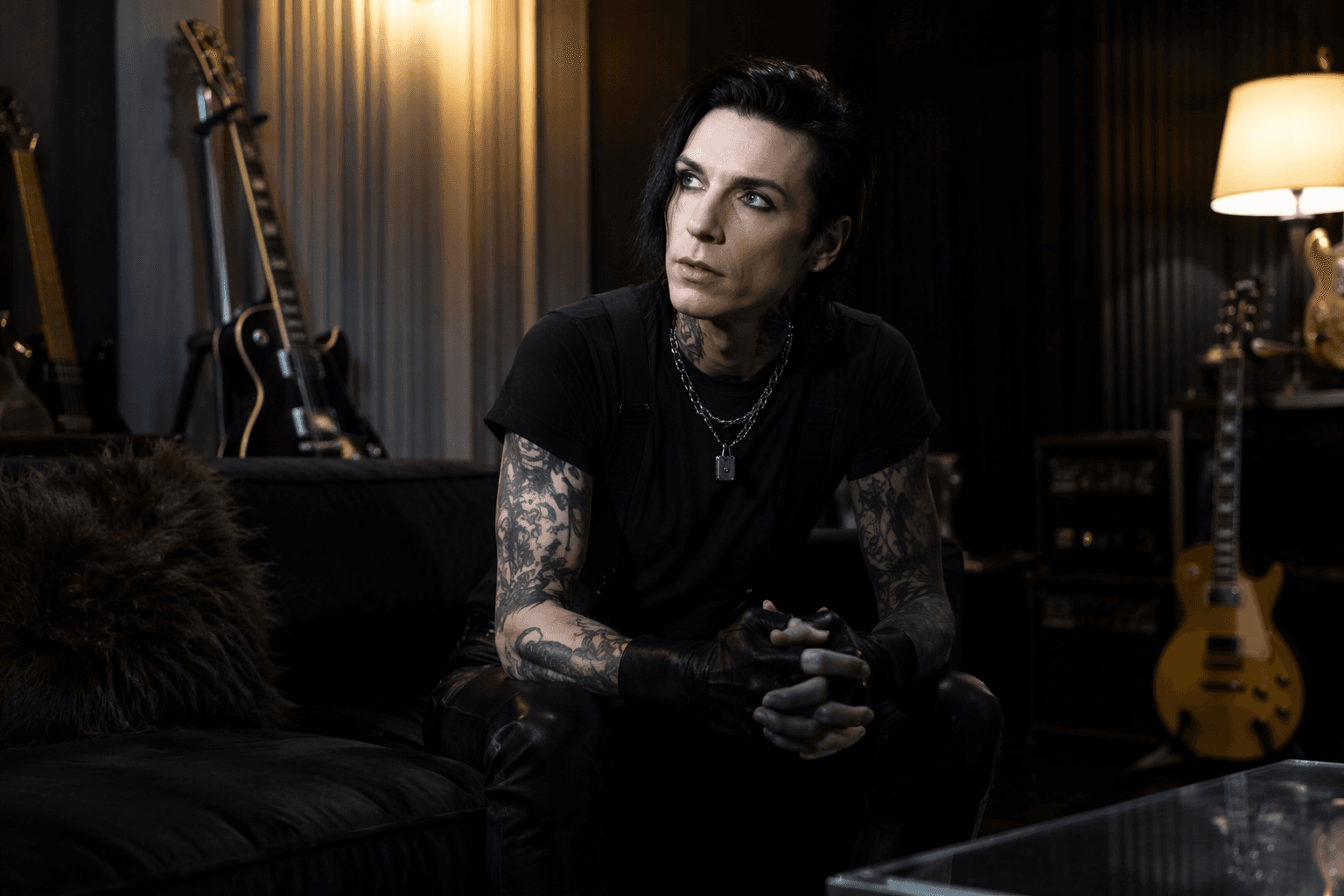
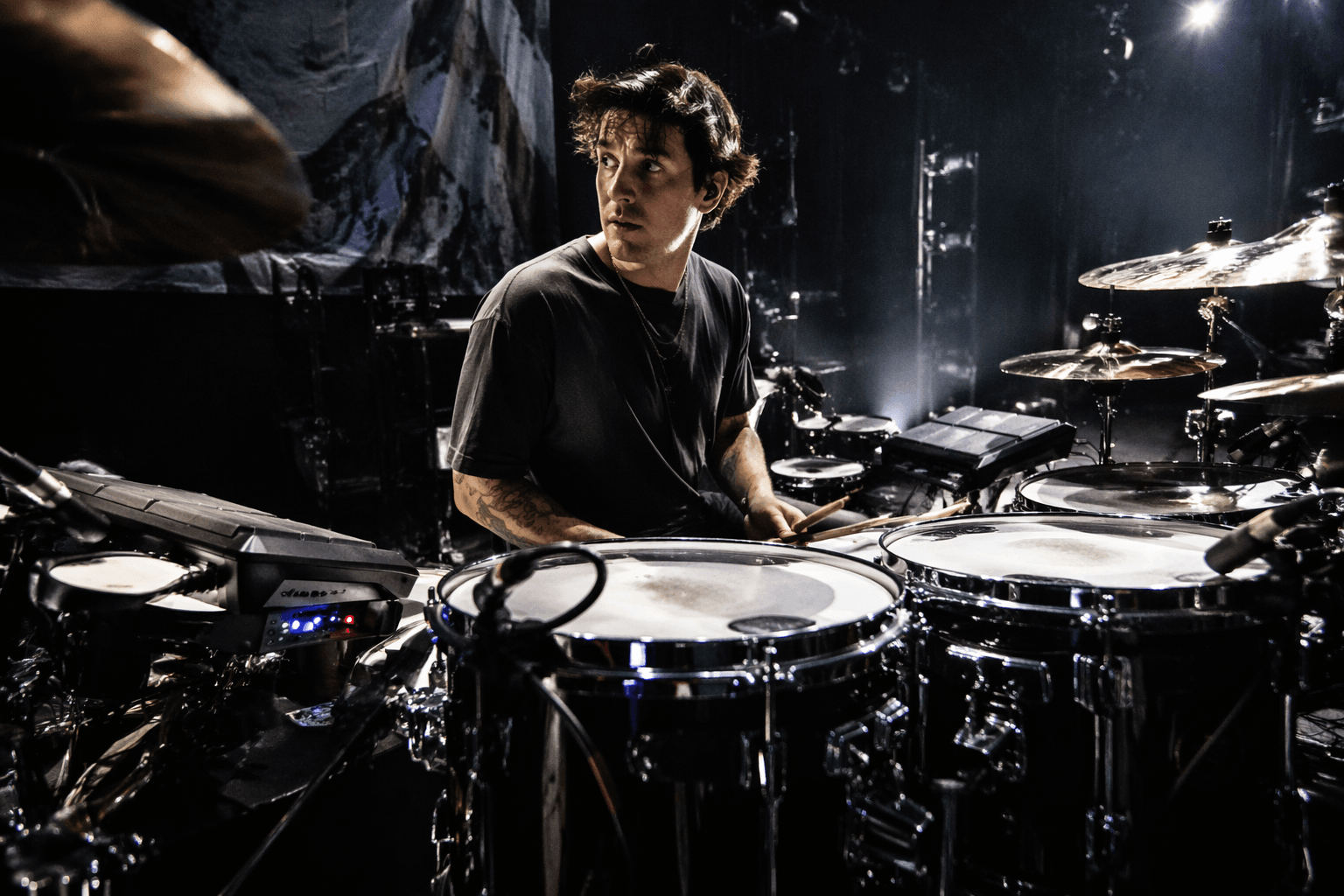
Jake Goss Brings LANY's Electronic Studio Sound to Life on Stage
Jake Goss figures out which programmed drum choices to honor literally and which ones to replace with something that actually breathes live.

Jake Goss was eleven years old when Modern Drummer magazine first entered his life, and the publication he was reading cover-to-cover in Arkansas as a kid became the same one that just featured him in its April 2026 issue. Goss has been obsessed with drums since age 11, growing up in Arkansas and spending countless hours behind the kit, studying players like Chad Smith, Matt Cameron, and Larry Mullen Jr. while developing a groove-first approach to the instrument. That full-circle moment, from reader to subject, is as instructive as anything in the feature itself.
From Arkansas to Nashville to Global Stages
Read those three influences together and you have a complete curriculum in feel-first playing. Smith brings the hip-hop-inflected pocket and raw power of the Red Hot Chili Peppers. Cameron layers dynamics and textural creativity across two of alternative rock's defining bands. Mullen Jr. strips everything to essentials, a drummer so restrained and so iconic that a single hi-hat pattern became the opening of a generation-defining album. Goss absorbed all three and synthesized them into a groove-first mindset that has carried through every stage of his career.
Goss majored in commercial music with an emphasis in music technology at Belmont University in Nashville, a city that changed who he is as a player and person. During college, he said yes to every gig that came his way, knowing that doing so would teach him how to adapt and how to serve as a drummer. He might not always have been the best fit, but he was the one behind the kit, and that accountability built his reliability.
He credits teachers at Belmont for shaping his philosophy of serving the song and serving the gig. That philosophy is not a vague platitude; it is a set of active, deliberate choices about where not to play.
After years grinding through Nashville's music scene and touring with Jars of Clay, a call from his friend Paul Klein sparked the beginning of LANY. What started as a few songs between friends quickly turned into sold-out shows, festival stages, and a band with a global audience.
The Electronic-to-Acoustic Translation Problem
LANY is, at its core, a songwriter-and-producer-driven project. The band released four EPs before delivering their self-titled full-length debut in 2017, which charted in the US, UK, and Australia. That album, and everything LANY has built since, lives in a sonic world of synth-heavy textures, layered electronic production, and programmed elements that sound immaculate on record because they were designed to. For a live drummer, that presents a specific problem.
Electronic production is precise by nature. Programmed kick drums hit at mathematically exact intervals. Snare samples fire at controlled velocities. When Goss plays these songs live, he isn't just replicating patterns; he is translating a language. In his Modern Drummer conversation with writer Danny "Ziggy" Laverde, Goss discusses building LANY from the ground up, translating electronic textures to a live drum setup, and the lessons learned from years on the road. His Belmont background in music technology gives him a vocabulary to hear a production not just as a drum track, but as a set of rhythmic intentions he can realize on an acoustic kit.
The Modern Drummer feature frames Goss's playing as both supportive and textural, with a central emphasis on serving songs while bringing tasteful, memorable drum moments to LANY's live shows. Pocket, dynamics, and the human feel that programmed tracks deliberately lack are the three pillars of his live approach.
Groove Forensics: Three Choices That Define Goss's LANY Sound
1. The Anchored Kick
LANY's production frequently layers synth bass hits and kick drum sounds at the same rhythmic points, creating a fused low-end punch that feels enormous in a live PA context. Goss's kick placement follows the logic of those bass-and-kick unisons rather than decorating around them. The approach draws directly from Chad Smith's concept of locking the kick to the bass line, a technique Smith developed alongside Flea over decades of Red Hot Chili Peppers recordings. For Goss, it means resisting the urge to add embellishing kicks and instead making each hit land with maximum weight exactly where the production already puts the emphasis. The result is a live kit that sounds like it belongs on the record rather than competing with the tracks running alongside it.
2. Strategic Hi-Hat Openings
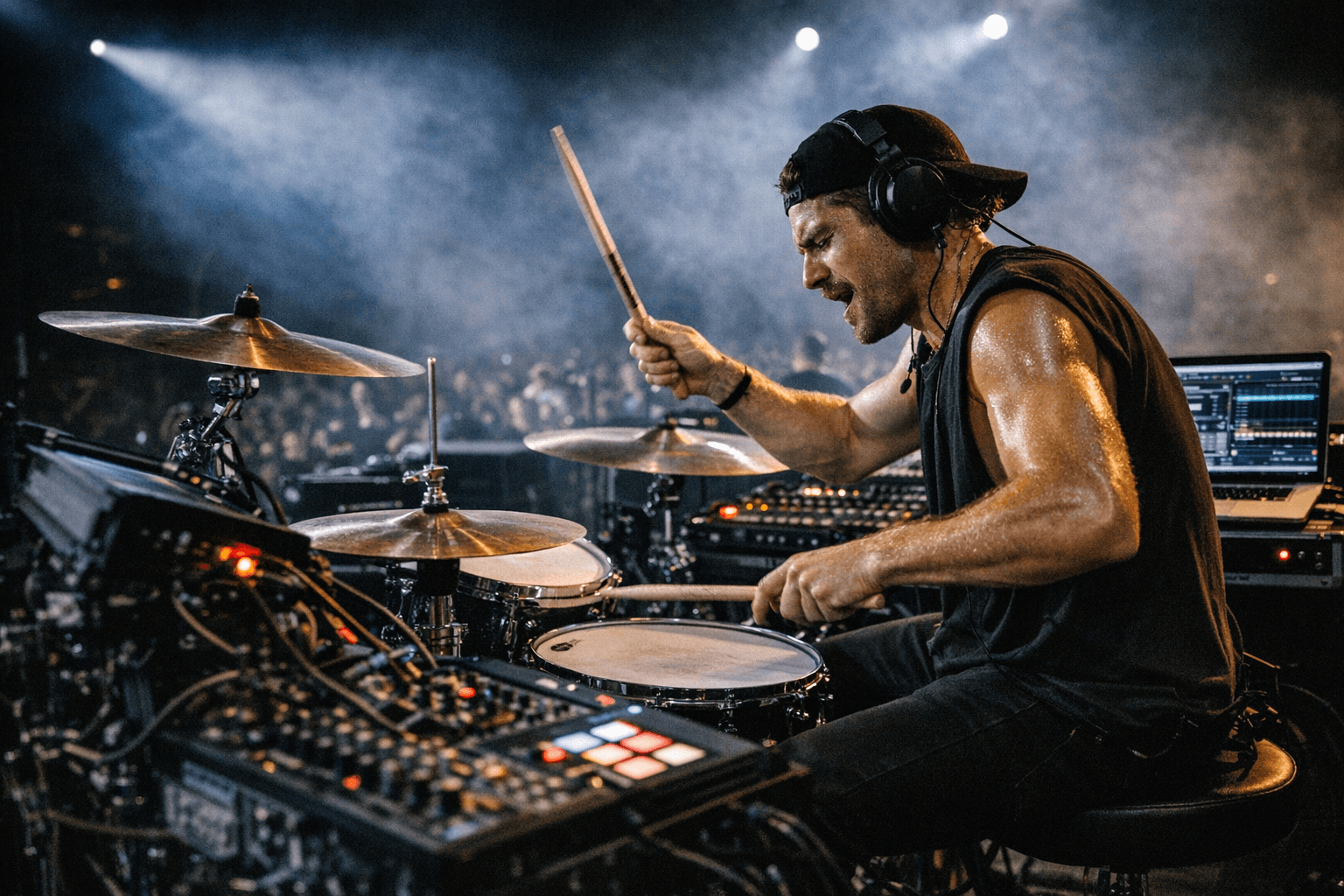
LANY's synth-pop textures fill the midrange with arpeggiated sequences and layered pads. In that sonic environment, a drummer playing constant closed hi-hats disappears into the wash entirely. Goss uses selective hi-hat openings sparingly at phrase endings and pre-chorus transitions, creating breath where the electronics would otherwise crowd the frequency spectrum. This is Larry Mullen Jr.'s influence applied to a modern pop context. U2's music is synth-saturated at its peak, and Mullen Jr. built his reputation by finding the moments where doing less created more space, more drama, and more feel. A single controlled open hi-hat going into a chorus, snapped shut hard on the downbeat, is the kind of micro-decision that audiences feel before they consciously identify it.
3. Restrained Ghost-Note Density
Electronic snare samples are tonally exact and velocity-consistent in a way that acoustic snares fundamentally are not. Goss's approach to bridging that gap is not to match the sample's precision but to undercut it with human texture. Light ghost notes on the snare, placed at low velocity in the spaces around the backbeat, introduce the slight variation and pre-accent motion that makes a groove feel inhabited rather than mechanical. The key is restraint. LANY's production is clean, and Goss treats ghost-note density the way Matt Cameron treats dynamics: as something to deploy deliberately, not continuously. A concentrated burst of ghosting into a breakdown, then pulling back entirely in the verse, creates a textural arc that listeners track emotionally without identifying it technically.
Steal This: The LANY Mid-Tempo Pocket
Here is one bar in 4/4 that captures the Goss approach, practical anywhere from 92 to 108 BPM (LANY's sweet spot for mid-paced cuts like "Good Girls"):
- Kick: Beat 1, the "and" of 2, beat 3
- Snare: Beats 2 and 4 at full backbeat velocity; one ghost note on the "and" of 1 at low velocity
- Hi-hats: Steady eighth notes, closed throughout, open on the "and" of 4, closed hard on the next downbeat
The displaced second kick on the "and" of 2 is the key move. It creates a forward lean into beat 3 without rushing the tempo, mimicking the push-pull of a programmed synth bass pattern anticipating the next chord. The ghost note on the "and" of 1 seeds just enough pre-motion to make the backbeat land harder by contrast. Set a click at 96 BPM, drop hi-hat velocity to around 70%, and run this groove for two minutes without adding anything. If you can keep it locked and feel it breathe, you are doing exactly what Goss does.
What This Career Path Actually Teaches
The arc from church kit in Arkansas to global festival stages carries practical lessons beyond groove specifics. Goss spent years saying yes to every gig he could get in Nashville, built touring chops on the road with Jars of Clay, developed studio literacy at Belmont, and answered a phone call that changed everything. None of that mattered without the foundation underneath it: three influences who collectively taught him that the best drummers serve the music first and themselves second, and a discipline to sit in the pocket when showing off would have been easier.
For drummers operating in a pop landscape where electronic production is the default, Goss's example reframes the problem. The goal is not to fight the programming or outplay it. It is to understand it well enough to translate it into something only a human being behind a physical kit can deliver: an interactive, dynamic, responding organism that makes the song feel live. That is the only thing acoustic drums offer that a track can't replicate. Jake Goss has spent his career proving the point is worth making every single night.
This article was produced by Prism’s automated news system from verified source data, official records, and press releases, then run through automated quality and moderation checks before publishing. The system is built and supervised by the people who set the standards it runs under. Read our full AI policy.
Did this article answer your question?