James Drummer Debbie Knox-Hewson Opens Up About Motherhood on Tour
Debbie Knox-Hewson’s tour-through-pregnancy story exposes a hard truth: drumming still rarely fits motherhood. Her case shows what the industry must change.
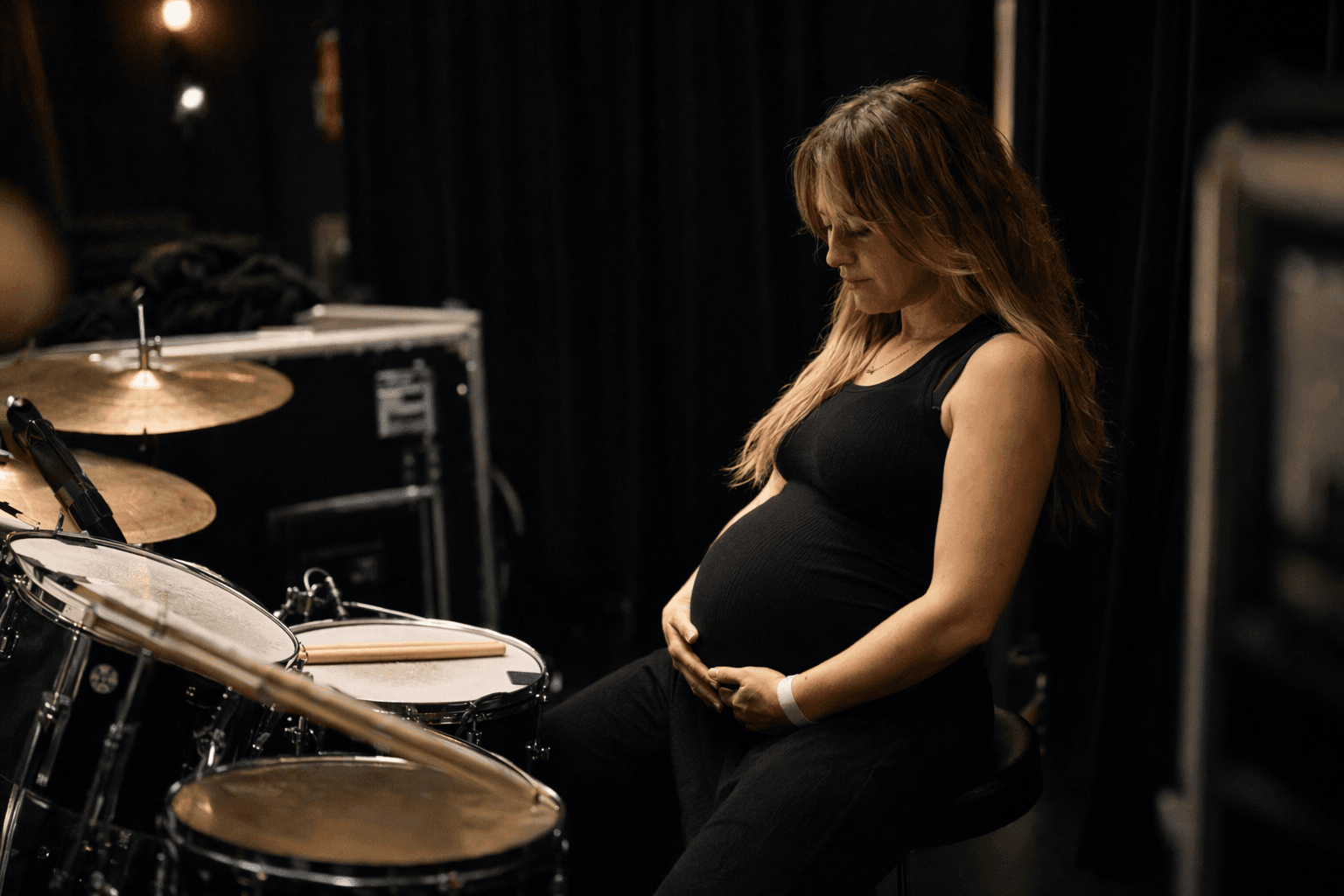
James drummer Debbie Knox-Hewson’s pregnancy and first months of motherhood cut straight to the part of touring life the business still likes to ignore: the schedule does not stop for family. She had her first child in December 2025, kept touring throughout her pregnancy, and has now turned that experience into a very practical argument for why working drummers need better systems, not just tougher attitudes.
Motherhood on tour is still treated like a surprise
The striking thing about Knox-Hewson’s story is not that she managed it. It is that in 2026 it still feels notable when a working drummer is pregnant, has a baby, and keeps the job moving. She has been a full member of James for eight years, after touring extensively with Charli XCX and working with Nasty Cherry, so this is not a newcomer trying to prove she can cope. It is an established pro describing what it takes to stay in the game when life changes in real time.
That is why the story matters beyond one band. Touring is built around long days, heavy load-ins, unreliable sleep, and a calendar that can swallow personal life whole. When a drummer is pregnant or newly postpartum, those pressures do not disappear. They become sharper, because the work itself is physical, the travel is relentless, and the margins for rest are thin.
The real problem is structural, not personal
Knox-Hewson’s experience points to a broader industry failure: music work still assumes that caregiving sits outside the job description. Touring schedules are often planned far in advance, which can be useful when your band has real continuity, but brutal when your body and family needs are changing. The question is not only whether a drummer can play a set. It is whether the system around the gig can accommodate pregnancy, recovery, feeding, and childcare without turning every show into a crisis.
The Musicians’ Union has been blunt about this. It says parents and carers face significant challenges balancing music work and family life, and it provides guidance on pregnancy, maternity rights and protections for freelance musicians. For employed pregnant musicians, and for those who have recently given birth or are breastfeeding, the union says workplace health-and-safety adjustments should be in place, including breaks, somewhere to sit, and modified duties where needed.
That is the practical gap Knox-Hewson’s story exposes. The industry often celebrates endurance, but endurance is not a policy. A sustainable career needs support built in, not improvised after the fact.
Why timing matters when you are in a band that plans years ahead
One of the most telling parts of Knox-Hewson’s situation is the stability she found inside James. She has described the challenge of deciding when to tell the band she was expecting, but she also benefited from a calendar that extends years into the future. That kind of long-range planning does not erase the difficulty of touring through pregnancy, but it does give a musician room to make realistic decisions instead of scrambling from week to week.
James itself is a useful counterpoint to the usual touring chaos. The band formed in Manchester in 1982, reunited in January 2007, and has remained a major live act. It also celebrated its first UK No. 1 album with Yummy, which underscores how long-running acts can build a more stable working framework than younger, constantly chasing projects.
For a drummer with family responsibilities, that matters. A future-filled diary can make the difference between staying in the band and being pushed out by uncertainty. In practical terms, it means less guesswork around commitments, fewer last-minute shocks, and more time to plan the logistics that motherhood demands.
Knox-Hewson is part of a visible but still small line of women changing the picture
Her story also lands in a wider moment for women behind the kit. Sarah Jones and Colette Williams are both important reference points here because they make it harder to pretend this is uncharted territory. Jones, who has toured with Harry Styles, Bloc Party and Hot Chip, was visibly pregnant while performing at Harry Styles’ 2021 Grammys opener, one of the most widely seen examples of a drummer playing through pregnancy on a global stage. Colette Williams, who plays with Blossoms, has also been publicly discussed in this context.
Those examples matter because visibility changes what seems possible. When younger drummers see women continuing to work while pregnant or after giving birth, the profession looks less like a fixed template and more like something that can be reworked. Knox-Hewson now sits in that same small but significant group, not as a symbol but as proof that the job can be done differently.
The support ecosystem is growing, but it still needs muscle
There is progress, and it is worth naming. Music Week has reported on Mothers In Music, launched in 2022 by Shauni Caballero, as an initiative aimed at supporting and empowering mothers in the music industry. It has also covered Mother’s Write, launched in 2025 by Eve Horne and funded by The Ivors Academy Trust, which was created to elevate mothers in music. Help Musicians also maintains resources highlighting organisations that support women in music, alongside material that includes musicians talking about flexible working and motherhood.
That ecosystem matters because it gives working players somewhere to turn besides the gig group chat and their own exhaustion. But the need is still bigger than the support network. The Musicians’ Union’s 2021 report on discrimination said anecdotal complaints about negative reactions from bookers, promoters or band members were rising, and it cited a survey finding that 85% of freelancers with caring responsibilities had turned down work.
That number is the alarm bell in this story. If so many freelancers are declining jobs because caring duties and music work collide, then the issue is not a fringe problem. It is a structural drag on careers, income, and representation.
What this means for drumming now
Knox-Hewson’s interview is valuable because it does not romanticize the juggling act. It shows the specific pressure points: the moment you have to tell the band, the strain of physical touring while pregnant, and the difference a stable long-term schedule can make. It also makes the case that the next generation of drummers should not have to choose between being a parent and being visible onstage.
That is the real takeaway for the drumming world. The conversation is no longer just about chops, gear, or whether a player can survive the road. It is about whether touring culture can accommodate real lives without treating caregiving as a career problem. Knox-Hewson’s story suggests the answer has to change, and the sooner it does, the more working drummers will be able to stay in the music on their own terms.
This article was produced by Prism’s automated news system from verified source data, official records, and press releases, then run through automated quality and moderation checks before publishing. The system is built and supervised by the people who set the standards it runs under. Read our full AI policy.
Did this article answer your question?