Johannesburg Drummers Unite for Global Human Rights Solidarity Event
Drums were provided free and no skill was required: Johannesburg's 1000 Drums for Solidarity gathered the public at Constitution Hill on March 28 to beat for Palestine, the DRC, Sudan, and Western Sahara.
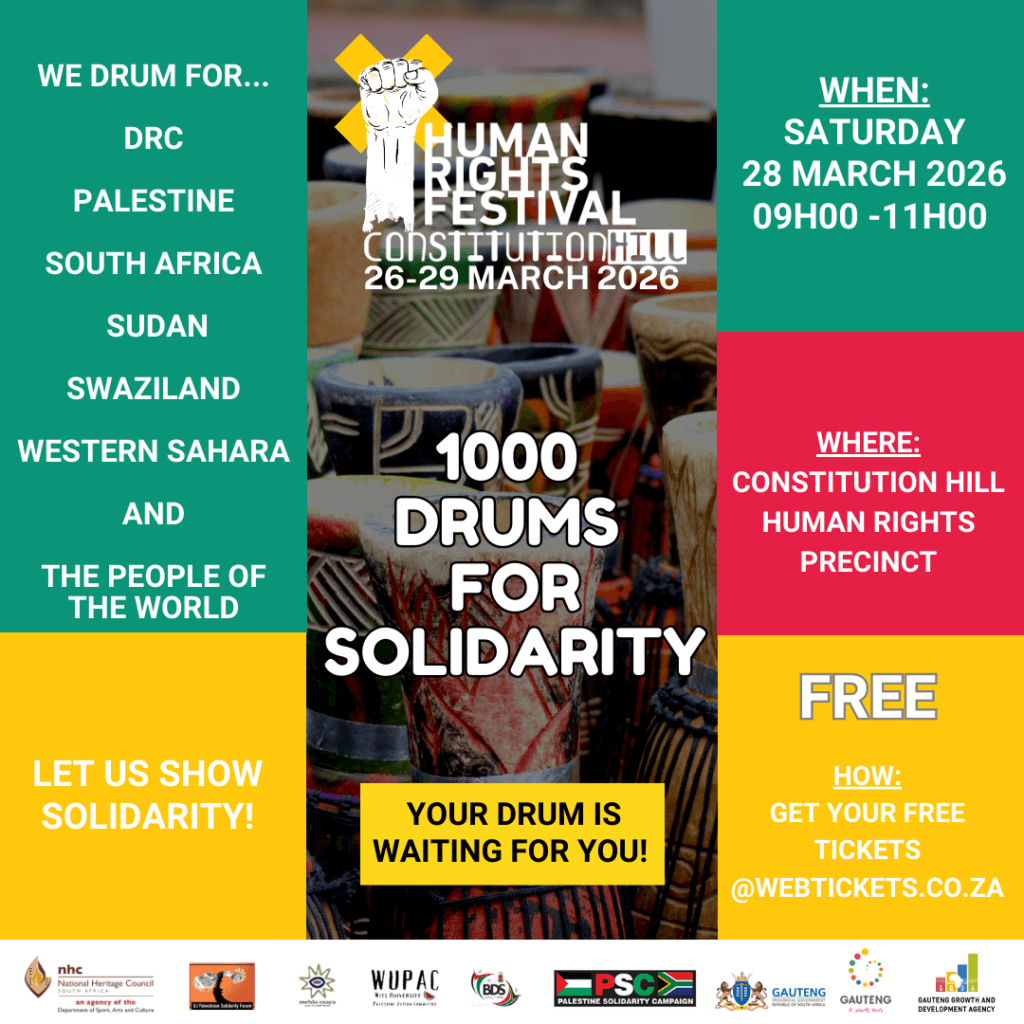
Constitution Hill's "Equality" main stage filled with percussion Saturday morning as the third edition of 1000 Drums for Solidarity drew participants from across Johannesburg for a two-hour rhythmic demonstration of global conscience.
The event ran 9:00 to 11:00 AM on March 28 as part of the eighth Constitution Hill Human Rights Festival, and it required nothing of participants except their presence. Instruments were provided on-site, making the mass drumming accessible to anyone regardless of experience level. That design choice is also what makes the format logistically coherent at scale: a lead facilitator sets a foundational pattern, typically a simple repeating pulse that a first-timer can lock into within a few bars, and the crowd layers on top. The parts stay simple because they have to. With a thousand people holding any rhythm together, complexity is the enemy of unity. The sound coheres not because participants are trained but because the pattern leaves no room to get lost.
Launched in 2024 as a focused mobilization around Palestine, 1000 Drums has expanded with each iteration. This year the organizers, including the Congo Solidarity Campaign and BDS (Boycott, Divestment, Sanctions) representatives, broadened the program to address human rights crises in the Democratic Republic of Congo, Sudan, and Western Sahara alongside Palestine. Speakers included Shomari Mukandjwa of the Congo Solidarity Campaign, journalist and Palestine activist Zukiswa Wanner, and Roshan Dadoo of the BDS movement, with poets and musicians framing the drumming within a wider dialogue about systemic injustice across African and global conflict zones.
The event opened the festival's four-day program, which ran March 26 through 29 at Constitution Hill in Braamfontein. The venue, a former apartheid-era prison now operating as a constitutional and cultural landmark, carries its own weight for any gathering centered on rights and resistance. Constitution Hill's Marketing Manager Janine Muthusamy described the festival as seeking "to honour the legacy of those who fought for human rights while creating greater awareness of the importance of active citizen participation."
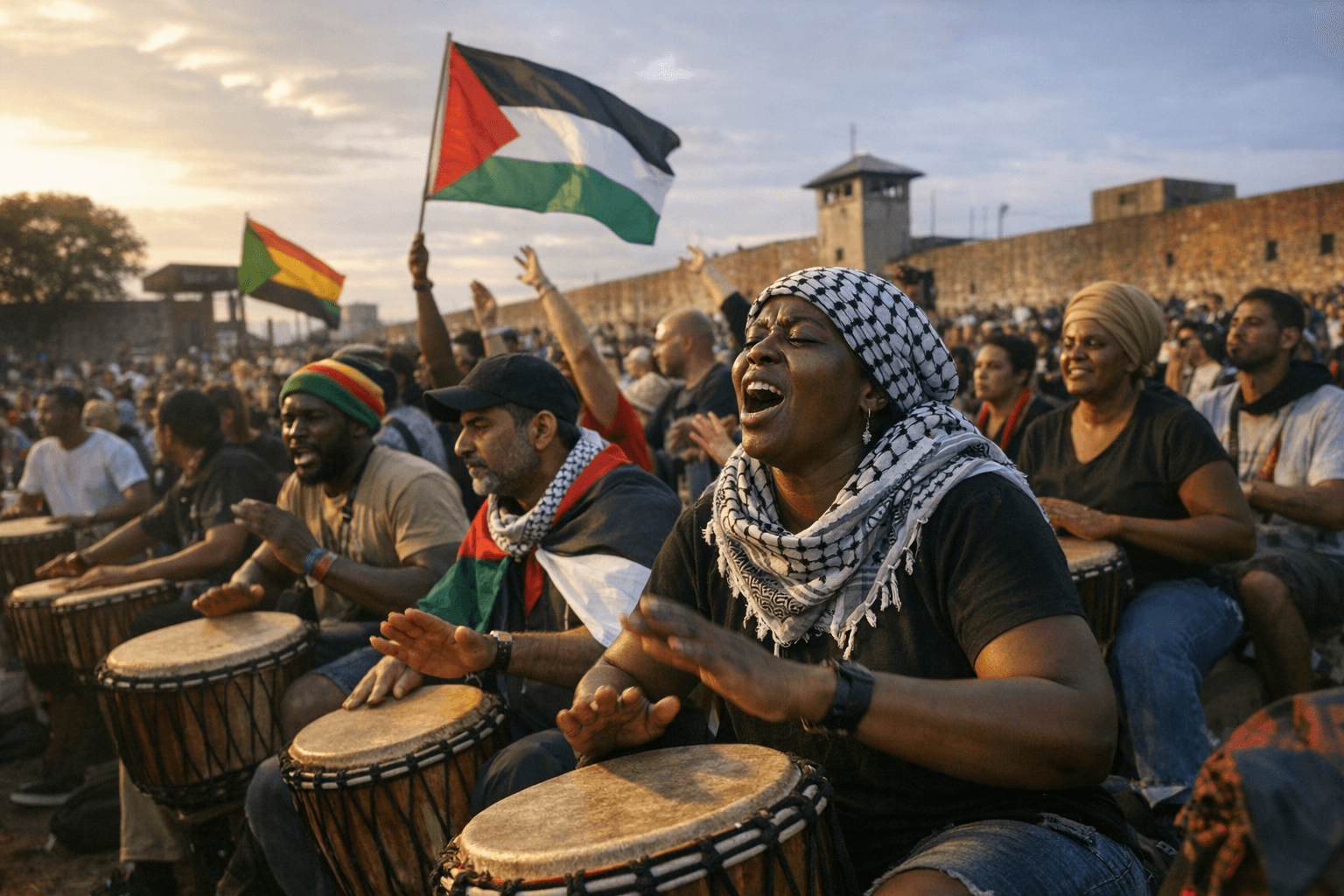
For percussionists thinking about replicating this model at a smaller scale, the mechanics translate directly. Secure your venue and any permits early, particularly if amplification is involved. Designate one facilitator whose only job is to hold the groove and signal clear starts, stops, and dynamic shifts with visible cues. Keep the core rhythm to a single pattern everyone can find in two bars or fewer. A mixed instrument supply covers the most ground: djembes, frame drums, shakers, and basic hand percussion give participants something to hold without requiring anyone to own a specific kit. Pair with at least one advocacy organization from the outset so the event carries genuine civic intent. Even 50 people playing a locked-in pulse outside a community center generates collective sonic presence that converts passersby into participants.
Across three editions, 1000 Drums has proven that mass percussion is a replicable organizing tool. The barrier to entry is a drum and a willingness to show up.
This article was produced by Prism’s automated news system from verified source data, official records, and press releases, then run through automated quality and moderation checks before publishing. The system is built and supervised by the people who set the standards it runs under. Read our full AI policy.
Did this article answer your question?