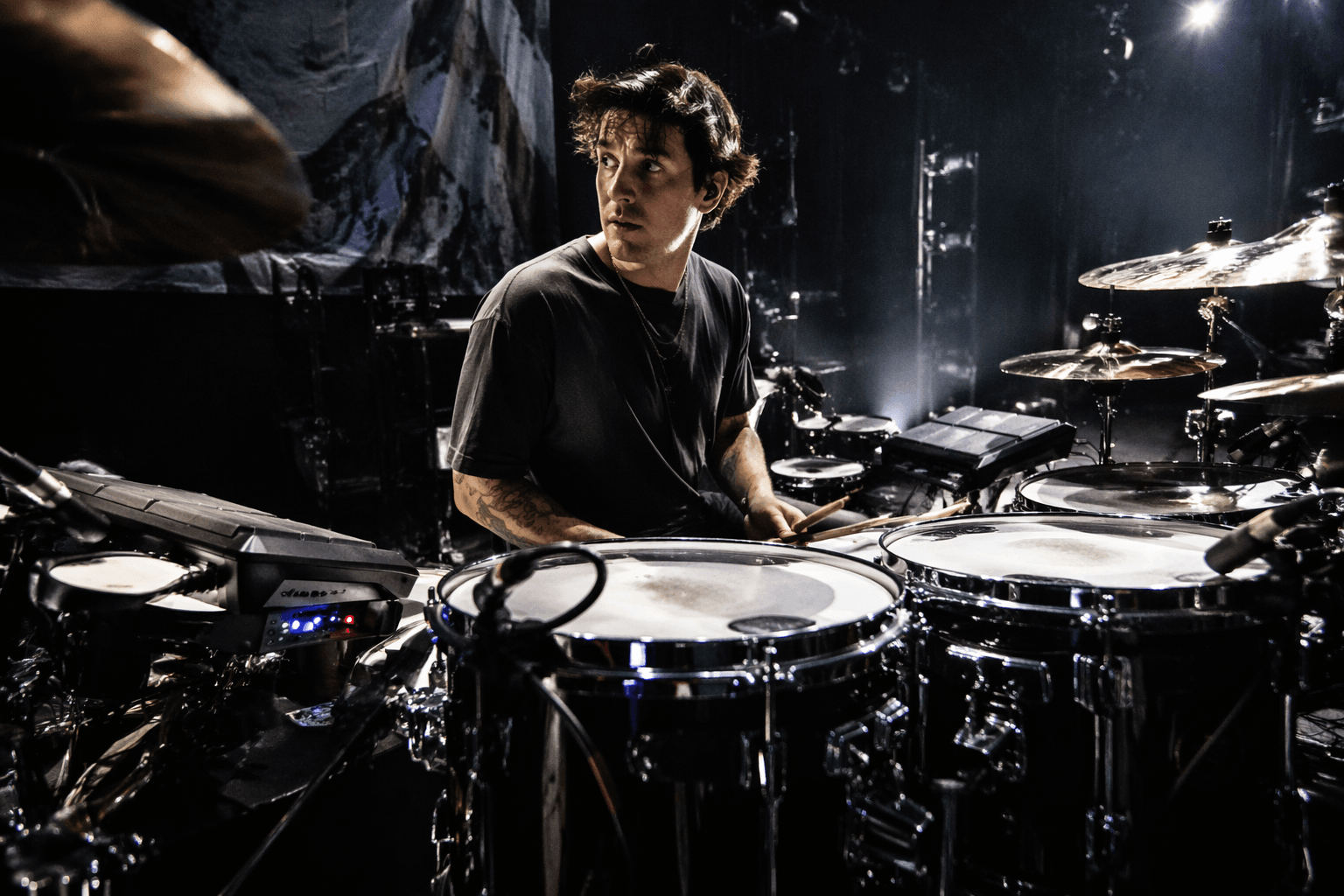
Low-Noise Drumming Techniques: Practice Pads, Muted Kits and Electronic Alternatives
WhisperDRUMS claims a 20-decibel cut, here are three proven low-noise routes (practice pads, muted acoustic kits, and electronic alternatives) with concrete steps for apartment and late-night practice.
WhisperDRUMS markets a 20-decibel claim as a headline grabber; if you live in an apartment, practice late at night, or have kids and roommates, that kind of reduction matters. Quick poll: which route are you leaning toward, (A) practice pads, (B) a muted acoustic kit, or (C) an electronic kit? Pick one and read the matching section below, each route has specific steps so you don't waste time or money.
1. Practice pads
Practice pads are the cheapest, quickest way to reduce volume and isolate mechanics. A good practice pad will let you work on rebound, stick control, and rudiments without the shell resonance or cymbal wash that carries through walls; for apartment players this often means a pad on a snare stand or a dedicated rubber pad on a music stand. Use these sessions to focus on finger technique, accents, and metronome discipline, these are the exact skills that transfer to louder settings when you need them. Tip: set a metronome at performance tempo, dial the tempo back to half-speed for difficult passages, then bring it back up in controlled increments; this builds clean muscle memory without ever needing a full kit.
- Setup: mount the pad on the snare stand at playing height to replicate your usual posture.
- Practice routine: 15–25 minutes of warm-up rudiments, 20 minutes of focused groove work, 10 minutes of dynamic control exercises.
- Pitfall: don’t only play rudiments, pad-only drummers often lack cymbal-hand coordination; alternately practice stick-to-hand transitions on a small muted cymbal substitute (see item 2).
2. Muted acoustic kits (low-volume acoustic modifications)
If you want the feel of real drums without the SPL (sound pressure level) of a full kit, a muted acoustic setup is the middle path between pads and full electronic conversion. That means using mesh heads or heavily muffled heads on toms and snare, swapping to low-volume cymbals or cymbal-silencing devices, and treating the bass drum with a thick pillow or commercial muffler. For apartment living and family-friendly spaces, reduce shell resonance with internal damping (blankets or foam inside shells) and replace or dampen the resonant heads; the result keeps stick feel closer to acoustic while shaving off the boom and rimshot projection that wakes neighbors. Practical step-by-step: retune to slightly lower tensions to reduce ring, add patch mufflers on snares for controlled attack, and use a bass-drum pillow or purpose-made damper to stop long sustain.
- Cymbal strategy: use dedicated low-volume cymbals or stack small crashes with sizzles to get articulation without wash.
- Head choices: mesh heads give excellent rebound and low acoustic volume, swap them on toms and snare where you need quiet.
- Pitfall: over-muffling kills feel, start with one muffler and add only as needed; too much damping changes stick response and groove timing.
3. Electronic alternatives (triggers, full e-kits, and hybrids)
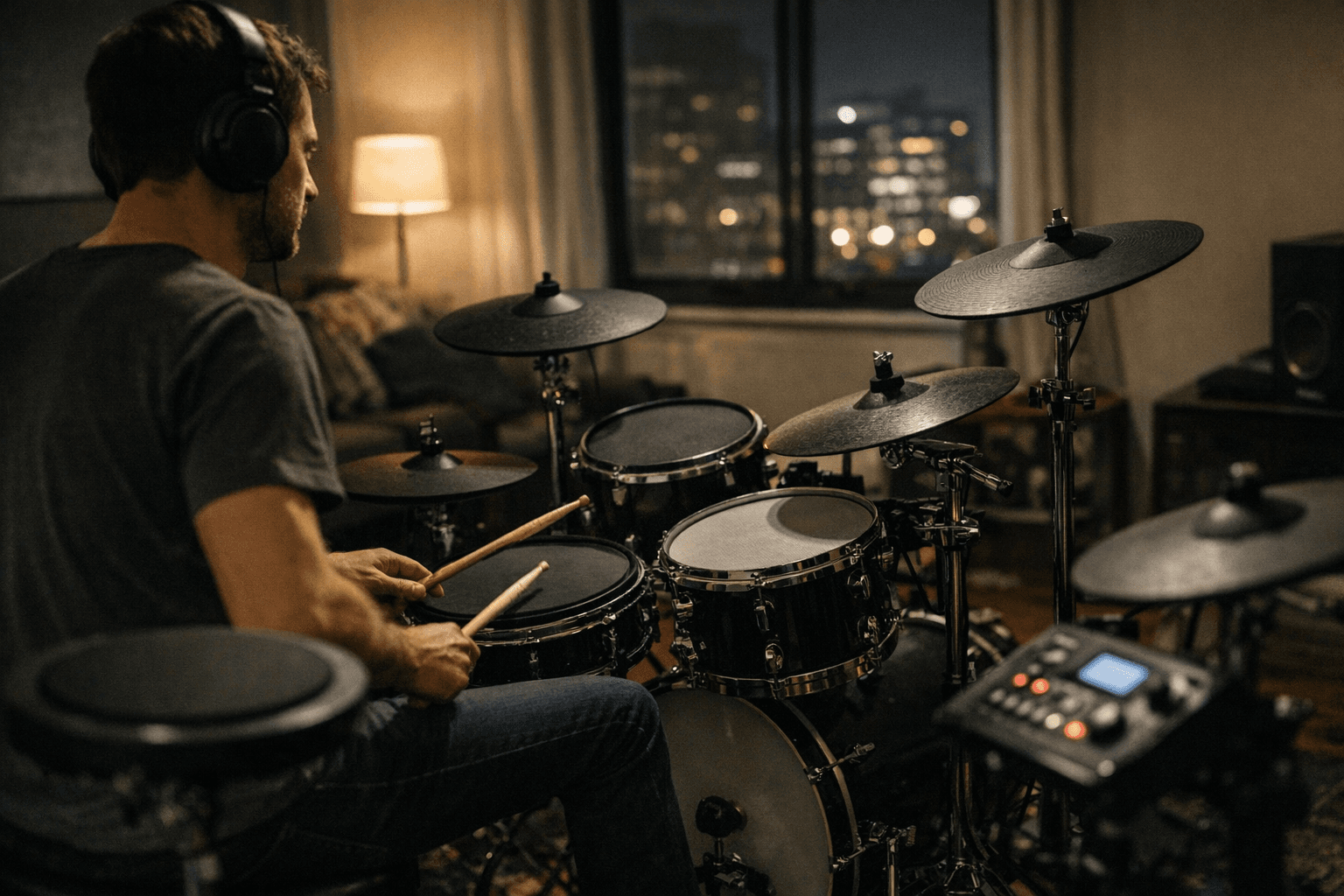
Going electronic is the surest way to control volume, through headphones or low-volume amp, while keeping full kit ergonomics. Options range from drum triggers on acoustic shells feeding a module (a hybrid path) to compact electronic kits that replace cymbals and heads entirely. WhisperDRUMS’ 20-decibel claim highlights the marketing arms race: some systems promise large SPL drops, but what matters for practice is realistic feel, latency, and dynamic response. If you choose an e-kit, prioritize modules with low latency (<10 ms feels best for live-feel practice), responsive mesh pads, and good cymbal choke detection so your chops translate to acoustic contexts later.
- Hybrid setup tip: fit triggers to your acoustic snare and bass drum and run a mesh head on toms, this keeps feel but lets you switch to headphones quickly.
- Headphone/monitoring: use closed-back headphones for silent practice; if you must use a monitor, keep it at low volume and consistent levels so you don’t compensate by hitting harder.
- Pitfall: some entry-level modules have poor dynamic scaling, don’t assume louder pads equal better practice; test stick dynamics and rimshot sensitivity before buying.
Practical routines that work across all three approaches These are routines I’ve used for late-night and apartment drills; they’re simple, repeatable, and don’t rely on loud backbeat energy to be effective. First, do a 5-minute warm-up on dynamics and ghost-note control; second, spend 20 minutes on metronome-based subdivision work (quarters, triplets, sixteenths); third, dedicate 10–15 minutes to a musical application, play a reduced-volume groove for a real song and focus on consistency. If you switch between methods (pad to muted kit to e-kit), keep a baseline metric, your preferred tempo for a given rudiment, and log how much easier/harder it feels in each setup; that empirical habit prevents false confidence from deceptive low-volume rebound or module compression.
Noise-reduction accessories and home setup specifics There are small purchases and setup changes that compound into big reductions in neighbor complaints. Use rugs and wall hangings to cut reflected sound, place your kit on a thick rug to decouple from floor transmission, and consider moving the kit away from shared walls or bedrooms. If neighbors complain, record a short clip of your practice session on your phone so you can objectively hear what carries, sometimes perceived volume is worse than actual SPL. Remember the use cases: apartment living, late-night practice, family-friendly spaces each prioritize different trade-offs, neighbors want less wash, kids need predictable schedules, and late-night sessions value absolute quiet.
Final word Low-noise drumming isn’t about surrendering tone, it's about choosing the tool that preserves the technique you care about. Practice pads for pure mechanic work, a muted acoustic kit if you need near-authentic feel, and electronic or hybrid setups when headphone practice is essential; WhisperDRUMS’ 20-decibel claim is a reminder that vendors will offer big numbers, but the real test is how your hands, timing, and dynamics respond in the room you own. Pick the route that fits your life, commit to the targeted routine above, and you’ll keep improving without making anyone regret living next door.
This article was produced by Prism’s automated news system from verified source data, official records, and press releases, then run through automated quality and moderation checks before publishing. The system is built and supervised by the people who set the standards it runs under. Read our full AI policy.
Did this article answer your question?