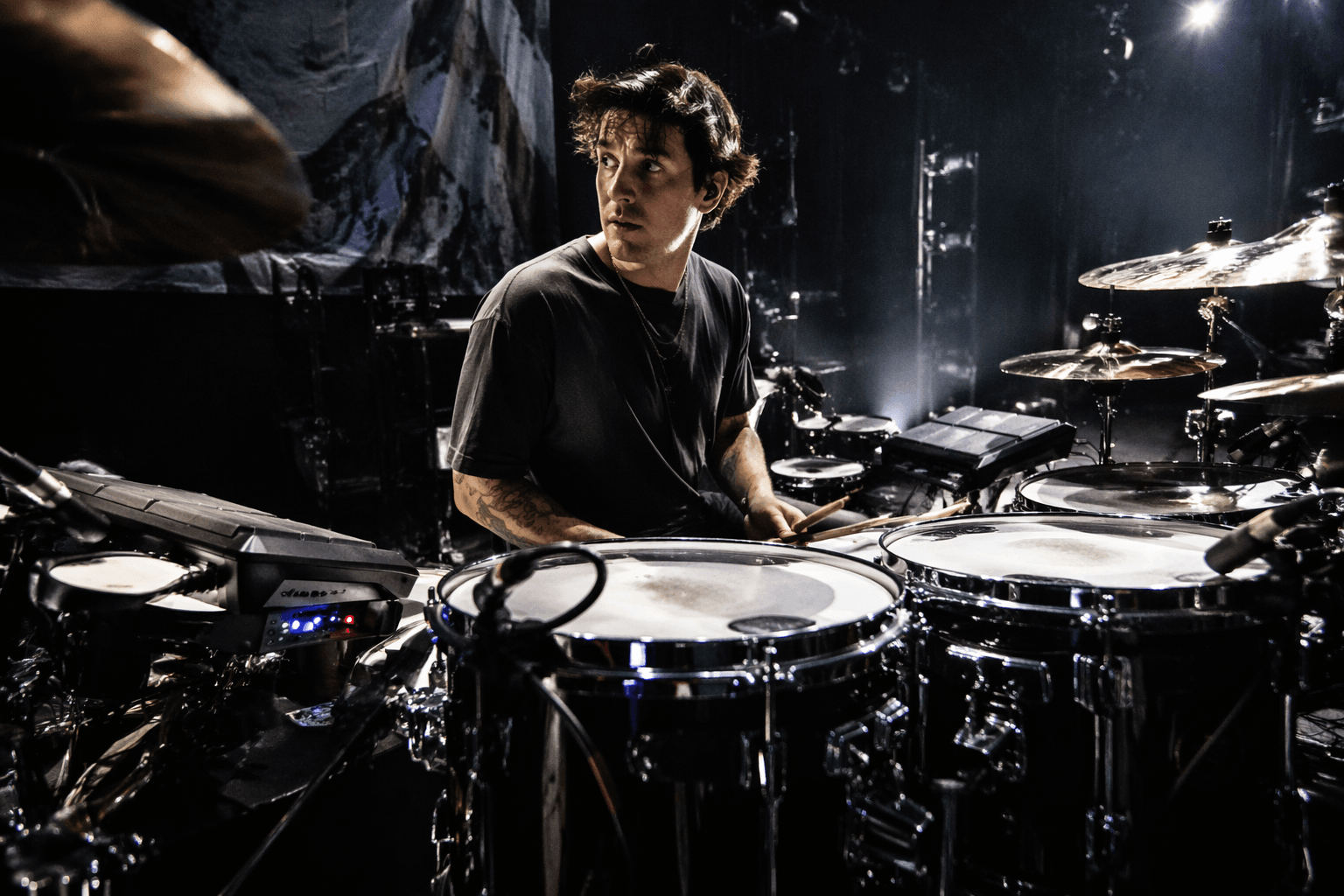
Phil Collins Helped Genesis Rise From Crisis to Superstardom
Phil Collins didn’t just replace a frontman, he turned Genesis’s biggest crisis into the move that saved the band. The drummer taking over should have broken everything; instead it became the strategy that made them huge.

The night Genesis had to choose survival
Peter Gabriel’s exit after *The Lamb Lies Down on Broadway* left Genesis staring at the kind of hole that usually ends a band, not restarts it. The record had arrived in November 1974, and the band’s own 50th-anniversary edition ties that era to the complete January 1975 Shrine Auditorium show, which is exactly the point where the old Genesis and the next Genesis overlap.
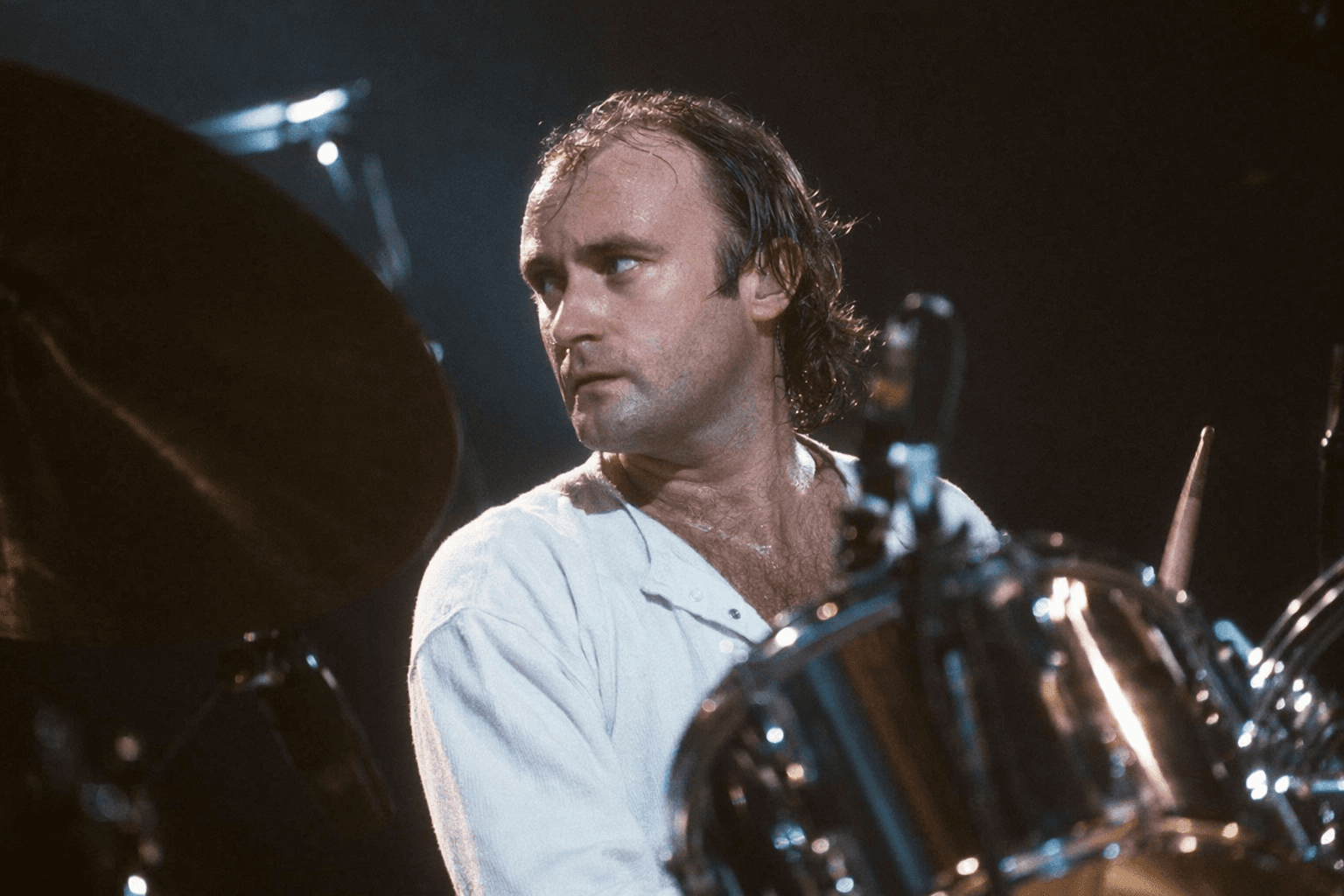
This was not a casual lineup change. Genesis had already built a serious reputation as one of progressive rock’s sharpest acts, with albums like *Nursery Cryme* and *Selling England By The Pound* placing them among the genre’s elite. But Gabriel’s theatrical persona had become so central to the band’s identity that losing him created an artistic and commercial crisis at the same time. If the voice, face, and drama were gone, what exactly was left?
Why the drummer mattered more than the usual replacement story
Phil Collins was not brought in as a temporary fix, and that difference matters. He was already the drummer, already inside the chemistry, already trusted by the people who had to make the call. That made the transition feel risky and oddly logical at the same time: the band was not hiring a stranger to imitate a missing star, but asking the rhythm section’s own engine to become the new center of gravity.
That is why the story still lands so hard with drummers. The supposed liability, the drummer stepping out front, became the survival strategy. Collins didn’t just keep time for Genesis; he gave the band a way to keep moving when the obvious option, staying exactly the same, was no longer possible.
The Rock & Roll Hall of Fame captures the scale of the shift by describing Genesis almost as two different bands, one built on the whimsical, eccentric Gabriel years and the other on Collins’ more down-to-earth reign. That is not a cosmetic change. It is a full identity reset.
What changed musically when Collins stepped up
The most important thing Collins brought was not merely a set of pipes. He changed the way Genesis could function on stage and on record. With Gabriel gone, the band had to make the vocals less dependent on theatrical character and more tied to songcraft, groove, and clarity. That shift made the singing drummer believable, because the performance no longer had to sell a fantasy before it sold a song.
Genesis’s later mainstream run shows how far that approach could go. *Duke* in 1980, *Abacab* in 1981, and *Invisible Touch* in 1986 map the progression from prog heavyweight to mass-audience force. The band did not abandon musicianship; it repackaged it so the songs could travel farther, reach wider radio, and hit harder with a broader audience.
For drummers, the lesson is practical: Collins’ rise worked because the band adjusted around his strengths instead of pretending nothing had changed. He was still the drummer, but the role around him got redefined. That is leadership, not just personnel.
The commercial proof that the gamble worked
If there is any doubt that the move paid off, the numbers erase it. ChartMasters estimates Genesis have passed 115.6 million equivalent album sales, and it lists *Invisible Touch* as the band’s biggest album at 21.5 million units, including 13.0 million pure sales. That is not a niche prog afterlife. That is blockbuster scale.
The title track from *Invisible Touch* became Genesis’ first and only No. 1 single in the United States, and the album produced five consecutive US top-five singles. In plain terms, the drummer-frontman era did not merely preserve the band’s legacy. It gave them their most dominant commercial stretch.
Britannica’s description of Genesis as a British progressive rock group with major success in the 1980s and 1990s fits that arc perfectly. The early reputation gave them credibility, but the Collins years gave them the reach. That combination is why this story still matters: they did not choose between artistry and mass appeal. They found a version of themselves that could do both.
Why this still resonates in drummer culture
Part of the reason this story keeps getting revisited is that musicians remember how improbable it looked. Steve Harris, later of Iron Maiden, was one of the fans who felt the loss deeply. He said he was devastated when Gabriel left Genesis and later said the Gabriel-era albums still gave him goosebumps. He also made clear that while *A Trick of the Tail* was strong, the later lineup never felt quite the same to him.
That reaction makes sense. A band’s identity can be emotional before it is commercial, and Genesis were one of those groups that inspired loyalty from players before they became a pop force. Their induction into the Rock & Roll Hall of Fame in 2010 only formalized what the numbers already showed: this was a band that made one of rock’s biggest reinventions work.
Collins’ wider status reinforces the point. Britannica identifies him as an English drummer, singer, songwriter, and record producer who rose to fame through Genesis and his solo work, and the Rock & Roll Hall of Fame says he has sold more than 150 million records worldwide as a member of Genesis and as a solo artist. That is the full arc of a drummer who did not just survive the transition, but defined it.
The takeaway for anyone who cares about band dynamics
Genesis were forced into the kind of decision that usually exposes a band’s weak spot. Instead, they turned that weakness into a new center of power. Collins stepped from behind the kit into the frontman role, and the band answered the question of whether it could continue by making itself bigger than the crisis that nearly split it.
That is why this story is more than a retrospective. It is a case study in how a drummer can become the most important person in the room, not by abandoning the kit as a failure plan, but by using that same rhythmic authority to keep a band alive and push it into superstardom.
This article was produced by Prism’s automated news system from verified source data, official records, and press releases, then run through automated quality and moderation checks before publishing. The system is built and supervised by the people who set the standards it runs under. Read our full AI policy.
Did this article answer your question?