Ronald Bruner Jr. reflects on pressure to deliver every performance
Bruner’s career shows why elite drumming is about repeatable habits, not flashes. The real flex is staying calm, consistent, and useful when the room expects perfection.

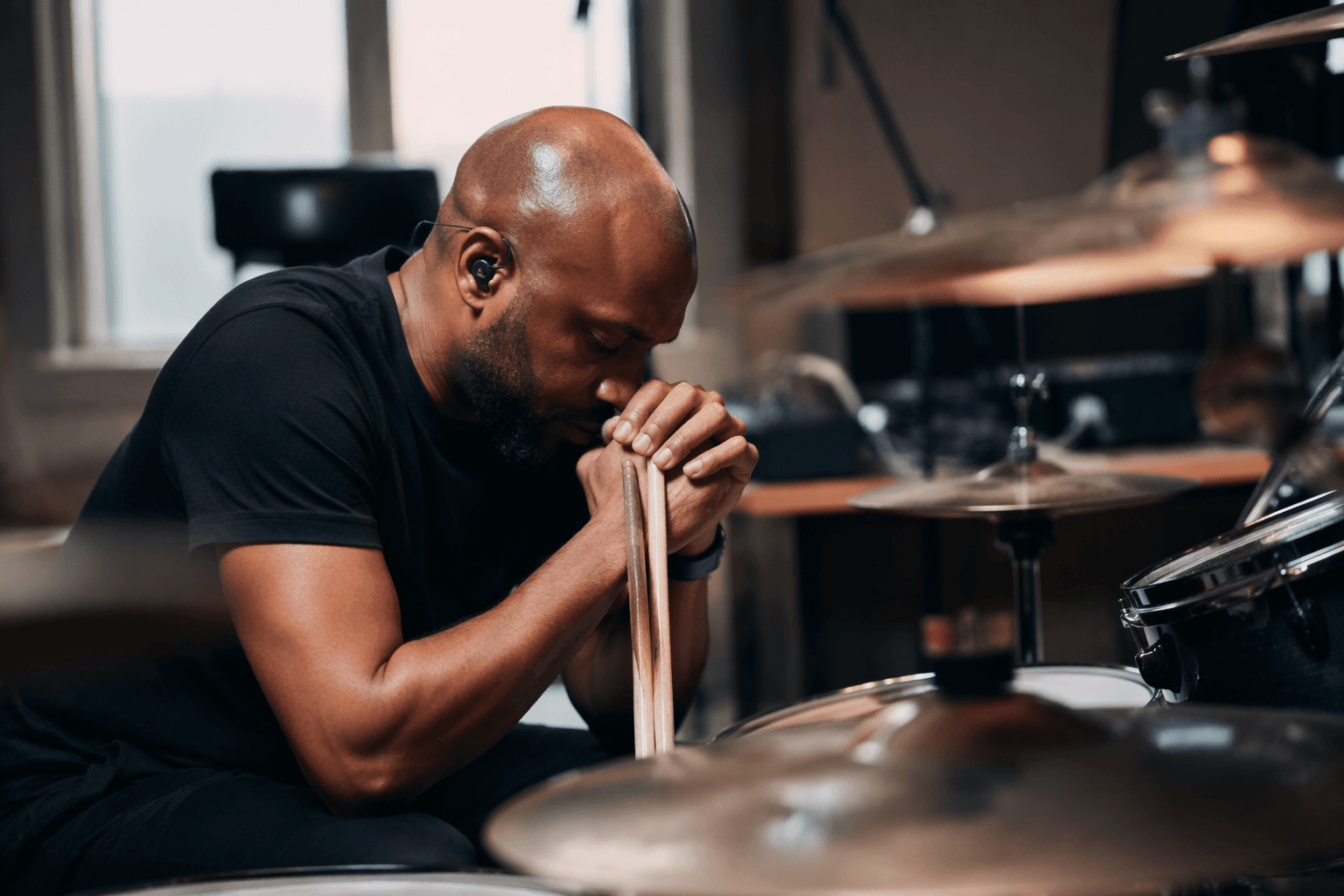
Ronald Bruner Jr. is the kind of drummer whose reputation travels ahead of him, not because he looks comfortable, but because he makes hard situations look routine. Ronald Ray Bruner Jr., born October 5, 1982, has built a career as an American drummer, composer, and producer in the spaces where time, feel, and discipline get tested every night. That is the pressure he is talking about here: not just playing well, but making excellence feel like the baseline when the count-off starts.
Pressure is the instrument you do not get to put down
Bruner’s resume makes the point cleanly. He has played with Suicidal Tendencies, worked inside the Los Angeles jazz collective West Coast Get Down, and won a Grammy for The Stanley Clarke Band at the 53rd Annual Grammy Awards, in the Best Contemporary Jazz Performance, Instrumental category. Those are not the credits of a drummer who only has to survive one lane. They are the credits of a player expected to switch languages fast, keep the pocket intact, and still sound like himself.
That is what makes his reflections useful for real drummers. At this level, nerves are not a separate problem from technique, they are part of technique. If you are the drummer in the room, especially in a bandleader’s band or a high-stakes session, your job is to make the music feel settled before anyone has had time to wonder whether it is.
Prep is what keeps pressure from becoming panic
Bruner’s 2017 debut album, Triumph, puts that standard in plain view. Issued on World Galaxy Records, it was built with contributions from his brothers Stephen “Thundercat” Bruner and Jameel Bruner, and it was captured during the KSL Sessions associated with Kamasi Washington’s The Epic. That is a family-and-scene record, but it is also a reminder that heavyweight drumming is rarely just about velocity or chops. It is about entering a dense musical environment and knowing exactly where your responsibility sits.
For non-pro drummers, the lesson is practical and unglamorous:
- Know the form before the first downbeat, including intros, stops, tag endings, and any odd-length turnaround.
- Lock in one reliable recovery point, usually the ride pattern, the hi-hat, or a simple kick-snare reference, so a mistake does not spread.
- Rehearse dynamics as seriously as fills, because under pressure the wrong volume is often more damaging than the wrong note.
- Practice counting through transitions out loud or silently until you can do it without splitting your focus.
That is the kind of prep that keeps a bad bar from becoming a bad song.
When a note cracks, the real test is the next eight bars
The pressure Bruner is talking about is not abstract. A drummer in a room full of musicians, especially one with a résumé that stretches from West Coast Get Down to Stanley Clarke, is judged on how quickly he resets. The difference between a pro and a player who sounds rattled is usually not whether a mistake happens, it is how much space that mistake is allowed to take up.
The cleanest way to handle nerves is to shrink the job back down to touchable pieces. Count the subdivision. Feel the backbeat. Keep the bass drum honest. If a fill goes sideways, come back on the next clear landmark instead of trying to rescue the whole chorus at once. Bruner’s career, which crosses jazz, fusion, and heavier band situations like Suicidal Tendencies, is proof that the drummer who stays useful under stress is the drummer who keeps getting called.
Range matters because pressure changes shape
Bruner’s place in the Los Angeles music scene is not just about one breakout moment. An interview description tied him to work with Prince, Chaka Khan, and Stanley Clarke, which tells you how broad the expectations are around him and how fast a drummer can be asked to adapt from one musical world to another. That kind of range changes the mental game. A metal gig asks for impact and control; a jazz or fusion date asks for nuance, time feel, and the ability to breathe inside the groove.
His connection to Kamasi Washington’s The Epic ecosystem matters for the same reason. The recordings around that project made precision feel communal, not mechanical, and that is the environment where consistency becomes a real currency. A drummer who can keep the room calm in those settings is not winning by flash. He is winning by trust.
The standard is simple, even when it is hard
Bruner’s reflections land because they strip the job down to what players actually face when the stakes rise. The room wants confidence, but it also wants repeatability, and those are not the same thing. You can only give both if you have done the boring work first: learning the form, protecting the pulse, and refusing to let one rough moment rewrite the rest of the set.
That is the real lesson in Bruner’s story. Elite drumming is not the ability to look fearless before the count-off. It is the ability to hear the count, settle your breath, and make the first bar sound like you were ready all along.
This article was produced by Prism’s automated news system from verified source data, official records, and press releases, then run through automated quality and moderation checks before publishing. The system is built and supervised by the people who set the standards it runs under. Read our full AI policy.
Did this article answer your question?