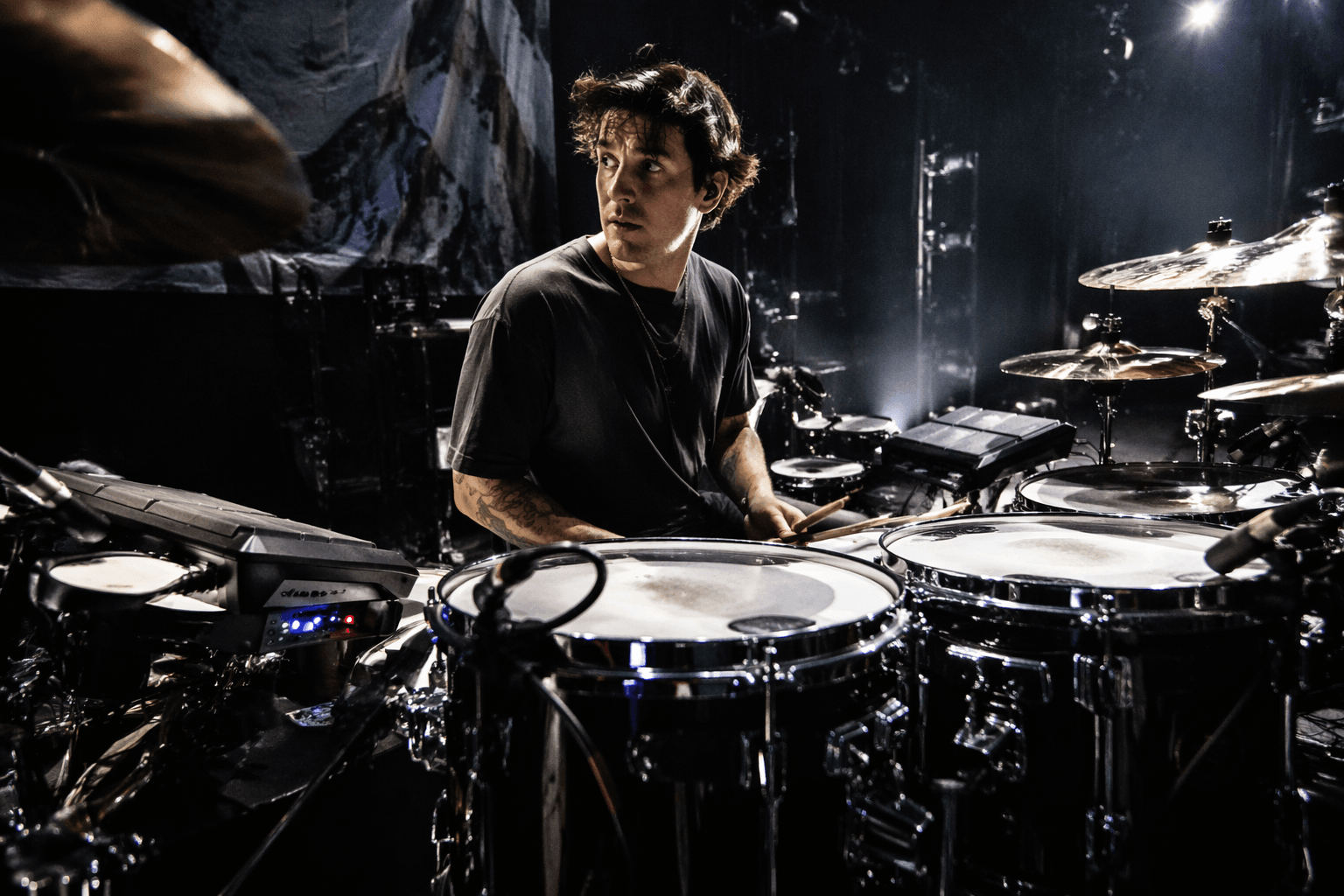
Short Daily Drum Practice Builds Consistency, Speed, and Musicality
Ten focused minutes a day can outwork the occasional marathon. A simple routine builds steadier time, more endurance, and cleaner grooves without burning out.
Why short sessions stick
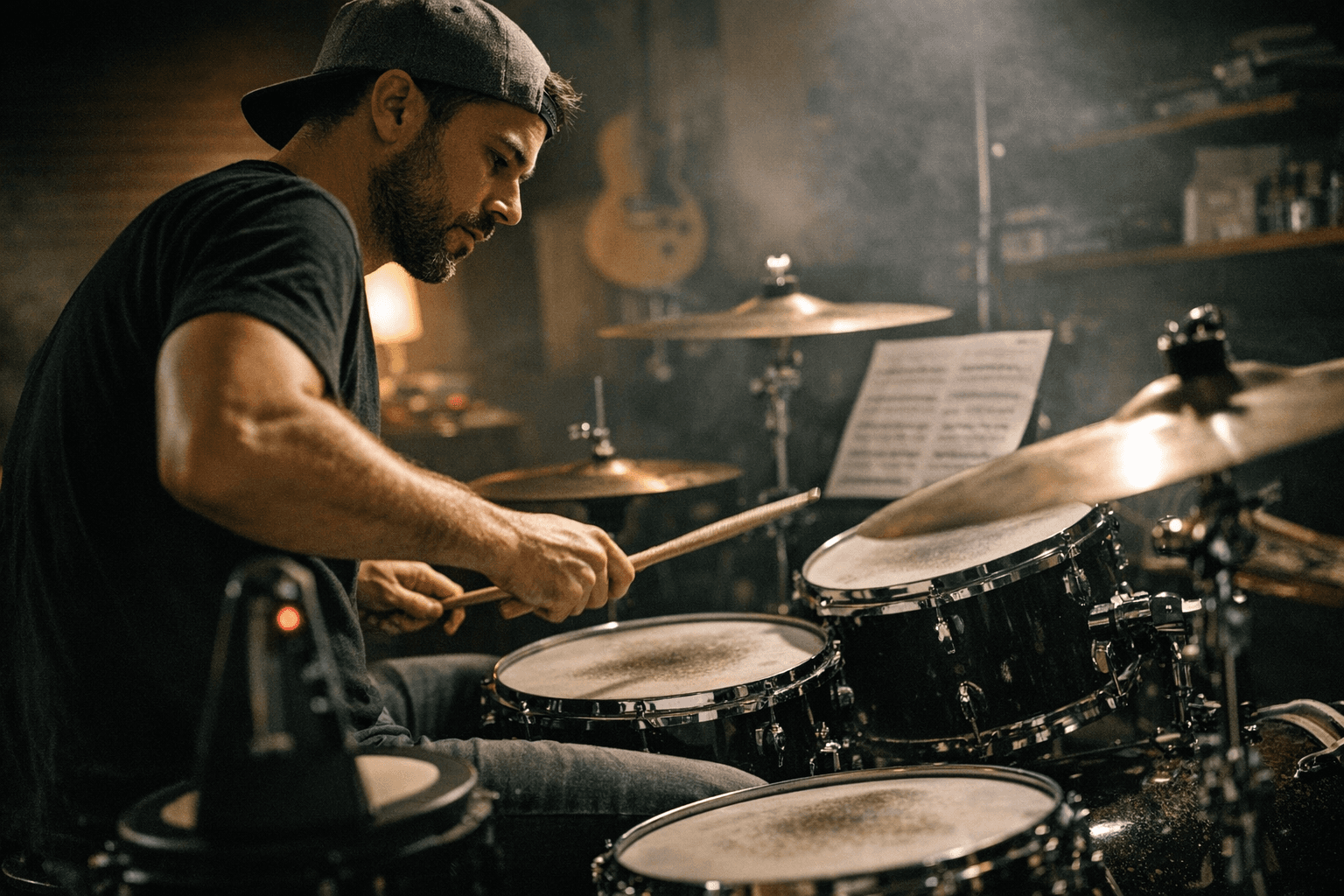
The fastest path to better drumming is usually not a heroic two-hour grind. It is ten to twenty minutes of focused work, repeated often enough that the kit stays part of your daily rhythm instead of becoming a weekend project. That approach is easier to sustain around work, school, gigs, and family, and it keeps progress moving in small, measurable steps.
Short sessions also reduce the temptation to chase everything at once. When you only have a few minutes, you are forced to choose one or two goals, like cleaner singles, better foot control, steadier time, or smoother fills. That kind of focus matters because the session structure is doing as much work as the exercises themselves.
What a focused practice block should cover
The modern drum-learning world has made this kind of structure central for a reason. Drumeo organizes practice around four core areas: technique, vocabulary, independence and coordination, and musicality. Its method materials also stress efficient practice, stretching, warm-ups, and practice plans, while Modern Drummer’s 45-minute routine starts by warming up the hands, feet, body, and mind before moving into deeper work.
That same logic works whether you are brand new or already playing advanced material. Beginners need a routine that avoids overload. Intermediate players need a way to connect rudiments to grooves and songs. Advanced drummers often need maintenance work that keeps tempo, dynamics, limb independence, and chart reading in shape without turning practice into a reset every day.
What short sessions build best
Short daily practice is especially powerful for timing. When you revisit a groove, click pattern, or subdivision every day, your internal clock gets more reliable, and the space between your notes starts to feel more intentional. That is exactly the kind of steady reinforcement that turns a beat from acceptable into locked-in.
It also builds endurance in a smarter way. Rather than waiting until your hands or feet are exhausted, you train them in small doses that preserve form, which helps stamina grow without sloppiness. Groove consistency benefits too, because repeated short exposure to the same pocket, same tempo, and same fill placement makes your time feel more automatic.
Speed improves for the same reason. Fast playing gets better when it is approached in controlled bursts, with relaxed motion and clear repetition, not when it is forced for too long. Musicality grows alongside it, because a brief session makes room for listening, dynamics, and song-based decisions instead of just burning through exercises.
A one-week micro-practice plan
A good daily block does not need to be complicated. If you only have ten minutes, protect that time. If you have twenty, stretch the last section and keep the same order so the habit stays repeatable.
1. Day 1: Time and touch
Start with a short warm-up on pad or snare, then move to a simple groove with the metronome. Finish by playing the same beat at two different dynamics so your time and control are both tested.
2. Day 2: Singles and foot control
Spend the first few minutes on clean single strokes, then add kick pattern work. End with one groove that forces your hands and feet to line up cleanly.
3. Day 3: Independence and coordination
Use a basic ostinato or hi-hat pattern and layer the snare and kick around it. Keep it simple enough that you can listen to the spaces between the notes, because that is where coordination gets clearer.
4. Day 4: Vocabulary into music
Work on one rudiment, then place it inside a groove or fill. The point is not to collect licks, but to make the vocabulary usable inside actual playing.
5. Day 5: Endurance at moderate tempo
Play a groove long enough to feel where tension creeps in, then reset and repeat with better relaxation. This is where short practice helps most, because you can train stamina without losing form.
6. Day 6: Musicality and phrasing
Pick a song excerpt and play along with it, paying attention to the pocket, accents, and transitions. The goal is not just accuracy, but making the groove feel like part of the record.
7. Day 7: Review and repair
Return to the weakest spot from the week, then end with one clean run-through of your best groove. That final review makes it easier to see progress and choose the next target.
Why the science supports the habit
The research behind motor learning points in the same direction. A 2019 study found that for efficient learning, the time between practice sessions should not be too long or too short. In other words, spaced repetition matters, and a short daily routine fits that pattern better than a rare marathon session.
Practice variety matters too. A 2018 study found that mixing tasks and variations during practice can improve how well a learned motor skill transfers to other similar tasks. That is a strong argument for rotating between pad work, grooves, fills, and song excerpts instead of drilling one thing for too long.
Drumming also changes the brain in measurable ways. A study of novice drummers found that learning to drum produced long-term plasticity in the cerebellum and changes in white-matter microstructure. That reinforces a practical truth every serious player knows already: repeated, structured contact with the instrument reshapes coordination, not just the hands and feet.
The same idea shows up beyond music education. A review of rhythm- and music-based interventions explains that musical rhythms can help entrain movement and regulate timing and pace. In Parkinson’s-related work, one pilot program used ten 30-minute drum sessions over six weeks, and another study examined drum playing with rhythmic cueing for upper-extremity motor control and attention. Those examples do not turn every practice block into therapy, but they do show how strongly rhythm can organize movement.
The bottom line for everyday drummers
Short daily practice works because it is realistic, repeatable, and specific. Drumeo’s 10-minute-a-day approach in its 30-Day Drummer program fits the same pattern as its broader practice framework, and Modern Drummer’s warm-up-first routine points to the same discipline: prepare the body, target one problem, and leave with something clearly improved.
That is why ten to twenty minutes can beat the occasional long session. Regular contact with the kit builds steadier timing, stronger endurance, cleaner grooves, and more usable musicality. The drummers who keep showing up for short, focused work are the ones who keep getting better when it counts.
This article was produced by Prism’s automated news system from verified source data, official records, and press releases, then run through automated quality and moderation checks before publishing. The system is built and supervised by the people who set the standards it runs under. Read our full AI policy.
Did this article answer your question?