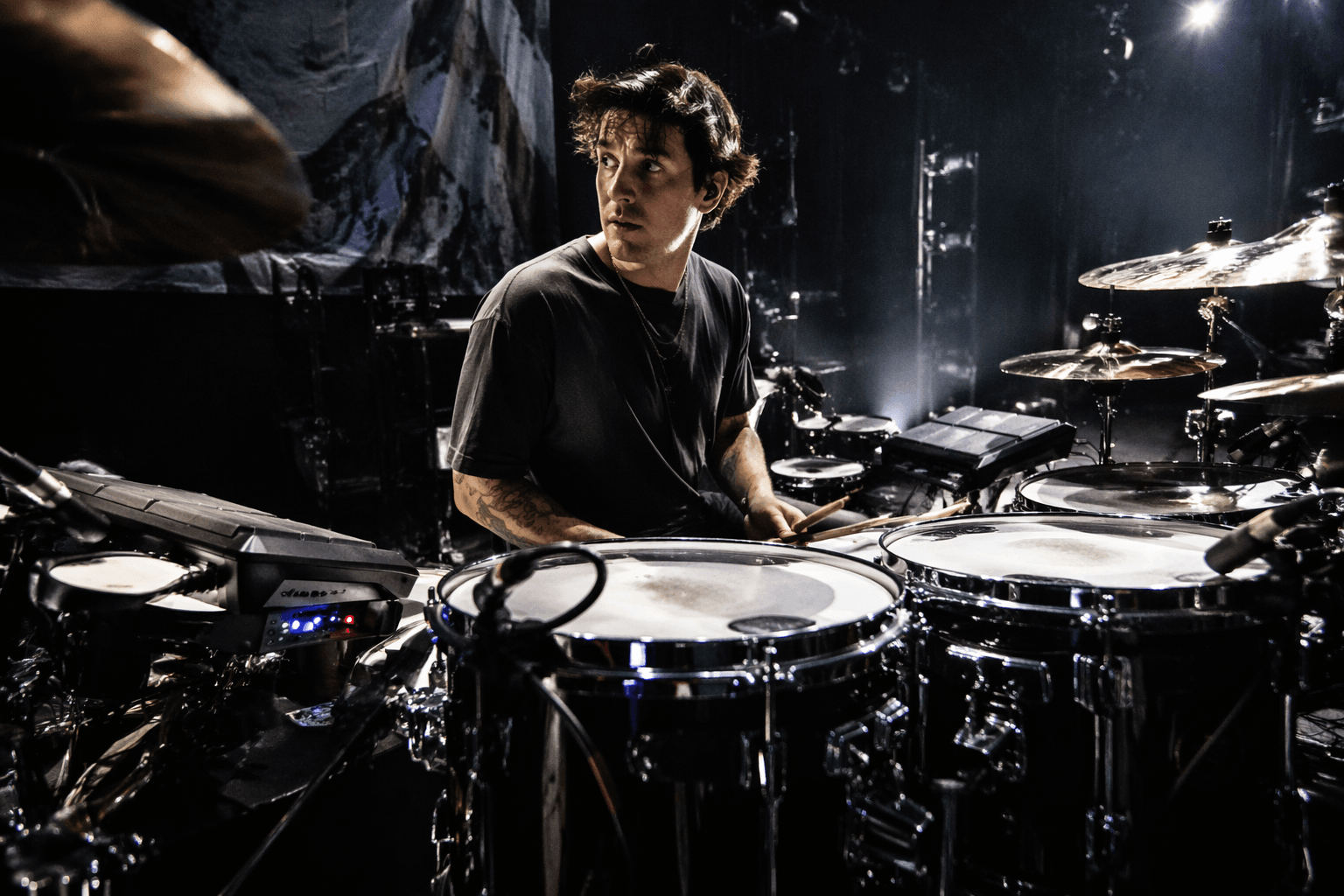
Why Rudiments Still Matter in Modern Drumming
Rudiments are not busywork, they are the shortest path from pad practice to real grooves. Singles, paradiddles, and flams become actual musical language the moment you move them onto the kit.
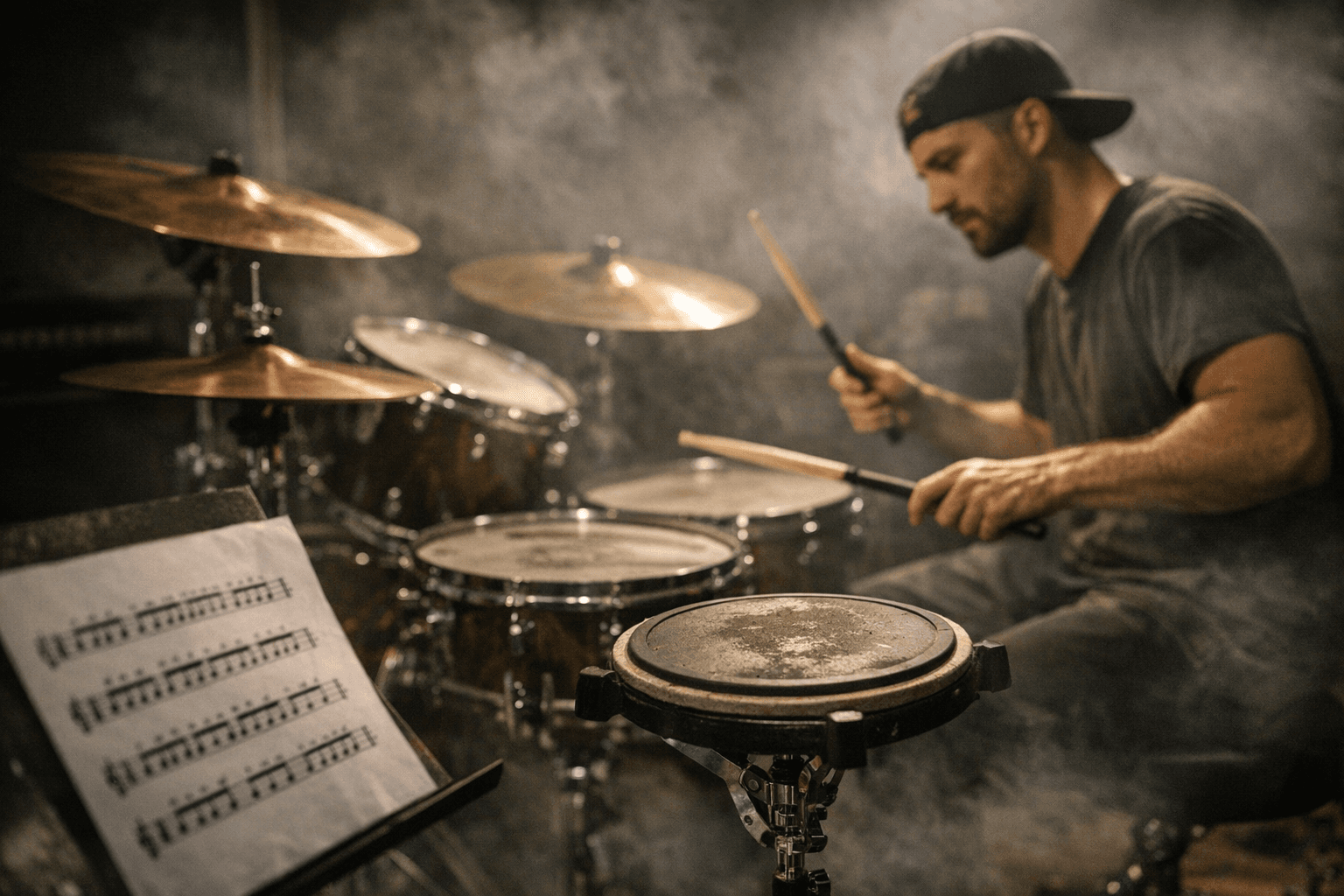
The fastest way to make rudiments matter is to stop treating them like homework. A single-stroke roll, a paradiddle, or a flam is not just a line on a practice pad. It is the mechanics of control, articulation, and phrasing that show up in grooves, fills, and transitions once you start listening for them.
That is why rudiments still sit at the center of modern drumming. They connect stick control to the musical reality of repetition with variation, which is what drumming actually is. Clean singles build consistency, doubles sharpen coordination, paradiddles shape movement across the kit, and flams and drags add weight and color. The basic patterns are simple; the payoff is that they keep working in jazz, gospel, metal, orchestral percussion, school ensembles, and straight-ahead rock.
Rudiments are not separate from music
The old trap is thinking of rudiments as a separate subject, something you do before you play. In practice, they are the hidden framework under a lot of the playing people already admire. A fill that sounds advanced may be nothing more than a paradiddle inversion placed across the toms. A funk groove may depend on clean doubles between the hands and feet. A marching passage may live or die on rebound control and even accents.
Even simple rock playing gets better when rudiments are cleaner. Better stickings improve time, tighten dynamics, and make transitions smoother. When the hands are organized, the groove feels less forced and the fill resolves more naturally back into the pocket.
Single-stroke roll: from exercise to sentence
The single-stroke roll is the easiest place to see the difference between practice-room mechanics and music. On a pad, it can feel like pure repetition, right hand, left hand, right hand, left hand, over and over. Useful, yes, but not very exciting if it never leaves the box.
Now move it into a groove. Keep the singles slow and even for a warm-up, then orchestrate them between snare, toms, and cymbals as a fill. The same sticking that looked academic becomes a phrase with shape, especially when you keep the accents consistent and let the notes open up across the kit. That shift matters because it teaches control without losing pulse, and it turns speed work into something you can actually drop into a song.
Before: a stiff pad exercise with no clear ending. After: a measured fill that rises across the toms and lands back on the downbeat cleanly.
Paradiddle: from grid to fill vocabulary
Paradiddles are where a lot of drummers finally realize rudiments are a language, not a test. The sticking itself is simple, but the alternating hands and doubles make it incredibly flexible. Once you move a paradiddle around the kit, it stops sounding like an exercise and starts sounding like a drummer making decisions in real time.
A practical way to use it is to practice a few minutes of paradiddles on the snare, then move the accents to the toms and cymbals. That keeps the underlying sticking intact while changing the sound, which is exactly what you need if you want to build fill vocabulary rather than memorize one fixed lick. A paradiddle inversion can turn into a slick transition between a verse and chorus, and the same logic applies whether the feel is straight, swung, or heavy.
Before: hands locked into one surface, with every note sounding identical. After: accents shifted around the kit so the phrase breathes, moves, and resolves like an intentional fill.
Flams: from accent drill to expressive color
Flams are one of the best examples of a rudiment that seems small until you hear what it does in a song. On paper, a flam is just a grace note paired with a primary stroke. In music, that tiny offset can thicken an accent, add weight to backbeats, or give a phrase a little more drama without turning it into overplaying.
Use flams to strengthen accents first, then fold them into actual phrases. They work especially well when you want a snare hit to speak harder without hitting louder across the whole kit. That is the point many players miss: rudiments are not only about speed. They are also about articulation, which is the difference between a flat note and one that carries shape.
Before: isolated flam taps that sound like a technical check. After: accented figures that add punch to a groove and make the phrase feel more expressive.
How to fold rudiments into a real practice week
The most useful way to practice rudiments is to attach them to music-making from the start. A few minutes of slow, even singles can become a warm-up before groove work. A paradiddle exercise can turn into a fill builder across the toms. Flams can be used as an accent study, then dropped into a song section that needs more lift.
A simple approach works better than endless isolated drilling:
- Start with singles at a slow tempo and keep them even.
- Move paradiddles across the kit so the sticking becomes a phrase.
- Use flams to shape accents, not just to satisfy the page.
- Finish by putting each idea into an actual groove or song form.
This is where rudiments stop feeling abstract. Instead of practicing patterns for their own sake, you are training your hands to speak in context. That makes the practice session shorter, more focused, and much easier to hear in your playing the next time you sit down at the kit.
Why the shared language still matters
Rudiments have survived every trend and wave of technology because they are simple, durable, and endlessly adaptable. They give drummers a common language across styles, which matters whether you are sitting in a jazz combo, cutting a gospel shout, locking into metal, reading orchestral parts, or playing in a school ensemble. The surface changes, but the core sticking ideas keep showing up in different forms.
That universality is the real reason rudiments still matter. They are not relics from drum class, and they are not a badge of seriousness. They are the working grammar behind speed, control, consistency, and phrasing, and they keep turning practice-room habits into musical fluency. If you want your playing to sound more intentional this week, the answer is not more theory. It is making the same old rudiments sound like music.
This article was produced by Prism’s automated news system from verified source data, official records, and press releases, then run through automated quality and moderation checks before publishing. The system is built and supervised by the people who set the standards it runs under. Read our full AI policy.
Did this article answer your question?