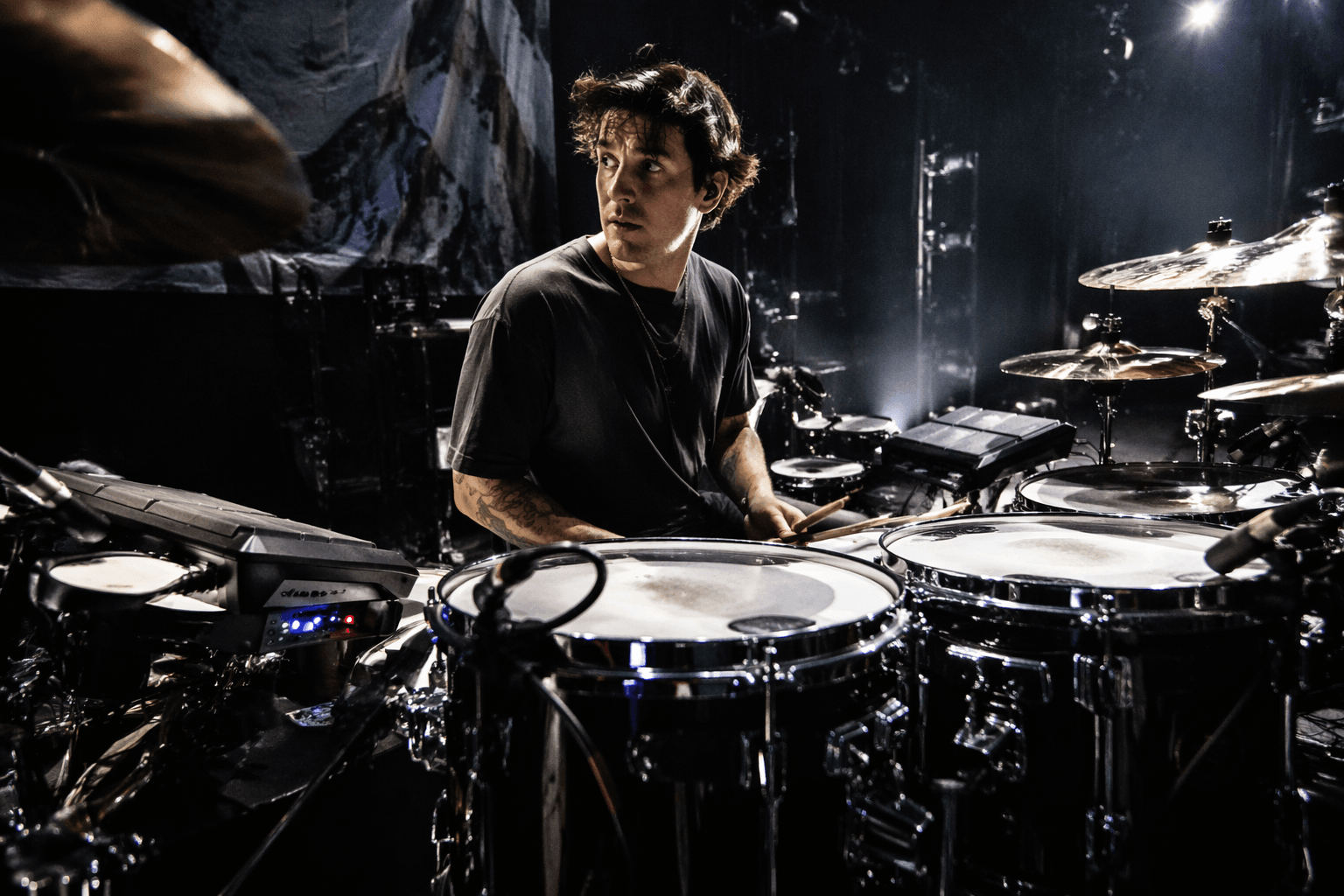
Song Athletics’ Get Back Drums channels 1960s British band tones
Get Back Drums chases the restrained snap of 1960s British records, built for producers who want character, not hi-fi muscle.

Song Athletics’ Get Back Drums arrives with a very specific promise: not more drum power, but a particular kind of record-made personality. The library is aimed at producers chasing the feel of great British bands from the 1960s, where the kit sits with restraint, warmth, and a slightly understated snap rather than modern, oversized impact. That is exactly what makes it interesting, and exactly why it will not be for everyone.
A drum tone with a period memory
The core idea behind Get Back Drums is baked into the sound reference itself. Song Athletics frames the pack around the drum character of 1960s British records, then sharpens that idea with three words that tell you almost everything you need to know: “simple, set-back, and paper-like.” That points to a very specific production mindset, one where the drums support the song instead of muscling to the front of the mix.
For drummers, that language should ring familiar. It describes a kit sound that feels played inside an arrangement, not pasted on top of it. The appeal is not brute force, but the way older records could make a snare feel dry, direct, and musical without losing personality. That is the lane Get Back Drums is built to occupy.
Recorded at Baltic Studios, with a prestige engineering hand
The library was recorded at Baltic Studios in East London, a three-studio complex that says it has been contributing to recordings since 2012. Baltic describes itself as an incubator of new music culture, and its rooms have hosted work by Björk, Cleo Sol, A. G. Cook, Arctic Monkeys, Sampha, Skepta, and Blood Orange. That backdrop matters because it suggests the pack was captured in a space used to both indie edge and high-level contemporary polish.
Song Athletics also emphasizes the involvement of award-winning engineer Evie Clark-Yospa, who won Breakthrough Engineer of the Year at the MPG Awards in 2026. Her credits include Beabadoobee, Blood Orange, and Florence and the Machine, which gives Get Back Drums a second layer of context: this is not only a retro concept, it is being filtered through an engineer with current prestige credentials. The result is a library that tries to balance period character with the discipline of modern capture.
What the pack is really giving producers
The easiest mistake is to treat this as just another drum sample release. It is more useful to think of it as a sonic attitude package. The stated goal is not hyper-modern width or aggressive transient shaping, but a tighter room feel and a drum image that can live inside a song without flattening the rest of the arrangement.
That makes Get Back Drums a natural fit for a few specific worlds:
- indie rock that wants the kit to sound intentional, not overbuilt
- retro pop that leans on vintage color instead of gloss
- cinematic scoring where drums need mood more than domination
- any production style that values warmth, restraint, and a little grit
It is less obvious as a default choice for everyday beat-making when the brief calls for giant low end, ultra-bright snap, or a heavily processed contemporary pop aesthetic. In other words, this is a character library, not a universal utility pack.

The numbers behind the release
Song Athletics backs that concept with practical details. Get Back Drums includes 70 drum loops and 30 one-shots, delivered at 48kHz/24-bit, royalty free, and 488 MB unzipped. The pricing is set at £29, which positions it as a focused, accessible purchase rather than a sprawling, do-everything library.
Those specs reinforce the creative intent. Seventy loops and 30 one-shots is enough to establish a palette, but not so much that the pack tries to become all things to all sessions. It is the sort of release that invites a producer to commit to an atmosphere quickly, then build around it.
Song Athletics’ broader identity is part of the story
Get Back Drums also makes more sense when placed inside Song Athletics’ wider philosophy. The company describes itself as an independent creative studio with a focus on music, technology, and culture, and as a creator-owned “slow business” built around long-term, sustainable decisions. That framing is important because it explains why the releases feel curated rather than churned out.
Song Athletics was founded by former Spitfire Audio CEO Will Evans, and that lineage shows in the attention to recording identity. This is a company interested in craft and taste, not just volume. Get Back Drums fits neatly into that model because it behaves like a statement about what drum sounds are worth preserving, not simply a product designed to fill a catalog slot.
Why Some Drums still matters here
This is not Song Athletics’ first trip into drum-centric territory. The company previously released Some Drums, recorded at Empire Sound on the Isle of Wight with drummer Marc Pell. That earlier pack already signaled that Song Athletics wanted to build a recognizable lane around carefully recorded percussion, and Get Back Drums extends that idea with a stronger historical reference point.
Taken together, the two releases suggest a deliberate aesthetic program. Some Drums showed the company could make drums feel alive and specific; Get Back Drums pushes further into period-inspired language and the sonic memory of a particular era of British records. The throughline is not variety for its own sake, but identity.
In the end, Get Back Drums is for producers who hear drum tone as part of record-making history, not just mix engineering. If a track needs the kind of kit sound that feels tucked into the band, shaped by room and restraint, this pack makes a persuasive case. If the brief is broad utility or modern maximalism, it is probably too narrow, and that narrowness is exactly the point.
This article was produced by Prism’s automated news system from verified source data, official records, and press releases, then run through automated quality and moderation checks before publishing. The system is built and supervised by the people who set the standards it runs under. Read our full AI policy.
Did this article answer your question?