Step-by-Step Drum Tuning Guide for Beginners and Semi-Pros
Bad tuning kills good drums. Here's the exact four-step process that gets your snare, toms, and kick sounding right every time.
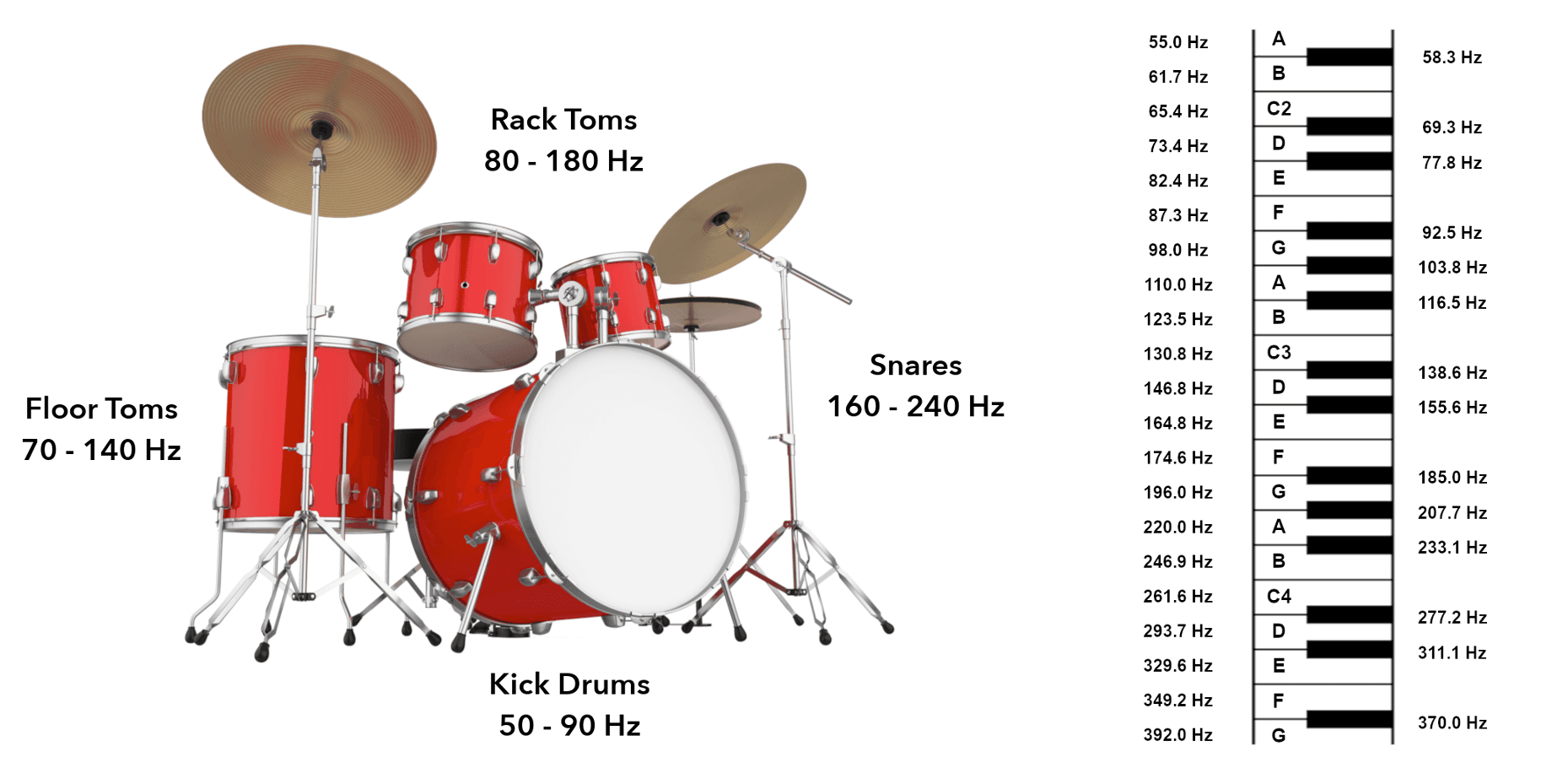
Without proper tuning, even the best drum set or high-end drum heads will sound flat and lifeless." That's not an exaggeration. A kit that cost you two thousand dollars will sound worse than a cheap beginner set that's been dialed in correctly. Tuning is the thing most drummers skip, rush, or do wrong, and it shows every single time they sit down to play.
This guide walks you through the full process, from the gear you need before you touch a tension rod to the final tweaks that make your kit sound like it belongs in a studio. Whether you're playing your first kit or trying to get more consistency out of a semi-pro setup, the same fundamentals apply.
Why Tuning Actually Matters
Many drummers focus only on technique, forgetting that drum tuning is equally essential. Each piece of the kit has something specific to offer when it's tuned right: a well-tuned snare drum can cut through the mix with clarity, toms tuned correctly will sing with warm overtones, and even the bass drum benefits from precise tuning, providing a deep and powerful foundation. When any one of those elements is off, the whole kit sounds muddy, choked, or just dead.
The goal isn't to hit a single "correct" pitch. It's to get each head even with itself, then set the overall tension to where it serves your playing style and the music you're making.
What You Need Before You Start
Three things, and none of them are complicated:
- A drum key, which is essential for adjusting tension rods. Don't even think about using a regular wrench; the drum key fits the square posts on your lugs properly and lets you make precise, incremental turns.
- Fresh drum heads if your old ones are worn out. Dented, stretched, or cracked heads won't tune up no matter how much time you spend on them. If the head has a visible dent in the center or feels dead when you tap it, replace it first.
- A quiet environment so you can hear each note clearly. This one gets repeated for a reason. If you're tuning in a room where the TV is on or someone's talking, you're going to miss the subtle pitch differences between lugs that make the difference between an even head and a warped-sounding one.
The Four-Step Tuning Process
1. Loosen the drum head. Start by loosening all tension rods and then tighten them finger-tight.
This resets the head to an even baseline across all the lugs. Finger-tight means snug but not engaged, just enough that the rod isn't loose in the socket. This step matters because heads shift over time, and starting from scratch ensures you're not compounding old unevenness.
2. Tune in a star pattern. Use the drum key to gradually tighten the rods opposite each other to keep even tension.
On a standard eight-lug drum, you'd tighten at 12 o'clock, then 6, then 3, then 9, then the positions in between, always moving across the drum rather than around it. This cross-pattern approach distributes tension evenly so the head seats flat on the bearing edge. Going around the drum in a circle is the most common beginner mistake, and it leads to uneven tension that makes the drum nearly impossible to tune properly.
3. Listen for overtones. Tap about an inch from each lug and make small adjustments until the pitch matches around the drum.
You're not hitting the center of the head here; you're tapping close to the rim at each lug position and listening for the tone at that spot. Each lug point should produce the same pitch as the others. Where the pitch is higher, back off slightly. Where it's lower, add a small turn of the key. This is where a quiet room pays off because the differences you're listening for are subtle.
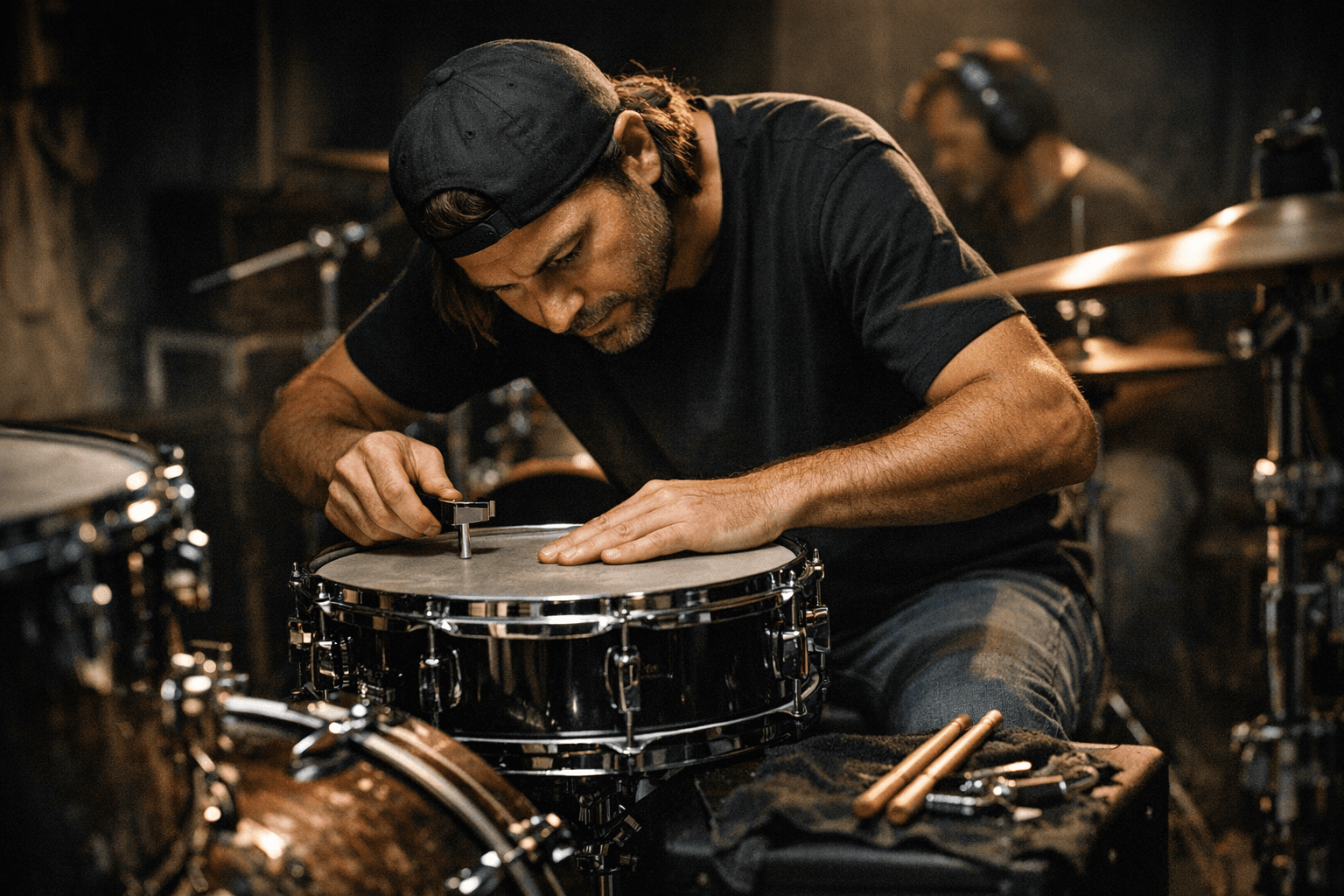
4. Fine-tune for style. Rock drummers often prefer lower tuning for punch, while jazz drummers might tune higher for articulation.
Once your head is even, bring the overall tension up or down to match what your music needs. Lower tension gives you a deeper, thicker sound with a longer decay. Higher tension produces a tighter, more focused tone with quicker response. There's no wrong answer here; it's about what fits the gig.
Using Technology to Speed Up the Process
Tuning by ear takes practice, but technology makes the process easier. For drummers who are still building their ear, or who need fast, accurate results in a studio or live setting, a free online drum tuner can be a genuine shortcut. These tools help you quickly find the right pitch for your snare, toms, or kick drum, and they're useful whether you're a beginner learning the basics or an experienced player who wants consistency across multiple kits on tour.
The technology doesn't replace your ear in the long run, but it gives you a reference point that makes the listening process in Step 3 much more concrete. You know what pitch you're aiming for, which makes matching it around the drum significantly easier.
Maintenance and Dampening
Always change both batter and resonant heads when needed. That second part is where people cut corners: the resonant head on the bottom of your toms affects sustain and tone just as much as the batter head you're hitting. Replacing only the top and ignoring the bottom is like putting new tires on one side of a car.
Dampening is worth experimenting with once you have the heads tuned evenly. Gels, rings, and tape all reduce overtones in different ways. Moongel sits on the head surface and tones down ringy high frequencies without killing the fundamental tone. Rings sit around the edge of the head and reduce the decay. Tape is the lowest-cost option and works in a pinch. None of these are substitutes for good tuning; they're tools for fine-tuning the character of a drum that's already dialed in.
Record yourself playing after tuning to hear how your kit sits in the mix. This is the step most people skip and it's one of the most useful things you can do. What sounds great in isolation from the throne often sits differently in a full-band recording. A phone voice memo or a quick session with a basic DAW takes ten minutes and tells you immediately whether the snare is cutting through or getting buried, whether the toms have the warmth you were going for, and whether the kick punch is landing where it should.
Keep Learning
The four steps above will get your kit sounding dramatically better, but tuning is a skill that deepens with time. Watching professional drummers demonstrate their approach is one of the fastest ways to develop your ear. The World Drummers YouTube Channel covers tuning tutorials alongside performances and gear reviews, which is useful context because you hear the finished product alongside the process.
The drummers who sound great on every kit they sit behind aren't just technically skilled; they've made tuning part of their regular practice. It takes maybe fifteen minutes before a session once you've done it enough times. That fifteen minutes is the difference between a kit that sounds like yours and one that sounds like a pro's.
This article was produced by Prism’s automated news system from verified source data, official records, and press releases, then run through automated quality and moderation checks before publishing. The system is built and supervised by the people who set the standards it runs under. Read our full AI policy.
Did this article answer your question?