Versatile Drummer Cinque Kemp Shares Touring Stories, Practice Philosophy, and Creative Process
Cinque "Ignabu" Kemp spent years touring with Macklemore, Ana Tijoux, and Flatbush ZOMBiES; his 8020 Drummer episode is one of the most honest field guides to professional drumming you'll hear.
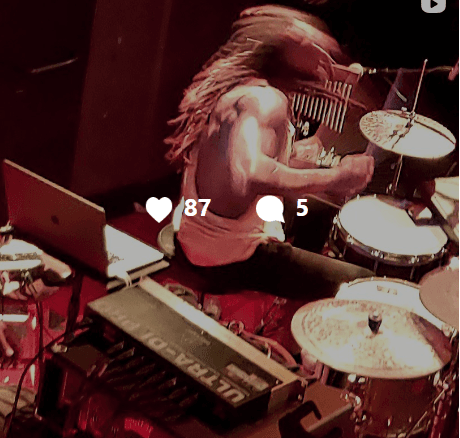
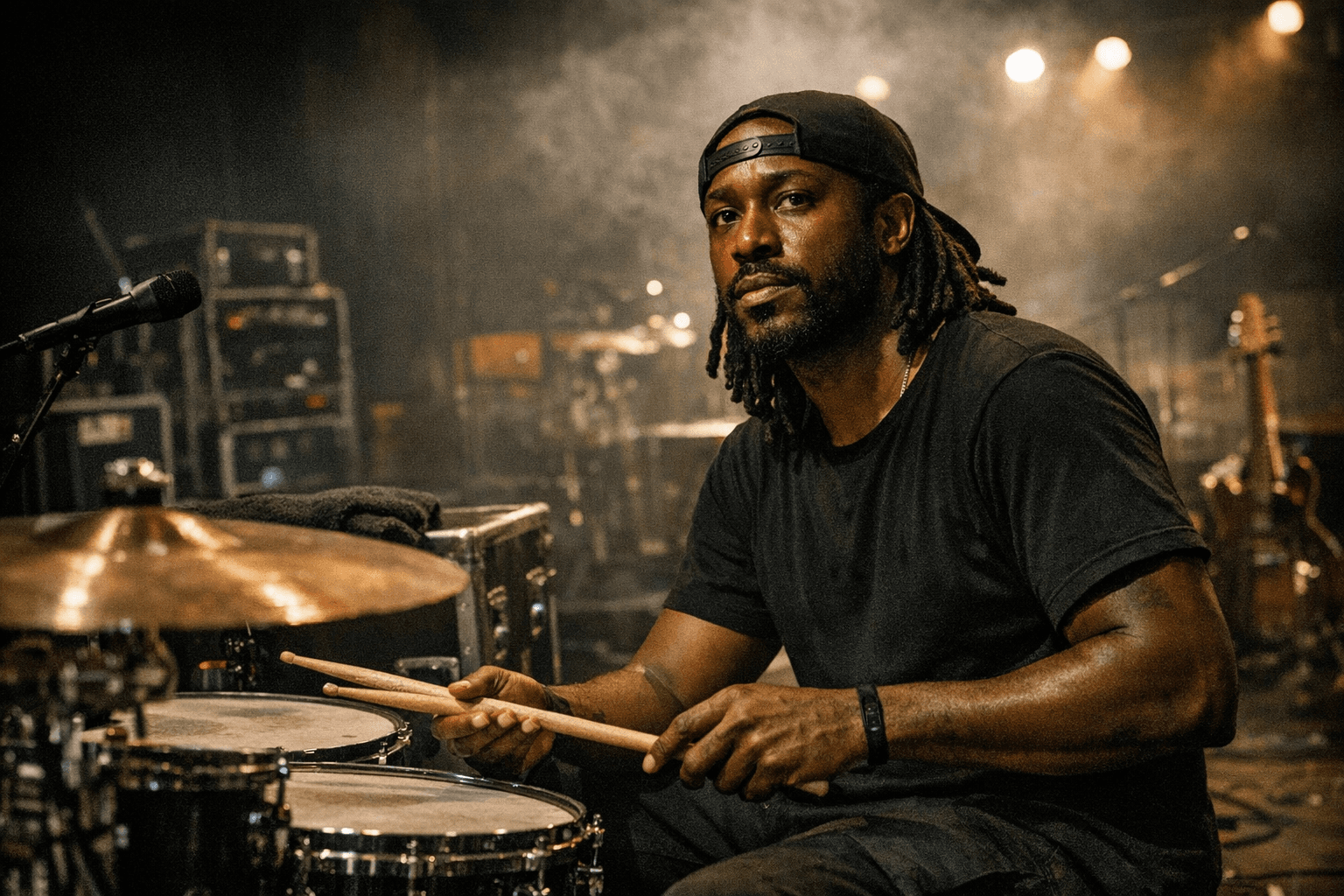
Few working drummers carry a résumé as deliberately varied as Cinque "Ignabu" Kemp's. A Queens, NY native currently based in Bushwick, Kemp has performed, toured, and recorded alongside Macklemore, Flatbush ZOMBiES, Ana Tijoux, Hypnotic Brass Ensemble, Arto Lindsay, Melanie Charles, Janka Nabay, and even served in the house band for James Corden's Late Late Show, among dozens of other collaborators. When host Nate Smith finally got Kemp on The 8020 Drummer podcast after what he describes as several attempts, the result was a longform conversation that covers real touring mechanics, an honest practice philosophy, and the kind of craft insight you only earn by doing the gig for years across wildly different musical contexts.
What the Gig Actually Demands
The glamour of touring is real, but Kemp doesn't oversell it. In his own words from prior interviews, he's described the road as "constantly subjected to time zone differences, intense travel, lack of sleep, hard work and 1000% focus on stage every night for weeks, and just general lack of equilibrium, routine, and being grounded." That's not a complaint; it's a technical specification. If you want to play at the level a Macklemore arena show or an Ana Tijoux concert demands, you have to build stamina and consistency that holds up under those exact conditions, not just in your practice room.
For Kemp, the through-line across genres is adaptability. Moving between Macklemore's high-energy, hip-hop-rooted production, Tijoux's politically charged Chilean hip-hop, and Flatbush ZOMBiES' dense, left-field boom-bap requires a drummer who can shift tonal identity without losing pocket. The gig demands that your fundamentals be so internalized they become invisible: the groove locks in regardless of what the setlist throws at you.
Practice Philosophy: Fundamentals as Infrastructure
Kemp's approach to the practice room is context-driven rather than rigid. He keeps "a general upkeep of fundamental work-outs every day, rudiments, scales, and so on," but layers on top of that whatever the next project actually requires, whether that's studying a specific genre, writing and producing parts from scratch, or running through set-specific material. The baseline never changes; the work on top of it always does.
That framing is worth stealing directly:
- Start every session with a fundamental block: rudiments, stroke types, single and double stroke rolls at varied tempos. Keep this non-negotiable.
- Layer a project-specific block on top: if you're prepping for a hip-hop gig, spend serious time on ghost note density and snare placement. For something closer to Tijoux's Afro-Latin-meets-hip-hop palette, work your clave feel against a click.
- End with something creative and unstructured. Kemp is vocal about the importance of filling the creative well, not just outputting. His advice: "have a clear purpose for your artistry, a goal you're trying to attain and/or a problem you're trying to solve. And then shed incessantly. And diversify, express yourself with multiple mediums."
The practical drill: set a timer for 15 minutes and do nothing but play to a click at 70 BPM, varying only ghost note weight and snare accent placement. The goal isn't flash; it's hearing yourself make micro-decisions under the flattest, most revealing conditions possible. That's what the gig actually auditions.
Flow States and Consistency Under Pressure
One of the most valuable threads in the 8020 Drummer episode is Kemp's discussion of how to cultivate and sustain flow, particularly across the grind of a multi-week tour. His perspective isn't mystical; it's grounded. He acknowledges that creativity doesn't arrive on demand, and that sometimes the right move is to step away entirely: go for a run, read, let the well refill. "It's important to have input to replenish one's energy stores and not perpetually output."
That balance, output and input, is precisely what breaks down on the road. Fatigue and schedule pressure push drummers to only output, and the performances reflect it. Kemp's counter-strategy is personal connection: "Personal connections is the only way to keep me sane and comfortable on those endeavors." Whether that means finding a familiar face in a new city or building enough community within the touring party to have genuine downtime, the point is the same: protect the human infrastructure that the musical performance runs on.
Beyond the Kit: Producer, Director, Model
Kemp's non-drum roles, producer, musical and visual director, model, aren't tangential to his drumming; they're load-bearing. Working as a producer forces you to understand how a drum part functions inside an arrangement rather than as a performance in isolation. You start hearing the whole track when you play, not just your own contribution. As a visual and creative director, you develop an acute awareness of stage presence and energy projection, the physical communication that separates a great live show from a technically correct one.
This multi-hyphenate identity is reflected in his solo project, Ignabu, which spans original composition and performance. He was also awarded a fellowship with OneBeat Sahara, a State Department-sponsored cultural exchange program in Algeria in 2022, which underscores how far his curiosity extends beyond any single genre or context.
Steal This: A Short Playlist for Studying Kemp's Range
The best way to internalize what these gigs demand is to sit with the records. Here's a focused list:
- Macklemore, "Can't Hold Us": Big arena hip-hop with a groove that has to land hard for 20,000 people. Study how the kit drives without overplaying; every hit has to read in the back row.
- Macklemore, "Thrift Shop": Looser swing feel inside a hip-hop framework. Notice how much space lives in this groove and how restraint becomes the dominant technique.
- Ana Tijoux, "1977": Her signature track, and a masterclass in what it sounds like when Afro-Latin rhythmic DNA runs through a hip-hop skeleton. The pocket here is deep and specific.
- Ana Tijoux, "La Bala": Harder-edged, more politically urgent. The groove needs to carry emotional weight without sacrificing rhythmic precision.
- Flatbush ZOMBiES, "Palm Trees": Slower tempo, darker texture, a completely different kind of patience than the Macklemore material. This is where adaptability shows.
Sit with each track on headphones, map out where the snare lives relative to the beat, and notice how the kit's role shifts to serve the genre. Then take that specific rhythmic identity to your practice pad and work it at half tempo until it's in your hands.
The Bigger Takeaway
The 8020 Drummer episode with Cinque Kemp is an unusually honest conversation precisely because Kemp resists the urge to make the professional drumming life sound frictionless. The anecdotes are specific, the philosophy is practical, and the craft advice is earned. For any drummer trying to close the gap between serious practice and serious gigging, this episode is a field guide worth returning to more than once. The fact that Kemp's credits span Macklemore arenas, Tijoux's politically charged concerts, and late-night television houses, all with the same foundation of fundamentals and curiosity, is the argument itself.
Know something we missed? Have a correction or additional information?
Submit a Tip