Why the snare drum is the heart of modern drumming
The snare is the one drum that decides whether a groove feels loose, surgical, or military. Its heads, shell, and wires shape feel more than any flashy upgrade.
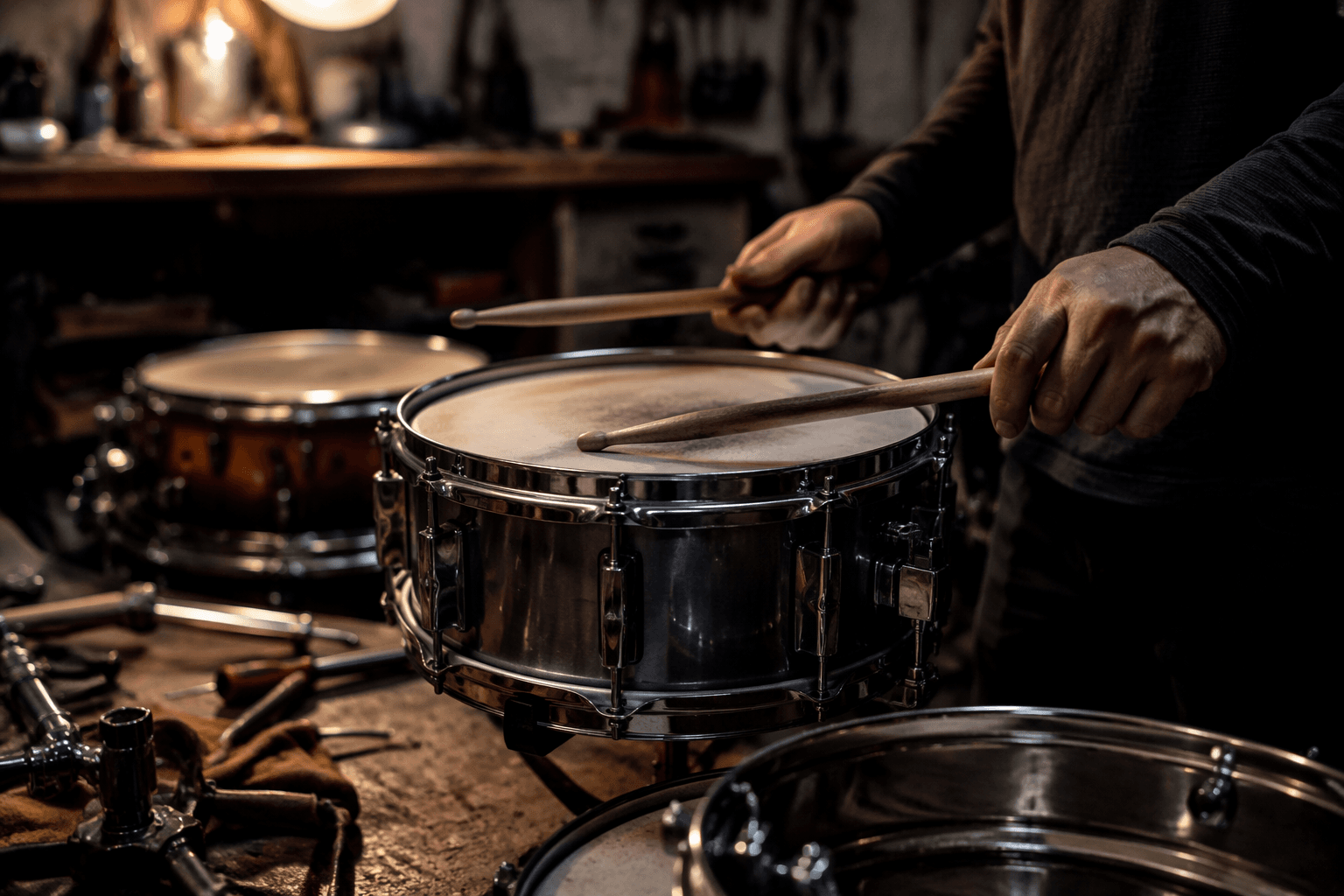
The snare drum was originally played in military bands hanging at the drummer’s left hip and beaten from the side. Hit it and you hear time, attack, and identity all at once: the crack that defines a backbeat, the buzz that gives it edge, and the immediate response that tells you whether the whole kit feels alive or flat. It sits at the center of Western drumming, from orchestra and marching band to jazz and rock.
Why the snare sits at the center of the kit
Drums are membranophones, instruments that use a tautly stretched membrane to produce sound, and the snare drum is a clear example of how much that matters. The instrument evolved from military use before becoming central to orchestral, jazz, and popular music. Its history reaches back to medieval times, with the tabor as a precursor, and its roots are also traced to Switzerland, where Swiss mercenary forces used it to coordinate troops on the battlefield.
You can still hear that ancestry in Fife and Drum Corps work and in the U.S. Army tradition, even when the same drum is carrying a jazz comp or a rock backbeat.
How the parts work together
A snare drum does not make its sound from one part alone. The shell, batter head, resonant head, rims, tension rods, and the set of metal strands called snares all interact, and each piece changes the way the drum speaks. The top head is where the stick strikes, the bottom head vibrates in response, and the snares create the crisp, buzzing aftertone that gives the instrument its signature snap.
The strainer turns the snares on and off. Turn the snares on and you get the sharp, articulate voice that cuts through a band; turn them off and the drum becomes much cleaner, closer to a tom-like sound. That switch lets one drum move from military precision to a more open, legato role in a second in both concert settings and drum set playing.
Why size changes feel, body, and range
A standard 14-inch snare balances stick response, tuning range, and projection, which makes it useful across a wide spread of styles without fighting the player. A common size is 14 inches in diameter by 5.5 inches deep, a combination that covers a lot of ground without becoming too specialized.
That does not mean all snare drums are interchangeable. Shell depth changes response, diameter changes feel and body, and snare wires affect articulation, so the same pattern can feel completely different on two drums that look similar from across the room. The snare family reflects that range clearly:
- Orchestral snares are built for nuance and control in concert writing by composers such as Ludwig van Beethoven and Benjamin Britten.
- Marching snares are built for projection and precision in lines that need to carry outdoors.
- Piccolo snares trade depth for a sharper, higher crack.
- Deep rock snares lean toward a bigger, heavier voice that suits louder backbeats.
In classical, jazz, fusion, and rock, the drummer usually asks the snare to define the pulse before any other drum does.
What actually changes the sound, and what drummers overrate
If you want to change a snare drum’s voice, start with the heads and the snare tension, because those are the parts directly controlling attack and response. A batter head that is too loose, a resonant head that is not responding properly, or snares that are too slack will all make the drum feel less articulate, no matter how good the shell is. The shell matters, especially for response and body, but the sound you actually hear is the result of the whole system working together.
Snare wires shape articulation without being magical. They absolutely shape articulation, but they do not rescue a drum that is poorly tuned, and they do not replace the basic relationship between the two heads. The fast fix is getting the batter head, resonant head, and strainer relationship into a place where the drum speaks cleanly.
Why the snare still defines modern drumming
The snare can anchor a marching cadence, sit under a jazz ride pattern, power a rock chorus, or keep a chamber score taut without getting in the way. That range puts it in music by Beethoven and Britten and in the hands of players like Tom Teasley and John McLaughlin.
This article was produced by Prism’s automated news system from verified source data, official records, and press releases, then run through automated quality and moderation checks before publishing. The system is built and supervised by the people who set the standards it runs under. Read our full AI policy.
Did this article answer your question?