Wichita State percussion reunion links alumni duo to student ensemble
A student ensemble became a reunion when Wichita State alumni Mat Britain and Dan Moore joined Impulse in Miller Concert Hall, turning a recital into a living percussion hangout.
A room that made percussion visible
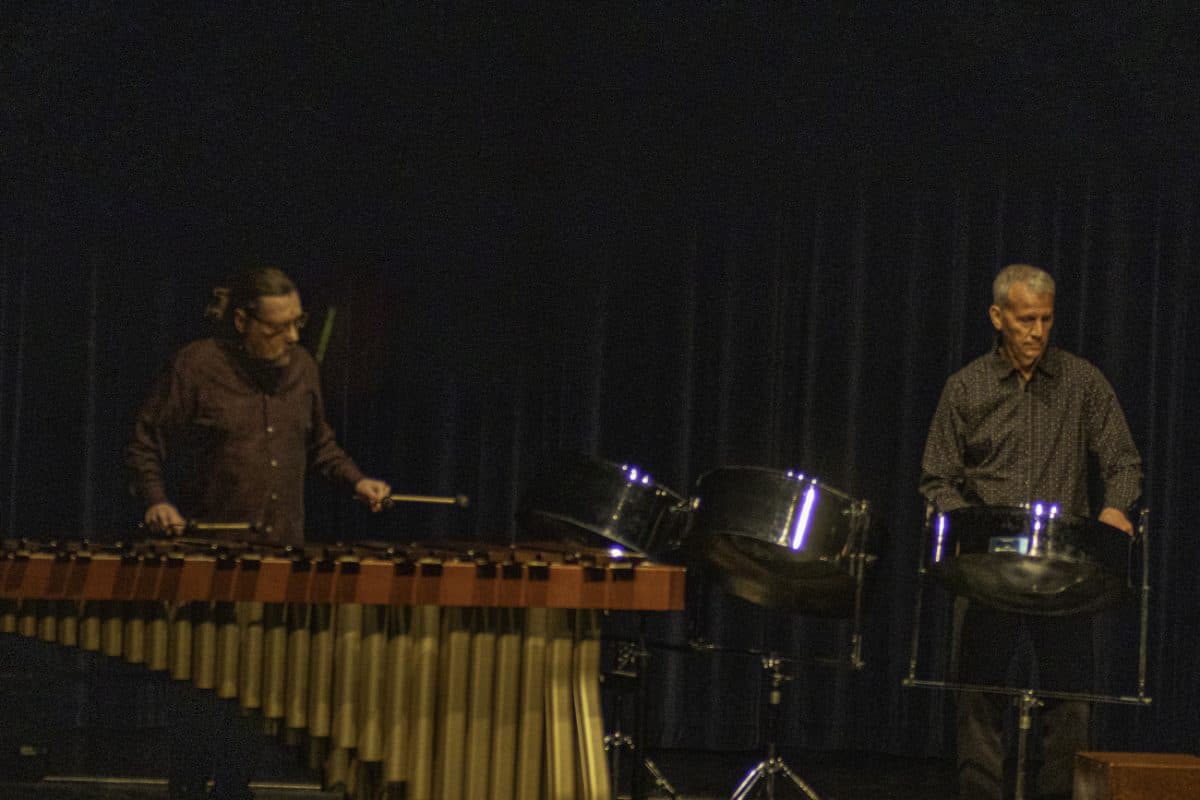
Impulse Percussion Group did more than play a concert when it brought Sleepless in Wichita into Miller Concert Hall. The room felt like a meeting point for Wichita’s drum community, with students, alumni, and listeners sharing the same pulse while guests Mat Britain and Dan Moore of the Britain Moore Duo sat in with the ensemble. The most telling detail from the night was not just the repertoire, but the response: people were dancing in their seats, which is exactly what happens when percussion stops being background texture and becomes the event itself.
That matters because this kind of performance opens the door for non-musicians as much as it rewards players. The concert turned drumming into something social, visible, and easy to follow, with the ensemble moving through music such as Sleepless, Cricket City, and Calypso #2 while Gerald Scholl joined during part of the performance and a concert talk. It was a showcase built on participation, not distance, and that is what gives it community weight.
Why the alumni reunion landed so hard
Britain and Moore were not simply guest artists dropping by campus. They are Wichita State alumni who met as students, began their musical journey together in 1984, and formed the Britain Moore Duo in 1986. Their partnership stretches back more than 40 years, and that history gives a student concert a much bigger emotional frame: this was a reunion of players whose shared vocabulary was built in the same rooms where current percussionists are still learning.
Their origin story is exactly the kind of lineage drummers pay attention to. The duo started in a student steel band, wrote early material together, and built a career that included travel gigs, summer tours, and arrangement work. They also describe themselves as the first touring steel pan/marimba duo, which makes their appearance with Impulse feel less like a cameo and more like a living demonstration of where a university percussion program can lead.
The most revealing detail may be the way their first composition came together. Clock on the Wall was created during a lunch break before a recording engineer returned, a tiny anecdote that says a lot about how percussion careers are often built: in the gaps between setups, around the next session, with whatever instruments and time are available. Dan Moore’s bio adds another layer, noting that he appears on more than 40 professional recordings. That kind of resume gives younger players a concrete model for what long-term, niche percussion work can look like.
What Impulse actually is, beyond the stage
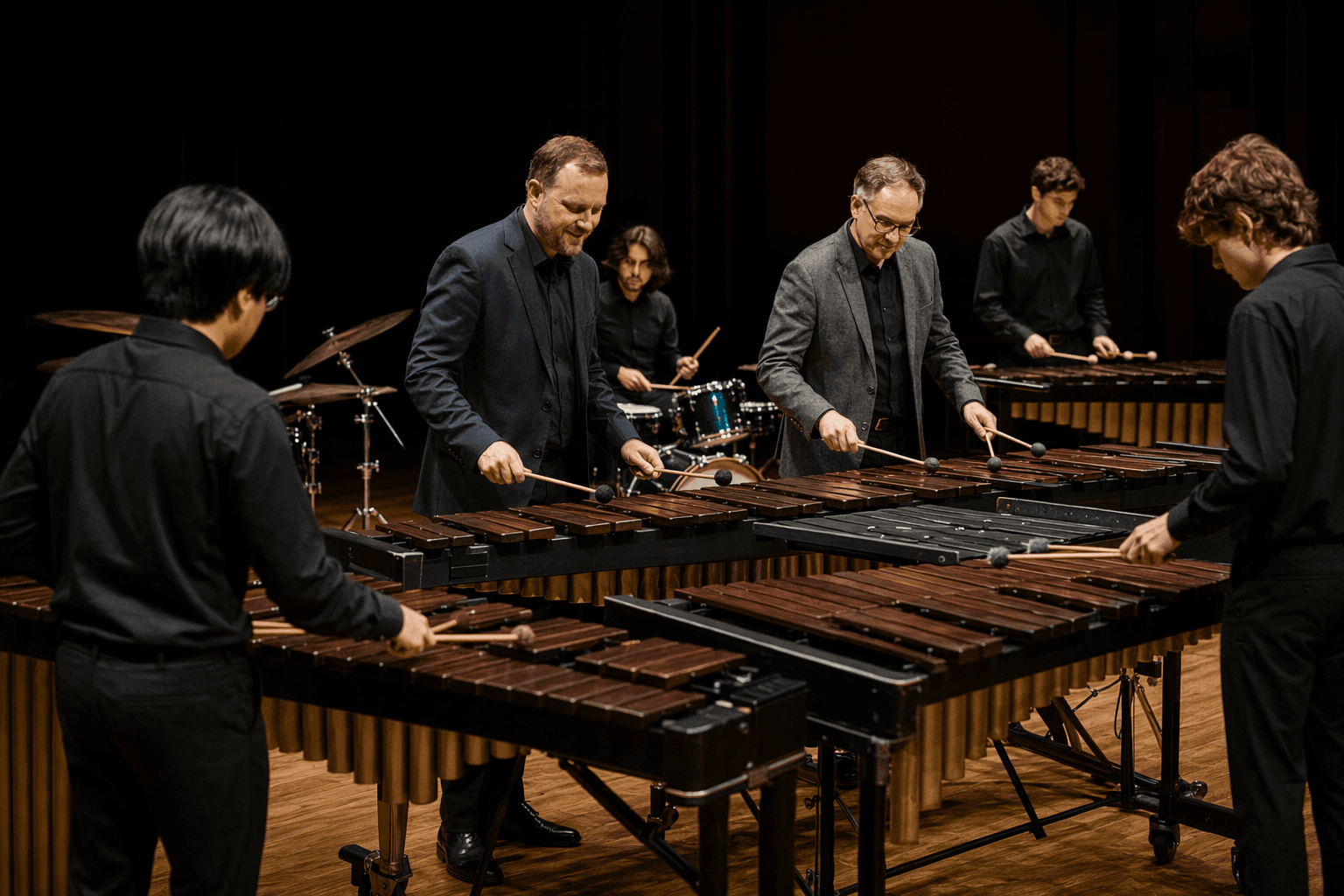
Wichita State’s own music pages make clear that Impulse is not just a standard concert ensemble. It serves as both a large percussion ensemble and a platform for smaller chamber groups, and it welcomes majors and non-majors alike. The percussion studio includes about 16 to 20 undergraduate and graduate students, which helps explain how a group like this can function as both a performance engine and a training ground.
The repertoire and presentation style matter just as much. Wichita State describes Impulse as focusing on theatrical, contemporary works and as an all-inclusive sensory experience, and Sleepless in Wichita fits that identity. This was not a passive recital with players lined up and the audience left at arm’s length. It was a concert built to make sound, motion, and ensemble interaction feel immediate in a 530-seat room.
That design is what makes open-format showcases so valuable for the drum community. They let the audience see how parts lock together, how chamber playing differs from bigger ensemble writing, and how percussion can carry narrative without needing a front person to translate it. For students, that visibility is part of the lesson. For non-players, it is often the first time they see how much precision and coordination sits behind a groove.
Gerald Scholl’s role gives the room its throughline
Gerald Scholl is the connective tissue in the whole scene. At Wichita State, he serves as professor and head of the percussion department, and he is also the artistic director and conductor of Impulse Percussion Group. A university calendar listing says he has led Impulse for over 15 years, which gives the ensemble a real sense of continuity rather than a rotating-program feel.
That continuity matters because programs like this survive on more than talent alone. They need a stable artistic center that can bring in alumni, shape repertoire, and make the concert feel like part of a longer story. Scholl’s presence during part of the performance and the concert talk helped frame the event as both music-making and mentorship, which is exactly how a strong percussion studio builds its next generation.
The hall itself helps tell the story
Miller Concert Hall is not an abstract backdrop. It sits inside the Duerksen Fine Arts Center, which opened in 1956 and houses the 530-seat hall. That scale is part of the appeal here: big enough for a public gathering, intimate enough for the audience to feel every rhythmic detail and every shift in ensemble color.
The venue also sharpens the sense of reunion. A hall like Miller is the kind of place where students can see alumni return as working artists, not just names in a program. When Britain and Moore stepped into that space, the room became a bridge between eras of Wichita State percussion, with the current roster standing where earlier generations once stood.
Why this story reaches beyond one concert
Wichita State’s College of Fine Arts will celebrate its 100th anniversary in 2026, and that gives the performance an added layer of meaning. The reunion between Impulse and the Britain Moore Duo fits neatly into a broader institutional story about arts education producing durable artistic networks, not just isolated student performances. It shows how a university percussion program can keep its own history active while still feeding the present tense.
For drummers, that is the real takeaway. A concert like Sleepless in Wichita is not only about the notes on the page or the novelty of guest artists. It shows how alumni relationships, chamber skills, large-ensemble power, and audience participation can all live in the same room, and why those open, communal showcases are where a scene quietly renews itself.
This article was produced by Prism’s automated news system from verified source data, official records, and press releases, then run through automated quality and moderation checks before publishing. The system is built and supervised by the people who set the standards it runs under. Read our full AI policy.
Did this article answer your question?