Brennan Lee Mulligan bans evil PCs in Critical Role Campaign 4
Brennan Lee Mulligan drew one hard line in Critical Role Campaign 4: no evil PCs, a rule meant to keep Aramán’s revolutionaries pointed at the same enemy.
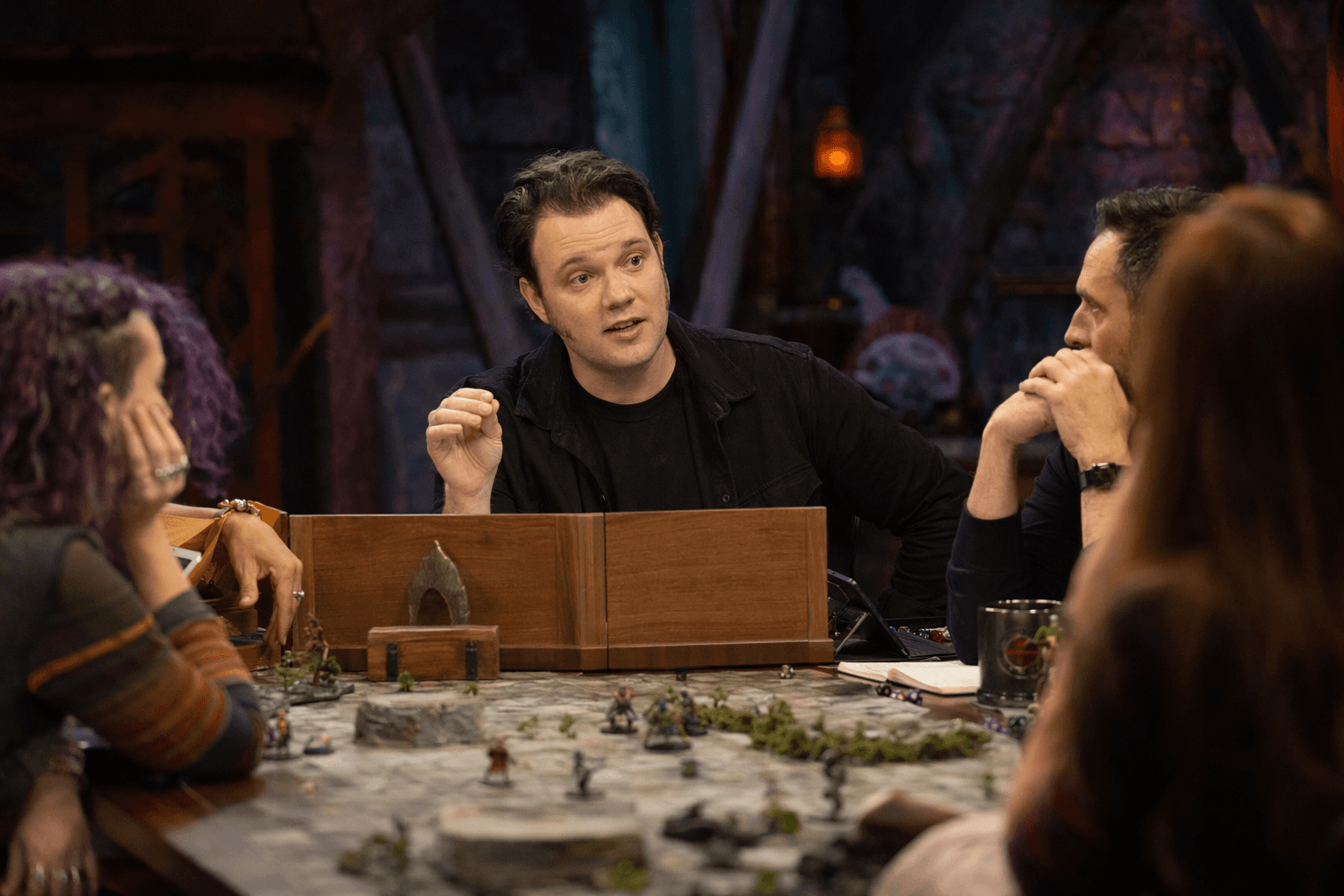
Brennan Lee Mulligan’s only hard character-creation rule for Critical Role Campaign 4 was simple: the player characters could not be evil. Cast members Liam O’Brien and Taliesin Jaffe said Mulligan was open to ideas and collaborative about character concepts, but he set that boundary from the start, and it immediately clarified what kind of table this was going to be.
That matters because Campaign 4 is built around motion, not drift. Critical Role describes it as a West Marches-style Dungeons & Dragons campaign set in Aramán, a new world where sorcery springs from the graveyard of the gods. The campaign uses three rotating tables, the Soldiers, the Seekers and the Schemers, with 13 players in the main cast. Brennan Lee Mulligan was announced as the game master in 2025, taking over the main-campaign seat from Matthew Mercer, and the show premiered Campaign 4 on Oct. 2, 2025.
In that structure, an evil PC is not just a roleplay choice. It can become a structural problem. A campaign about revolutionaries pushing back against oppressive powers works best when the party is fundamentally aligned on the same side of the conflict. A lone saboteur, or a character whose goals are to exploit the group rather than advance the mission, can turn every scene into table friction. Mulligan’s rule does not shut down complexity, but it does protect the premise from being eaten alive by internal betrayal.
That puts the Campaign 4 call squarely in the same conversation as standard session-zero practices. Most experienced DMs already use some version of this logic when they talk about tone, party cohesion, lines and veils, character ties and why the group stays together after the first job goes bad. The difference here is that Mulligan made the expectation explicit and narrow: play morally complicated characters if you want, but do not build one whose core function is to work against the party. That is a cleaner solution than hoping everyone interprets “don’t be a problem” the same way.
Critical Role’s past campaigns have certainly made room for messy choices and morally complicated arcs, so this is not a campaign about flattening out the fun. It is a table-management decision for a specific premise in a specific world, and it is a useful one. If your campaign depends on a shared objective, a rotating cast, or a faction-level story like Aramán’s, the no-evil-PC rule is not a gimmick. It is a guardrail that keeps the game pointed at the story everyone came to tell.
This article was produced by Prism’s automated news system from verified source data, official records, and press releases, then run through automated quality and moderation checks before publishing. The system is built and supervised by the people who set the standards it runs under. Read our full AI policy.
Did this article answer your question?

